
9. Thelma Haylock, Change Leader on Embracing Her Story
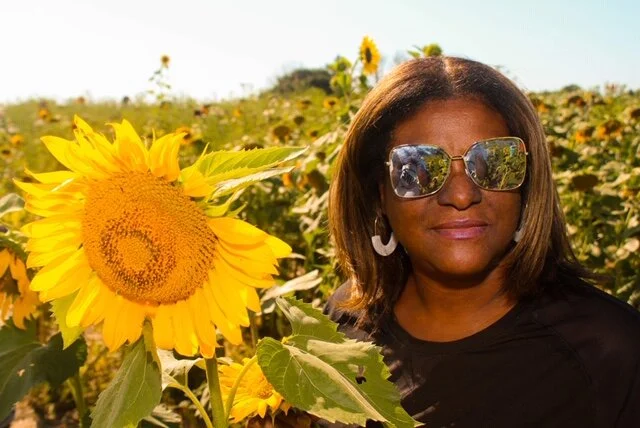
The process of becoming “enough” can be a long journey to finding yourself. Listen to Thelma Haylock share her journey of accepting and embracing her differences to break the rules by bringing her full self to the table.
Ep 9. Transcript
Alisa Manjarrez: We’ve been hearing a lot about people embracing their imperfections to become a leader and Thelma Haylock is no stranger to that.
She grew up as a straight-A student, a rule-follower, appeared to have everything together and, actually, I really think she did! But in order to climb the corporate ladder in health care, she actually had to start breaking rules and embracing herself.
And what I love about Thelma is that she had enough awareness about her need to share her authentic voice to ask for help. With the support of friends and co-workers and even an executive coach, she not only learned to share her voice but now she’s been able to give others permission to share their own voices.
THAT is what I call empowerment.
Here’s Rosa and Merary asking Thelma how she’s doing, right now… how she’s leading at work, and how she’s leading at home amidst this COVID-19 crisis.
Thelma Haylock: I have learned to be strong, and so walking into, everything, it’s been, what, 31, 32 days, of being at home.
I walked in with strength and then I learned, yeah, I’m not that strong. I’m not used to being around people so much, or the same six people, the spy people so much, and so I’m having to learn to adapt to my own family and also that it’s okay. Like, yeah, you do need a PTO day. You do need time.
Like to me, I’m home, so why do I need a day off? A day off is for me to go and enjoy. You need a day off because you’re still mentally plugged in, right? Physically, I may not be going into the office, but mentally I’m dealing with even bigger issues than I was when I was in the office. And so I need to continue to be strong for myself and for my family and for my teams.
And to do that, I need to unplug. It’s about closing my computer. It’s about taking a walk with my dog. It’s about spending time with my husband one-on-one. And I’m not saying I’m doing any of that successfully, but at least I recognize the components. And I think it’s also about faith. I was so busy running around doing everything.
I was getting a bit disconnected from who I was, what I believe, what keeps me grounded, and so midway through this, we do family prayer meetings, and we had one and I just broke down crying. And it was nothing that anyone said. It was just like, yeah, this is God’s way of telling me “slow down” and that, you know, I don’t have this. I am not in control of this.
I am just part of the process. And if I had faith in him, we will come out the other side. And so that’s what I’m trying to hold onto and impart to others.
Rosa Santos: I think you mentioned options, like what are all of my options? And I think what this has done is for us finding ways to self reflect and actually reframe achievement.
And I see a lot of being flexible and having the ability to adapt to your circumstance and to really become who you are, right? How important do you think that is to face something like what we’re going through right now?
Thelma Haylock: I think it’s a life skill, no matter what’s going on. What are the external circumstances? You know, we keep talking the new norm. I do a lot of communications and I always write “oh, we’re living through the new norm” right? But what does that mean? Well, the new norm is different day to day. I know people who are not bathing every day anymore, right? Because there’s no need, right? That is their new norm. And so they’re adapting to their circumstances, right? I think my sons are, well, in that camp. Other people are, you know, reconnecting with their family. I have a son in college and three other kids who are so active. We eat meals together. We haven’t done that in 10 years. And so adapting to whatever is happening makes it easier for you to maneuver what we are calling the new norm. I think if you’re stuck in like I get up in the morning and I do A, B, and C, and then I… Routine is good.
I’m not saying that, but you have to be flexible. Today is a bath. Tomorrow. It’s not a bath. Some days I put on makeup because I just want to feel normal. Other days I’m like, this is great. I can just, you know, wear my pajamas and go downstairs and start my day. We need something to hold on to and we just need to be happy that we have life or that we have jobs, right? So many people are losing their roles, don’t know how they’re going to pay their rent. And I could fixate on that or I could worry about the things that I do have and I’m being flexible and adapting to whatever comes my way and it’s, I’m a lot happier, I think because of that.
Rosa Santos: Part of the goal or the purpose of why we’re doing this is just to offer an opportunity to multicultural women when women of color to amplify their voice tell us a little bit about your journey to amplify your own voice.
Thelma Haylock: I think it has been a long journey, not because I’m old, which I am, but because it has had its ups and downs. And, finding your voice is very important. I think we all have that running narrative in our head of who we are and who we project and who we want to be. And there are sometimes dissonance between that and what the world mirrors back for us.
So I started out from grad school becoming a consultant. Wasn’t where I thought my career was going to go. I thought I was going to break into the world of advertising and set it on fire. But then I was at the University of Florida for grad school. Accenture Anderson consulting at the time came around and they captured my imagination, and that is the route that I took.
I quickly found myself in the world of human performance. So Anderson at the time was doing really big IT implementations. And so they always need a communications, org design, those types of things. And I quickly found myself gravitating towards that as an analyst.
But at the time, I was living at home with my parents in my twin bed. And I remember, you know, 25 years later, still being teased by everyone around me about the fact that I was living at home sleeping in a twin bed, you know? And so at that time I would not share as much of my story because of that, right?
And I learned really quickly too separate who I was at work and who I am at home. And so I wasn’t telling the full story. I was, not being my whole self, right? And I took that through my career as a consultant. I was very buttoned up, very professional, and did not allow others to see into my home life or to see the color that I bring to the table, right?
Literally and figuratively. I then went from Accenture Anderson Consulting, became Accenture, and then went into pharmaceuticals. And there, again, it was about that very professional polished persona, bringing that to the table. I think the first time that my coworkers heard me curse they were, they were so shocked and surprised.
And really I curse like a sailor. So they shouldn’t have been, but I never brought that to the table, right? That’s just an example. And so, it took me probably to the role that I have today, at a startup. So that kind of gave me permission, right? It’s not that buttoned up company that allowed me to bring my full self.
I talk about my children, being the mother of four. I talk about my background being Afro-Latina. I talk about the challenges that I’ve had. I talk about my first day at Anderson Consulting wearing a cream suit when everyone else was wearing blue and black. And so I have learned to bring my full self all of my colorfulness to the table, whether that makes other people uncomfortable, whether that makes other people’s perception of me different from how I see myself.
Rosa Santos: Yeah. That’s incredible. I think it sounds easier said than done. How were you able to actually bring who you are to the table cause it sounds like it took you a process to get there. When was the most challenging throughout, that process?
Thelma Haylock: It’s often said that youth is a gift of the young, right? And I think with age we just become more comfortable with who we are. I always look at my mother and my aunt, and they’re so comfortable in their own skin and with age, I’ve learned to be so. I’ve given myself permission to just be more of who I am.
I also had some personal coaching, which told me to listen to that inner voice, and to trust it and to lean on it. And so I think with age, with great friends and mentors, and then with that personal coaching, I was able to shine more. Not dim my light, listen to my voice and be able to do that for others.
I’m really passionate about lending my voice to others so that they have permission to do it. And sometimes you just got to tell people you have permission to be you. As others have allowed me to be me, I now can do that for others as well.
Merary Simeon: Thelma, you said something very impactful. There are many women out there, especially women of color, multicultural women who are not bringing their whole selves to work. Can you tell us a little bit about how impactful and how those friends or or even the, the consultant was able to help you?
Because I think sometimes we’re just afraid to ask for help, because we want to look so buttoned up and we don’t realize that we’re really not giving the whole world who we really are. So, can you tell us a little bit about that?
Thelma Haylock: I think we’re all looking for validation. And that validation can come through many different vehicles, whether you invest in yourself in a personal coach, someone who can tell you how to leap to the next level and how to perform in the boardroom.
And so that was an investment in myself. And through that process I got validation that I am enough. I think I have so many things in media and outside of ourselves that tell us that we’re not enough or that we are too much, right? ‘Cause it’s two sides of a coin, you’re either not enough or you’re too much.
And so through the process that I went through, and it was about three or four months of talking, and I thought it was all going to be about my career. And what I realized through the process, it was so much about who I am and my stories and my history of how I got to where it was and where I wanted to be.
And so when I dealt with that, when I talk to someone, shout out to Jenelle she was awesome throughout this entire process, I was able to work through some of that and understand that I was enough. And more than enough, like someone would see my talents and see what I bring to the table and value that, and I just had to give it an opportunity for others to see that because I was hiding it, right?
Rosa Santos: And I think you talk about two things, right? You’ve talked about, being mature or wise, to get to a level to understand that it’s okay to be you, on the one hand, on the other, having somebody else who’s going to help you see your worth and that it is okay to be who you want to be.
In your experience, when do you think it’s, I don’t want to say not okay, but when would you say, no, don’t bring your whole self to work? Is there such a place?
Thelma Haylock: I would look at it a little bit differently. I would understand the consequences of running your whole self. So not everyone is going to accept you in the way that you are showing yourself, or you want to be seen. And so, you know, I had a cousin who wants, wanted to wear three rings to work, and I was like, oh my goodness, you can’t do that.
That’ll say A, B, and C about you. And, no, that wasn’t the right answer. The right answer is, recognize that you work in a very conservative atmosphere, and if you do that there will be judgment or perceptions or a number of things. And so as long as you’re weighing that against, where you want to go and what your goals are, and you’re making a conscious decision, then you’re fine.
So you should always bring yourself, but recognize that sometimes it can be muted. Sometimes it doesn’t have to be at 100%. Look at your audience. It’s all about your audience and understanding how something is going to land with them. But always bring yourself. And there’s different parts of yourself, right?
I tend to be a little quieter in crowds. But one-on-one, you can’t shut me up. So it just… You just need to figure out what’s the right level of you that you need to bring to the table.
Merary Simeon: I want to continue to probe on this only because we understand from a multicultural perspective how difficult this is, especially for even some of our young talent, right? When they’re coming into the organizations or they don’t see themselves in organizations, and they struggle many times with bringing their whole self to work.
So I love the point that you made about being able to calculate it, number one, number two, have those other people that can validate that you are good enough and have those friends around you to support you. Now have there been any rules that you have broken to get to where you are today?
Thelma Haylock: I’m a rule follower follower for the most part. But I come from a long tradition of being a good girl, right? And so Catholic school through kindergarten through 12th grade, was all about following the rules of being a good girl, doing what you’re told. But if you want to be an executive at any type of company you can’t just follow the rules. That’s not what a leader is. A leader is someone who steps out, who takes a chance, you lead from the front. You can’t lead from the back that’s a follower, right? And so I had to learn to not just do what I was told, to have vision, be able to articulate that vision to others and get them to follow me.
That was uncomfortable for me. And it took me a few years in my career to go out on a limb to be different. I’m different. Everything about me is different, right? And to trust it, that’s okay. And so I did conform for many years. I did try. I put on the blue suit. And stopped wearing the cream one, even though the cream one was beautiful, right?
I wear the blue suit for a long time. I did my hair the way that conformed to others’ ideas of, what was appropriate in the workplace. But when I was more me and I started to be authentic in all parts of my life bringing that whole self to the table I was rewarded for that.
You don’t just jump into the pool, right? You put your toe in and see what the temperature is, and when you’re rewarded for that, you’re going to put more of yourself into it. And that’s how I learned to do it.
Rosa Santos: I like that you bring about the concept of vision, right? Tell us how you’re thinking about visioning, especially now in the midst of this pandemic.
Thelma Haylock: It’s needed more than ever, right? I think we are all so uncertain and we’re all trying to figure out what’s next, right? How do we go back to work? How do we live in what we’ve all entitled this new norm? And so we need someone, we’re looking to the heads of our government and we’re looking to the CEO’s of our companies to tell us how you’re navigating forward.
And so those people who will be successful at the end of this pandemic are those that have vision. Those who are painting a clear path for me what does that look like? It starts at home. It is organizing the Motley crew that are the Haylocks, and making sure that my children know the game plan and that they can execute upon it.
And I have teenagers, so they can do that with little supervision. At least they’re getting little supervision now. At work for my teams it’s about staying connected, being vulnerable. That is something that I really struggle with. And I think a true leader, one that has vision, is vulnerable.
They tell others that they’re unsure. When I sit down and I think through and I weigh options, this is the path that I see forward, and we may make some mistakes. But together we’re going to navigate through it. That’s what I mean by vision,
Merary Simeon: People are going through different stages, right? There’s fear. Or there’s getting into the groove, right? Or some days seem normal. Others did not seem normal, but yet we continue to talk about the new normal. So it, it sounds like it’s gonna be a ride. It’s going to be a journey.
What I love you said is just that it’s a life skill and we got to continue to look at it that way. I think for our own sanity, right? So that we can make sure that we work on being ourselves each day. Can you, tell us a little bit, maybe about what does resiliency look like to you? Does resiliency look the same today as it did before?
Thelma Haylock: I think resiliency is a skill that many people don’t have anymore. When I look at my generation, when I’m… Definitely my parents, right? They had to be resilient because so many things were coming at them. They were immigrants, you know, they spoke a different language. So many different things that they had to bounce back from.
And you can’t take everything so personally. Same, I would say, for my generation. When I look at my children, they don’t know what the word means, right? The littlest thing happens to them in their whole world is over. And I’m like, really? Cause tomorrow’s another day. The sun will come out tomorrow, you know? All of those platitudes.
And so I think hopefully a lot of people are learning, to be resilient right now, because their norm is, has changed, you know? Their role may change, their job may change, where they live may change, and if they get stuck in a rut and they don’t learn to bounce back.
I saw anxiety medicine is on a rise right now, 34% I think I saw.
Rosa Santos: Oh yeah, yeah.
Thelma Haylock: And I think that’s, that points to a lack of resiliency on how to adapt and learn and bounce back. So if I could give the world a gift, it would be to be resilient, because we know that this is not the first time in history this has happened, right?
And the world has continued on and we’ve done great things, and from this we will rise again, but we need to give it some time, distance ourselves, put on our masks, which I hate, by the way. I can’t breathe in a face mask. But we just have to learn to do things different because if we don’t, we’re not going to come out of this, So that’s my gift to the world, resiliency.
Rosa Santos: Probably there are certain communities that are just resilient by nature, right? You talked about, how grateful we should be ‘cause we have a house, have a job. There are a lot of communities that are going through this that are having to exercise that resiliency muscle because they don’t have any other choice. Whereas others probably can learn from this in a way that will, you know, will allow them to support and give, you know, ways that they hadn’t thought about before, right? But, you said, taking things personally I can see how this, for some folks, not just their circumstances, but sometimes going through life and especially amplified by what we’re going through now that they could, take some things very personally, like it’s just them. Or when I think about women in particular and having the possibility of maybe redefining, reideating the journey that you want for yourself might be prevented because they might be taking a lot of little thing that run that way personally. What’s your advice for that? To not to do so and just to free us of that baggage if you, if you like?
Thelma Haylock: That’s a hard one. We all think everything is about us, right? There’s a song I think that says that. I bet you think the song is about me, right? And I think if someone says something, right, you assume that that’s you. And I find that it’s usually the person, the least person that you’re talking about that it resonates with, but the person who needed the message doesn’t hear it at all.
And so to remember that things are not always about you is a reminder for myself, that, you know, A, B, C decision was made. It’s not because you took a 10 minute break, Thelma, it’s because, you know, the data shows whatever it is, and reminding people, that we’re all going through the same struggle.
I think we like to think our struggle is unique. And then when we talk with others, they’re like, oh, you’re going through the same thing, right? So maybe when this happened, it wasn’t about me. And just kind of remembering that having perspective. I think men are really good at it, you know, distancing themselves from things, like, oh, that just happened to happen and it’s nothing to do with me. And we’re the exact opposite. We’re like, oh no, that was all about me. Or they don’t like me. They said that because they don’t like me. I have this conversation with my 11 year old daughter all the time and probably could it be that they were having a bad day?
And so as I’m telling her that, I also need to be reminded of it myself. Every time someone questions something I do, it’s not because it was done wrong. Maybe they just wanted more clarity around it. And so, my suggestion for anyone who’s struggling with that is to use a well-placed question.
You asked me a question, help me understand that. Why are you asking me that? Well is there a disconnect? Are you struggling? Right before rushing to answer. Rushing to answer says, okay, it is about me. I’m going to set you straight. Whereas if I pose a question to understand your perspective I’m going to answer your question better and then I’m going to realize that it was broader than just me.
I think when you’re suppressed, where you’re suppressing who you are and your voice. And then you add being anxious to that you are quick to be defensive and you’re quick to respond. You could do that well placed question and, or you could write things down. So I am quick to, if you, send me an instant message or an email, I want to be seen as responsive and attentive, and I’m quick to reply.
But when there is something that comes at you and you think that I’m not quite certain the perspective this person has or they’re attacking me or it’s making me feel anxious, I think writing your respons and walking away from it for five minutes and then coming back is a great tool. Because sometimes I read emails really quickly, and when you read them on your phone, for example, it skews your whole perspective, right?
It’s something about that tiny screen that makes everything negative. You know, I get up in the morning, I read an email, I’m like, oh, the world is on fire, and then I take a shower and then I read it again. I’m like, oh no, they’re just asking a question, right? So if you feel the need that you have to respond write it and walk away from it. And come back, reread the question and reread your response. And if they’re aligned, and if it’s not coming from an emotional place, then go ahead and press send. But if you see that it’s highly emotional and I’m not telling you to take emotion out of it, but if it’s highly emotional or it’s not responsive to the question, or if you misunderstood, and that’s with me, I usually just misunderstand the intent, then delete it and start again.
I do it quite frequently, actually. And put yourself in other people’s shoes, right? Why would they have a need to attack you? Do they have a need to discredit you or to make you look bad or… It happened right before this call, my boss reached out to me and I was like, I did that. She was joking with me. I was like, I already did it. I’m on top of it. She was joking with me, right? And so I just needed to take a moment.
Rosa Santos: It’s hard though, because we have very high standards for ourselves, right? And sometimes that happens to me making all of those assumptions and I’m not capable of drawing all of that empathy that you are referring to. And I think the world, if anything right now, needs a lot of empathy. And all of our fellow women right now that are juggling so much, not just work, but parenting and teaching for those who are parents and, taking care of, you know, those who are depending on them. It’s a lot to take on and just trying to exercise that empathy it’s somewhat challenging. You mentioned you have an 11 year old daughter. What’s your hope and vision for your daughter, and what are some of the nuggets that you hope you can transfer it to her?
Thelma Haylock: Our children are definitely a reflection of ourselves, right? They hold a mirror in front of us and I find that the qualities that I’m trying to stamp out in myself are reflected in them. So my poor daughter gets it all and my expectation…
Rosa Santos: I’m going through my mind now, it’s like, oh, I’m not sure. That’s it, I’m not sure.
Thelma Haylock: It’s true. It’s true. And my expectation for her is to be valedictorian, always, right? Like, you have to be the best, the brightest, the smartest, the most beautifulist. I don’t think that’s a word. But, you know, all of those things and wow, what pressure, right? But on the other hand, diamonds come from coal being pressurized, right?
And so I’m a firm believer in my children. I brought them into my office the other day because I was talking to my son and telling him that, you know, he has to get all A’s in college. And he’s like, nobody does that. And I was like, oh, really? And I started taking my awards out from college to show them. And I was like, look, I had the high…
Rosa Santos: Go mom. You’re mean. You’re a mean mom.
Thelma Haylock: I was like, I had the highest GPA and this and that, and I just showing them, they’re like high school. I’m like, no, college, look at this. And you know what all four of them looked at me and said, well mom, you were a nerd and walked out of my office. They like dismissed me.
And I was like. Excuse me, what do you, what do you mean, right? And so, they don’t want to be a nerd. My daughter will tell you that she’s happy to be a good person and a kind person versus valedictorian. She doesn’t believe you have to be the best. She hurts me to my core.
Merary Simeon: I was just going to say, how are you doing with that?
Thelma Haylock: We’re going to get some therapy for that. But I think it is a reflection of the times as well. I did have that as an option. I brought home a B plus once in my life, and I think my father stopped talking to me. And so I love that she articulates that being a good person is important. I need her to balance that, right?
Have some balance that, that’s great, but that’s not going to pay your bills. But maybe she’ll be happy, right? And so, I’m learning to have my dreams for her, but also to allow space for her own dreams, because I think that’s what’s going to create a really great person.
Merary Simeon: We just had a different experience growing up, right? So we want our children to be well positioned. We know what the struggles are still in 2020, right? When it comes to multicultural women.
Thelma Haylock: But that is such an important thing for us to realize. They don’t have the same experience that we have. My parents prompted me up with, you’re just as good as everyone else. That has never been a question in my children’s mind that they’re not good enough.
They walk out the store with confidence and it takes other people knocking them down to make them realize they’re different. They don’t realize they’re different until others tell them. I led with being different. And so I think we’ve given our children all of us, right? We’ve worked really hard to give them everything, so they never doubt, but yet then we have to layer on to that you are different and recognize that people, see you first. I have an 18 year old and a 16 year old. They are over six feet tall. They’re over 200 pounds. They are big black men. No one sees the schooling, the education that they have. They don’t wait for them to open their mouths. If they’re walking down the street with hoods on, that’s what they’re going to see.
They’re not going to see all the time and effort that we have poured into them, right? If they gave them opportunity and they allowed them to talk they would be wowed, right? But that’s not what people see. And I have to explain that to them as they go out in the world. As a mother, it’s the hardest thing.
Rosa Santos: Yeah, and I think a lot of those listening to us resonate really well with where you are describing. The piece that I want to dwell in a little bit is the dream piece, right? That you have your dreams, but you want them to realize their own. And that’s something that we talk about here in this platform is about how we enable other fellow, women and women of color to really own, not just who they are, but own and empower them to defy, to develop, to, to ideate their own dreams and go after them. They’re not mine or Merary’s or yours, Thelma, it’s their dreams, and, you know, that there are role models out there that they can actually take a look at and say, yeah, if she can, I definitely can do that.
I mean, it won’t be without any struggle, of course, but at least just providing that avenue to own and have your own dreams, whatever it might be. Mine might be having my bubble bath later on tonight.
Merary Simeon: But I think that’s powerful because it talks about finding your own voice and you mentioned about your kids, but I think we all three of us live it, right, is when you go outside the world reminds you that you’re different.
And I think it’s with the life skills that you mentioned, recognizing that, you know what, different is great. It’s something I’ve been blessed with. So I loved how you said that, because even preparing our kids to, hey, the world is going to tell you you’re different, it’s okay. You are amazing the way you are. You’re perfect the way you are. And that’s really difficult. To your point, I think you said earlier, even just the resiliency and that things that people have encountered in their lives, it’s very difficult for people to deal with that in dealing with how the world makes you feel that you’re different.
And I think it starts with, different, it’s great. It’s how you look at it.
Thelma Haylock: You can’t buy it. Yeah. You can’t buy it, right? You can’t buy what we bring to the table. Just by the virtue of who we are and the experiences we’ve had. The fact that my grandmother took a tablecloth and had six daughters and had to make shirts for them. I think that’s kind of a family myth, by the way, but that’s the story we tell in our family, right? She took one tablecloth and made shirts for them for uniforms. My children will never know that, right? They have so many shirts in their closet they don’t know what to do. They can choose not to wear it, right? And so in two generations, look at how far we’ve come.
It’s a different type of resilience as well that they need to learn. But what a gift we’ve given them, but yet they didn’t have to develop that, right? They don’t, my kids are not street smart. You can’t drop them off in the middle of the city and tell them to come home. Like they… What, there’s not a car that’s gonna pick me up? I can’t call Lyft or Uber? You know, they don’t, they just don’t get it, right? They’ve never taken a bus. What are you talking about? My son once told me people don’t share rooms. I’m like, oh, yeah, no, they don’t share rooms, okay.
Rosa Santos: Definitely.
Merary Simeon: How can we as women continue to support each other? I mean, there’s so much going on in everybody’s life, in your life, right? You’re, you’re raising four children, you’re an executive woman, you have a husband, you have a home, you’re running things. How can we help each other? Or how can even Rosa and I help other women?
Thelma Haylock: So I’ll go back to… My daughter’s name is Eva, so I’ll go back to what Eva said. It is about being kind, be kind to yourself and be kind to others, right? We’re so quick to judge and to criticize. And we start with ourselves, right? I’m always telling myself, oh, you didn’t do this, or you did it, but it wasn’t all that great.
And then we also project that onto others. Like, really? She wore that, right? Or she said that, or she’s doing what? And so gave each other a break because you would want one, right? And it’s not just being a nice person because there’s more to life than being nice. I think it’s about starting there. Maybe you’re paying it forward. Maybe you’re banking it in heaven or whatever you believe in, right?
And if they offend you or if they step on, you recognize that’s more about them than it is about you. It is so important today, more than ever, to recognize that there are others that are going through the same thing that you are and that, you know, you may feel like you’re blazing a path, but there are others that are right there in the trenches with you. You cannot have a story to tell if you don’t go through something. So there is no testimony without a test. And so everything that you do, everything that you go through is a part of your story and you can’t come out the other side if that doesn’t happen to you.
So while you’re in the thick of it, recognize that it’s preparing you for something greater and don’t succumb to it, right? I think that’s what’s happening to people going through this pandemic. You are losing hope. But recognize that this is just another part of your story, and how we’re all traversing this. So I would just remind others to continue to work through the test. You’re not given more than you can handle.
Rosa Santos: I think the key nugget for me throughout the conversation was her process of becoming. That was very impactful to me. And she said, when she realized that she was giving herself permission to just be more of her. And I thought, wow, am I giving myself permission to be me, or more of me, and if so, how and when am I doing that? So that was pretty insightful for me ‘cause it’s this balance of being who you think you should be because of how others project whatever image of yourself versus really defining and framing and choosing being you.
Merary Simeon: It’s never too late to find your voice. And it is something worth fighting for. You can just tell the difference of her impact, right? Because you’re able to bring all those gifts and talents that you were born with and actually strengthen throughout your life, right?
She talked about her education and the type of work she does, and just this amazing woman that she is that the world was not seeing. Because she was muting. And just the power of being able to find your voice. Am I my being 100% me? I don’t think I am if I have to really be honest. I think maybe 50, maybe 80. Well, I don’t know if the world is ready for 100% me, but… Think of that, just how powerful that is. I know you have to have a balance, right? Depending where you are and where you show up and how you show up. But am I really bringing the best of Merary in every situation, because I’m bringing my whole self. I’d be lying to you if I say that I’m bringing my whole self.
Rosa Santos: And I have to tell you, I think I’ve wrestled with that one quite a bit. I think that notion of bringing your whole self to not just to work, but to wherever you are, to your community, to your friends, family, et cetera, I think there is a level of, and Thelma touched upon this, of humbleness and authenticity. And, and I think that’s the key.
And it is so difficult to be authentic when we are social beings whose ways of looking at the world and making meaning of the world is so different because of how you were brought up, you know, it puts certain lenses through which you’re going to look at the world. And, that’s why when she referred to, you know, her family, but how her kids are judged because of what they look like when they step out, and really bring themselves authentically to that and see who they are passed through what they look like. I really struggle sometimes with this notion.
Merary Simeon: That’s powerful only in itself that is not just about you finding your own voice, but you touched on something that society continues to struggle with is letting other people have their own voice versus expecting them to have the voice we want them to have, right? So I thought that was powerful. And the other thing is, when you talk about finding your own voice, that’s hard. I mean, you and I both talk about, do I have my own voice? Do I have one? And am I bringing my whole self? And one of the things that I thought was impactful and it resonates with me too, is the fact that a coworker or a friend Helped her find her voice as well as she invested in herself with a coach. Which I do that now, right? I found myself investing in a personal coach, and that sometimes brings stigma. People think that it’s something wrong.
But I think it’s powerful to be able to have somebody else look into your life and help you see some of the things that you don’t, but the more powerful thing about that is you have to be honest with yourself and say, I don’t have my voice, or I lost my voice, and I need somebody, I need an expert to help me.
And I think that that’s okay. And this is a program about helping elevate other multicultural women. So shout out to Jenelle Jones, who’s the executive coach who has been an impact in my life. And I think it’s okay for us to say I need a personal coach or I need a friend or many of us that have our mother here, we go to our mother for advice.
It is okay. Who knows how many times I lost count, Rosa, that I call you and I’m like, Rosa, how should I handle this, right?
Rosa Santos: RIght.
Merary Simeon: Because it’s okay. Sometimes we don’t have the fire in our belly that day, that month, that year, whatever it is. Sometimes we do need somebody else to help us look into our lives and to do that we have to be vulnerable.
And that’s what I admire and respect about Thelma, that she was able to be vulnerable enough to say, I don’t have my voice and I need help. And that’s something that society doesn’t like to say, right? We don’t like to say I’m asking for help. And how critical is that? To become who you really are, to let somebody in in your life and show them your weakness so that they can help you?
Rosa Santos: And I tell you what I think, it’s an incredible insight from there, is investing in oneself. That’s a very foreign concept for many of us.
Merary Simeon: Yes.
Rosa Santos: ‘Cause I think for you, Merary, investing in yourself might be hiring a coach who can help you navigate some, you know, some of the challenges that you have in front of you for a period of time, right?
Merary Simeon: Yes.
Rosa Santos: Investing in yourself might be, going to a gym on a regular basis.
Merary Simeon: Absolutely.
Rosa Santos: This process of allowing yourself to understand how you give more of you one of the ways is, what am I doing to invest on myself? What does that look like for me? And that is a very powerful inquiry to get into. We might be investing in things that are not necessarily helping.
Am I getting the return on the investment for myself? I don’t know. We don’t necessarily go through life thinking about that. Is that the outcome that I wanted? And if not, then what do I need to do to change it and to change the position. As I think through it it’s something that I think I’m going to start exercising and just making bolder choices maybe.
Merary Simeon: Sometimes investing in yourself is just being kind to yourself. Because I think sometimes we just put so much pressure on ourselves and even something even more impactful on how we can continue to support other women who are trying to find their voice is, be kind to her.
We don’t know what she’s walking through today or what’s going on in her life. Let’s be kind to her and let’s support her. We know that we’re all in a journey together, so let’s support each other and be kind to her, so that we can make it that much easier for her journey.
And it’s about controlling those things that we can control, as we mentioned, right? Is taking our power back, taking our voice back. We were born with that voice. We are the ones holding it back. So let’s figure it out. If we’re feeling like that, who’s that friend that can help you bring that voice?
Who’s that executive coach? Who’s that family member? Who is that coworker, right? Those are pretty big ones for me, Rosa. Take your voice back and be kind to her.
Rosa Santos: Thelma mentioned vision, right?
Merary Simeon: Oh yes.
Rosa Santos: And having the importance of having a vision, but also what she added that I hadn’t considered, ‘cause I also thought like, having a vision is such a powerful thing and you’ll never find a voice if you don’t have a plan or you don’t have a vision. And then she threw in, but have a vulnerable vision. I thought, wow, what a concept, right?
Merary Simeon: Like it blew my mind again.
Rosa Santos: And this time, more than ever, your vision is to be vulnerable. And again, allowing yourself to grow through the process rather than the answer or the goal, right? But really that process. And just entertain the possibility that the vision that you may have created might not be the right one, and then you’ll have to take turns and create a new one along the way. That was pretty powerful.
Merary Simeon: We try to plan, because we think what the future has, right? However, we can’t let what we know limit what we can imagine. And sometimes we’re just so realistic, right? Like, well, hey, look, the reality is there’s probably a 90% chance this won’t happen.
But a lot of times we do that. So she said, sometimes a test prepares you for something greater. And sometimes that’s what the vision might be, right? You have this vision in your mind, but you still haven’t gone through that test. And now that you’ve gone through the test, your vision could even be greater than what you could have imagined.
Alisa Manjarrez: That was Thelma Haylock, VP of Operations at Accolade interviewed by Rosa Santos and Merary Simeon. For more inspiring stories, please subscribe on Apple, Spotify, or wherever you listen to podcasts. If you have a guest you’d love to hear on the show, send us a DM on Instagram at Color Forward Pod.
I’m Alisa Manjarrez, producer of Color Forward. Thanks for joining us and please leave us a review.