
10. Jacqueline Camacho-Ruiz, Dream Catcher on Micro-Moments
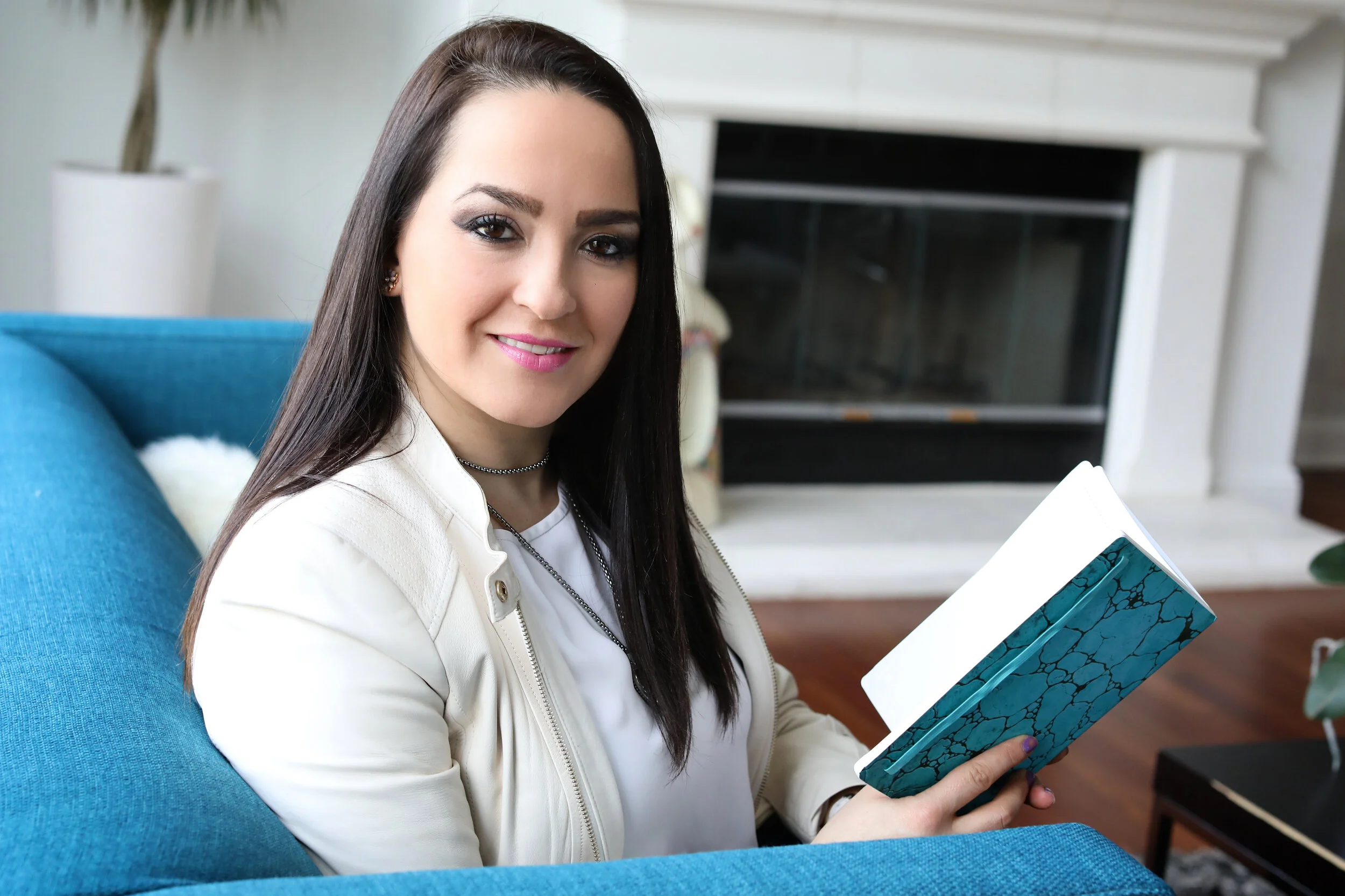
Jacqueline Camacho-Ruiz has had book tours cancelled, World Latina Day events, and even a historical flight recreating the Amelia Earhart journey cancelled because of COVID-19. However, her mission to live joyful from the inside out continues to push her to make the best of her circumstances.
Ep 10. Transcript
[theme music starts]
Alisa Manjarrez: Jacqueline Camacho-Ruiz lives out her mission to be joyful from the inside out and be a servant leader. She’s one of those people that walks the talk. At only 36 years old she speaks three languages, she’s published 16 books, she’s a CEO of a marketing company and a nonprofit, and she flies airplanes as a hobby.
This woman is incredible. She just recently gathered women from all over the world to celebrate international young Latina day, had them virtually speak all day long to empower young Latinas. And when you can step outside of your own personal journey and put a spotlight on other people, I think that really is servant leadership and Jacqueline’s done an excellent job doing that.
As you listen, I would challenge you not to compare yourself or your journey to hers, but instead think about how you might inspire other people along your path to dream bigger dreams.
[short musical break as theme fades out]
Jacqueline Camacho: First of all, thank you so much for having me on the show. I’m very excited to be here. I think that anytime that we can take a micro moment to elevate one another we create magic indeed.
Rosa Santos: What I want to hear, and this is something that we ask every single of our guests is, what would you say are some of the rules that you’ve broken to get here?
Jacqueline Camacho: I think one of the rules that I broke is the fact that I came to the States when I was 14 years old and I didn’t speak a word of English at the age of 23, just a few years later, I decided to create a marketing communications agency in English, and that is after I picked up English and German at 14.
So definitely defied the odds of, you know, why is a Mexican interested in German, number one, and why is a young Latina at the age of 23 creating a marketing communications firm working primarily with Caucasian CEOs? I think as people looked at me, they’re like, are you sure about this? Do you have what it takes?
And even though there were moments of doubt, I felt this relentless confidence inside of my heart to be able to share and add value to those people. So with that I’ve been in business for 14 years with a marketing communications agency and has been an incredible journey.
Merary Simeon: Congratulations. Now you have an inspiring story, and what you did to come here, not knowing the language, picking it up and opening your own business and being successful. What were those limiting beliefs that you had to put aside and kind of have resilience or conquer them to be able to be as successful as you are today?
Jacqueline Camacho: I think number one was the fact that I was young. I was Latina. I was seen as somebody that didn’t have any experience. So I used to kinda yearn, wanting to have like gray hair so that people would believe me.
I don’t know why. I’m like, I’m like, I know what I’m talking about, I promise. One time, actually, I was a marketing manager for a $10 million operation of Brazilian high end restaurants, and I was handling three properties. And this guy that has a big initiative in the Chicagoland area, he said, Hey, you know, I’m here to speak with a manager, the marketing manager, about this film festival that I’m doing. And I said, I am the marketing manager. How may I help you? He’s like, no, no, no. I mean, the manager. I’m like, I am the manager. And it’s interesting in hindsight, you know, looking back and 15 years later when I’ve, you know, accumulated and achieved all these amazing things and missions that have chosen me, you know, and, and become, uh, what I am today as far as, you know, speaking around the world and becoming a pilot and surviving cancer and starting another company and all those things.
I find this gentlemen, and he looks at me, he’s like, wow, you know? Like and I always remember that moment where he doubted that I had what it took or that I was a manager ‘cause I was so young and he didn’t believe that I was actually person in charge. So it’s interesting.
Rosa Santos: We walk through life having to overcome so many assumptions, especially us women, right, that others have on who we are and what we do. And as I was listening to you I was wondering, were there any assumptions that you yourself had of others as you went through all of this throughout your career that you all of a sudden had to think about twice?
Jacqueline Camacho: You know what, I grew up as the only girl, the youngest of my family, and we grew up in Mexico, kind of middle-class, just craving things, right? I mean, we used to go to the store and get apples, and it was like, oh, what a happy day, you know, having strawberries, and those were very rare, unusual days. So one of the misconceptions that I had is that, as I started learning the language here in the States, I was a teenager, and going to my friend’s house, I noticed that they had an abundance of like cereals and fruit on the table.
To me, that was something so rare and so unusual that you would actually have more apples than what you needed for the day, or that you would have three boxes of cereal instead of, you know, half of the box of cereal that everybody was sharing with the family.
So my assumption was that, these people were happy, like they were abundant and they were extremely happy. And what I realized is that they weren’t. That these things, and having what seemed to be abundance of food or, you know, cereal, whatever, fruit, that they didn’t, bring you happiness.
So I started searching for something that was deeper than that. And coincidentally, you know, I started reading when I was a little girl and one of the things that I’ve read was that you will achieve your dream based on how many people you help achieve their dreams. So as I started to think about this, and I started to become bilingual and understand English and be able to communicate, that was one of my main priorities. Like I needed to communicate so I can understand what their dreams were and be a catalyst for them, to be a dream catcher for them.
So as I was finding out that the fact that they had all these abundant things, started asking them about their dreams, I noticed that they were not fulfilled. So I took it upon myself to kind of go deeper and really use what I had learned as a little girl with all these amazing literature to bring happiness to those people around me, regardless of what they had or they didn’t have because I noticed that the deepest and the most important things were, you being connected to yourself and finding the joy within so that you can serve other people, and it was not based on what you had. And that was probably one of the biggest awakenings that I’m like, you know what, I don’t care if I don’t have anything.
If I have a serving heart and if I’m happy within myself, if I’m joyful, and if I have accumulated and capsulated my intellectual property and my knowledge, my value to other people, I know that there’ll always be a space for me in whatever situation, and I’ll find success by serving others.
Merary Simeon: This is such an important point and topic in just the way the world is happening around us today with COVID-19. First of all, how are you doing? How is this impacting you personally, and how are you able to, continue to use some of those tools that you just mentioned to impact the life of others as well?
Jacqueline Camacho: You know what? I feel like the situation, like many other situations that we’re not able to control, certainly creates a grief process where you go through denial and acceptance and all that. I think as this thing started to unravel, I started to go through those phases.
But for me, I mean, as an international speaker, pilot, business entrepreneur, a publishing house and so many other things that I do, I have to cancel a trip to South America, a keynote in Miami, a big huge event I had in New Jersey to big events that I had in Mexico, and the thing that hurt me the most is that I was part of an air race with only female pilots. We were going to cross the entire United States it’s the same race that Amelia Earhart did in 1929.
Rosa Santos: Oh
Jacqueline Camacho: 91 years later, we had four days, 2,400 miles, and eight stops, crossing the entire United States in June. And a few days ago I found out that he was canceled and my heart just shattered into a thousand pieces.
I love aviation with all my heart. Flying actually keeps me grounded, which sounds contradictory, but it’s the truth. It keeps me humble. So as I navigate through this new realities of canceling and relinquishing things that I’ve treasured in my heart for such a long time, I cannot help it, but feel that grief.
So I will tell you that I haven’t come out if it yet. I’m healing, but I am conscious as a pilot in commands that I use, you know, flying, and I use those techniques on the ground as well. I am finding micro moments of clarity and micro moments of innovation and creativity. So I can ponder what is happening and I can be the best of me and again, go back to my mission, which is to be joyful from the inside out and to be a servant leader. So that’s how I’m kind of coping with it. Some days are amazing, and some they suck. I mean, that’s the truth. Some days are too much.
As a CEO of two successful companies, as somebody that, a lot of people depend on, but I’m finding a lot of joy within these obscure moments. I’m finding, you know, creativity. I’m finding that I just created my second board game ,and that to do something like that, you need to be… you need to unleash your creative nature and your innovation. And this Saturday, I am celebrating a global young Latina day virtual celebration with 13 countries. And it is unlike anything you’ve seen before. It is such a beautiful initiative in that I was fired up to do this because of this pandemic. So some beautiful things are coming out of it.
Rosa Santos: I want to probe a little bit more, ‘cause this idea of these micro moments that you just described, what does that look like when you, when you think about these micro moments?
Jacqueline Camacho: So I am known for making up a lot of words, and that’s one of the things that I’ve been, sharing with people. A lot of times we seem to have this idea, this notion, that we label things by their macro impact, but oftentimes we overlook the beauty of those micro moments within that macro experience.
So for me sharing this beautiful nature of a micro moment is recognizing the presence of that particular moment. It’s also being extemporaneous in our gratitude. It’s knowing that you cannot take something and put a big fat label on it and say, this experience was bad. And I challenge people to digest that and say, well, the experience overall might’ve been an uncomfortable experience. But if we zoom in to look through those micro moments within that experience, I am certain that you can find a lot of beauty. So it’s about consciousness, it’s about presence, it’s about extemporaneous gratitude. And it’s about being able to grab onto something that is beautiful in itself and being able to expand on that. And that’s why I always share, this, just look at it through the lens of the micro moment and if you can find at least one micro-moment today, you’re on the right path, you’re on the right direction.
Merary Simeon: You talked about your experience coming here, your book tours, all these things. Can you give us an example on during a difficult time where you were able to find that micro moment that was positive and maybe jump started you to more innovative and bigger things?
Jacqueline Camacho: You know, I’m going to try to do this without crying because, there’s one particular micro moment that just marked my life forever, and that is when I was 23 years old. I had a five month old baby. I had just started my marketing agency and went to an Indian restaurant, ate an Indian spice, and it triggered two weeks of hospitals, 40 doctors interviewing me to finally end up being diagnosed with a rare condition that happens in 1 out of 150,000 people in this part of the world. And it was pre-cancer by my liver. This was the second time that I heard this word cancer associated with my body by the age of 23 in just two years.
So when the doctor comes in, and I found that they had to go to plan B, because he told me it was going to be an endoscopic surgery by my liver. I ended up realizing that I had tubes everywhere. They had completely open my abdominal area, removed my gallbladder, my bile ducts, cut the intestine in half connected intestine directly to the liver and created a makeshift digestive system based on that.
They found that that’s what they had to do in the circumstance, because I was a time bomb. I was going to die without even knowing why I died. And the doctor comes in and says, you are very lucky to be alive, number one, and two, we have three options here, one, you might be fed out of a tube for the rest of your life. Two, there’s a possibility that you might die in next two weeks as the bile leaks into your organs and disintegrates them. Or, three, you might be okay with this new digestive system. And I felt the devastation in my heart, I mean, like I… number one, I can’t die. I don’t have time for that right now ‘cause I just started my company, you know? I mean, there’s not an option. In the land of dreams, this is like what I’ve been dreaming my entire life.
And so as the doctor was walking away, that micro moment that I found in that this probably represents me to the T in my resiliency is that I looked at him and I said, doctor, thank you so much for that information, I do need to leave by next Thursday because I have finals in college and I’m graduating with honors. And he looked back and smiled and said, Jackie, you’re positive attitude saved you. And this was the second time that I heard that from my Western medicine doctor in two years.
So that micro moment allowed me to become aware, awake and alert to the sense of urgency to align with your joy and to serve others every single day of my life. And I decided that I was going to make every day count. I decided that I was going to be a catalyst to help other people achieve their dreams and that I was going to everybody that I encounter, that I was going to give them a little micro moment, a ray of sunshine, so that they know that they can achieve their dreams as well. And that’s what I’ve been doing.
Rosa Santos: Wow. Congratulations. I mean, with that in mind, and you said something about like being the dream catcher for others. I think now I see why and, where that is definitely coming from. And just leading others to create their own dreams so they live healthy, fruitful and joyful lives, right? Tell us a little bit about what, that means now when you think about being that dream catcher, and you mentioned this event that you have for a global Latina event that you’re hosting, and what would you say to others how they can become their dream catcher for others and infuse that, joy and that passion for living and being who you want to be and how you want to move forward?
What would you say to others at this time?
Jacqueline Camacho: I’ll take something from aviation. In aviation we always say that taking off is optional and landing in your dreams, or landing is mandatory, but I just added dreams because, as we become a tool for other people to achieve their dreams one of the things that I do is that I become consciously aware of the needs and the dreams of other people, that’s one. Second is that when I get, and this is another phrase that I created, when I get a divine download, which is an idea with an amazing feeling in my heart, I know that I have to manifest it, and I surrender to that mission, and I take every single step in order to align to that divine download and make it happen.
And a lot of times those divine downloads, they referred to other people. In this amazing journey when I get those divine downloads I kind of have this sense of urgency to make it happen. So I have had the honor of publishing 16 books of my own, and by the end of this year, I’ll have 22 published under my name.
I’m 36 years old. By a lot of standards a lot of people might say, well, how did you do that? I think that when you recognize that when you’re living your purpose time is completely irrelevant, and when you’re serving other people and when you get out of your own way to surrender to those divine downloads and you take action, and you do it with all your heart and all your might people will respond to that.
In response they will give themselves permission to dream bigger than they ever imagined. I, unbeknownst to me, through this desire of being a dream catcher, I have had the honor of creating the largest collection of Latina stories in the world in a book series. I’ve also created a nonprofit organization called The Fig Factor Foundation that celebrates their fourth consecutive year of young Latina day that started here in Chicago with one city, then three, then seven, then now the States, and then 13 countries. Sometimes it is surreal when you are aligned with your joy and that mission of yours. It is surreal to see how many things manifest around you and how many other dreams manifest for other people.
So those are some of the things that I do to pave the way to be a dream catcher, to have that sense of urgency, to have that sense of presence, to really be intentional about elevating the dreams of other people, most importantly, be authentic to you. Because in you being authentic, you’re allowing and elevating so many people around you.
Like when I became a pilot, people are like, holy mack, like you fly planes? I’m like, yeah, I didn’t even know I can do that. And now, you know, I’ve given scholarships to young Latinos. I’ve taken like 60 people up. Six women are in the process of getting their license, cause I took him flying. So I didn’t do anything extraordinary.
I just followed my own calling, and I became a pathway for other people to discover that this might be something for them too.
Rosa Santos: It’s like by opening up possibility for yourself you’re passing it forward and opening it for others. I really, really like that.
Merary Simeon: First of all, thank you for sharing that, especially during these difficult times. It’s hard for people to stay positive and for them to be able to hear these examples, I think it’s timely and just what you said about being positive saved your life I just challenge our listeners to, think about their day and what is that one thing they could be positive about, because it may make a difference of their health, their work, their personal relationships.
It can make a difference just in anything in their lives. So thank you so much for sharing that. I also wanted to ask you, I know that you’re the CEO, and you have great business experience, but there are not a lot of women that are racing pilots. So why the pilot? And it sounds like you love it and it means a lot to you, because out of everything that’s going on, this is what shattered you. So why the pilot?
Jacqueline Camacho: You know what, people ask me, did you dream about becoming a pilot since you were a little girl? And the answer is no. I never in my wildest dream thought that I could be a pilot in command of an aircraft. Number one, because I wasn’t even in the category of dreams when I was in Mexico as a poor family, as a middle class family.
So it was a divine download. I had the opportunity to do some marketing for an aviation school, and I had taken a couple of flights with them. One day I got invited to a U.S. military base on the Mississippi River on an island between Illinois and Iowa. I had an event for my seventh book in another part of another state, and I get invited by the U.S. military and said, I can’t say no.
I was a keynote speaker for their Hispanic heritage month celebration. So I called my client and I said, would you give me a ride? So he flew me to this island, picked up by a Sergeant, you know, standing ovation by 300 soldiers in uniform. They paid me a lot of money. I came back and I was like, I got into my little sports car.
I had everything ready to go, and I made it at my event just on time. And I was like, wow. I started investigating sectionals, which are basically maps, three-dimensional maps for the air. And I was like, wow, I didn’t know there were so many airports. That started to awaken something within me, but I never in my wildest dreams imagined that the decision to become a pilot was going to change my life, and it was going to be one of the hardest things that I’ve ever done in my entire life.
But I never gave up, because it came from a divine download. You know, I said, I’m going to be a pilot and I’m not giving up. And over 80% of the people that begin their flying lessons give up. And when the FAA examiner, after a seven hour test, and after landing 4 times, emergency landings and doing all maneuvers to perfection at 3 to 5,000 feet in the air, we came back and he said, you are a pilot in command.
Merary Simeon: Wow.
Jacqueline Camacho: I’ll never forget that moment. And ever since then if I ever had any doubt that I could do something, if I had a doubt that I could achieve something, I just look up to the sky and say, wow, this unlimited beautiful ability to zoom out of a situation and then zoom in when I’m on the ground, it’s such a privilege.
I take awesome responsibility in being a pilot. I mean, one of the few Latinas sports airplane pilots in the United States, and it keeps me grounded, as weird as it sounds, you know, it keeps me humble. It keeps me grounded. It keeps me real. And on my toes.
[theme music starts]
I am a pilotina. That’s another one of my words.
Rosa Santos: Can you let our listeners know how they can find you?
Jacqueline Camacho: Yes. Instagram: pilotina underscore official. Facebook, Jacqueline Camacho. LinkedIn, Jacqueline Camacho Ruiz. And I love to connect with all of you and cool dream amazing things and products and an incredible magic in 2020 and beyond.
[short musical break as theme fades out]
Rosa Santos: I think the energy just completely to me aback in terms of having that stamina, that determination, that ability to get going and get over some incredible challenges that she’s faced personally and what she continues to accomplish is just absolutely amazing and really makes you reflect us to even how you’re conducting your own life, right? And whether you’re making the most out of it, especially in the times that we’re in right now.
Merary Simeon: One of the things that she said is your positive attitude saved you. And just imagine in how many situations it may not even have to be that you’re in the hospital, but just things that are going on, whether it’s at work, your personal life, health, just the fact of what a difference it makes in you personally, you yourself, something that you can be accountable for, to be positive in a situation when things may be going wrong around you. I thought that was very impactful and to your point, it makes you, it makes you think of, wow, I need to be a little bit more positive in some other things, right? I mean, the things that she overcame in her life, right, from her… the sickness and just, yeah, just powerful conversation.
Rosa Santos: Yeah, no, and I really like what you’re saying and just picking up on that, because it’s true. I think we tend… we’re so good as human beings, right, to always focus on what’s wrong, right. What’s wrong? What’s not working? What’s the problem that we need to resolve, et cetera… But it’s harder for all of us to really veer towards a possible or positive… possible and positive outcome,and how you even frame yourself, how even you frame your situation in a really positive forward looking and outwardly looking in terms of, and I, and I, and I know I say this quite a bit in terms of possibility and more of like, what if it’s different? What if I can actually make a different choice? What if I wake up in the morning wanting to be happy, right?
The way that you conduct yourself and the way that you irradiate that energy around yourself to others is completely different. And it’s interesting ‘cause I think we’re seeing a lot of that now, a lot of that focus, even when you watch the news now, I know there’s a lot of bad going on, but I think we’re just starting to pay attention to that.
And I think she talked about that in terms of those micro moments and enjoying being with who and what you are around and having that positivity and that forward looking in mind and just enjoying the moment.
Merary Simeon: Absolutely, I mean, she said to add to the micro moments, she said, you’re the pilot in command and it’s all about being positive. Just like you said, I’m going to wake up in the morning and decide to be happy. That’s you being in command on how you’re going to spend your day, regardless of what happens around you.
The world may be falling apart, but you’re going to choose to smile today. So being the pilot in command, I thought was powerful, which then helps you appreciate those micro moments that she talked about where you can find joy.
Rosa Santos: I am going to land the plane, right?
Merary Simeon: Yes, I love that.
Rosa Santos: I love that. It’s like I’m going to land the plane. And I was thinking like, oh, if I only knew where to land it, right? And sometimes we actually need to think about not just staying positive, and choosing, and making that choice of joy versus sadness, right, even allowing it. Because sadness is okay. You need to get sad in order to then see the joy and the positivity, but at the same time, it’s creating that goal, which is taking control and landing the plane. And that’s how it really resonated with me. You need to know where you’re going so you can actually land to the plane.
Merary Simeon: Being the pilot in command, not only are you able to fulfill your dreams, but you’re able to help others fulfill their dreams. And she talked about being a dream catcher, and I was just like, whoa, a dream catcher.
Just imagine that, because every day how many people come and talk to us about their dreams, and how are we able, not to just catch their dreams, but give them that positive attitude or just help them get out of that funk to be able to achieve their dreams? So the moment when you are, or when I am being positive, we’re actually helping somebody else without realizing it.
Rosa Santos: Right. For me, the insight that I got from her was how proud she actually is of who she is, what she’s done, and what she intends to do in the future, right? And she’s unapologetically proud of that. And she’s unapologetically proud of conducting herself in that way because she feels that by doing that, she’s helping others see what else they can be doing that may not feel that they can actually, you know, grab it and run with it.
And that kind of tandem of, yes, I am going to catch your dream, but I’m going to release it so you can actually act on it. And by the way, especially for multicultural women, sometimes we feel that we cannot boast about what we do or what we’ve accomplished or where we come from and where we’re getting, right?
And we kind of quietly tiptoe around it and maybe someone will notice and she’s like, no, no, look at what I’ve done, right? I’ve got two companies I’ve overcome, you know, serious illness in my life. I was able to get my pilot license. I mean, racing pilot. I’m building these games. I’m doing all this stuff, and I want you to do it as well, ‘cause you can do it. If I can do it, you can do it, right? I thought that that was like a really key insight that it is okay to be unapologetically proud of who you are and how you conduct yourself and how you fulfill your dreams and your goals in life.
Merary Simeon: Isn’t that what we’re trying to do here? Showcase all the great things that multicultural women are doing out there? We have to be proud of our accomplishments, and we have to continue to look in and think about where are we going to land that plane?
But we can only do that if we find that joy in those micro moments, because life is not going to be easy every day, right? The big things are going to come at us, whether it’s, you know, COVID or family issues or work issues. There will always be those things around us, but if we let that govern how we live our lives, creativity will not be present in a lot of those situations. She took this time despite her book tour being canceled, despite her amazing race that was supposed to happen in June. She just decided to look at it like, well, now I have this time, let me be creative. What am I going to do? And she created her second board game. It’s just like, wow, look what happens when you really… instead of thinking negative about all this, you say, well, let me see what I can do to make it better, right? So it’s, it’s just so powerful what the mind, the human mind, can do when you actually know where you want to land.
Rosa Santos: Yeah. I think it is okay just to be who you are in the moment in which you are.
And I think if you are managing to do one thing that is going to bring you joy, one thing that it’s gonna keep you connected to somebody and open that possibility for somebody else and lift somebody up and that’s the only thing you do, that’s great.
Merary Simeon: Being able to find those micro moments can help you with that one thing. So one example, I would say right now for many women that have children or women that don’t have children in their home alone it could feel overwhelming whether you have a family at home or you don’t.
Some of those micro moments that I’m getting with the kids right now, even though it may seem really crazy at times, when I think about it, I’m like, whoa, I would have not had that experience to understand my child more, or to even get to have this wonderful conversation with my husband.
Even though five minutes later they may be driving me crazy. But when you start thinking about those micro moments that would have not happened if life was normal or as usual. I think we can all find that, right? And like you said, there might be something that day, hey, you just take a nice bubble bath, right?
I think more than ever, we have to be there for our listeners and we have to showcase the amazing things that multicultural women continue to do despite this pandemic.
[theme music starts]
And it just shows that no matter what’s out there, we are still the pilots in command of who we are. We can do this and we will get through.
[short musical break]
Alisa Manjarrez: That was Rosa Santos and Merary Simeon interviewing Jacqueline Camacho-Ruiz, CEO of JJR Marketing and Fig Factor Media. For more inspiring stories, please subscribe on Apple, Spotify, or wherever you listen to podcasts. If you have a guest you’d love to hear on the show, send us a DM on Instagram at Color Forward Pod.
I’m Alisa Manjarrez, producer of Color Forward. Thanks for joining us and please leave us a review.