
12. Zoe Dowling, Ph.D., Cultural Commentator on Planting Seeds for Growth
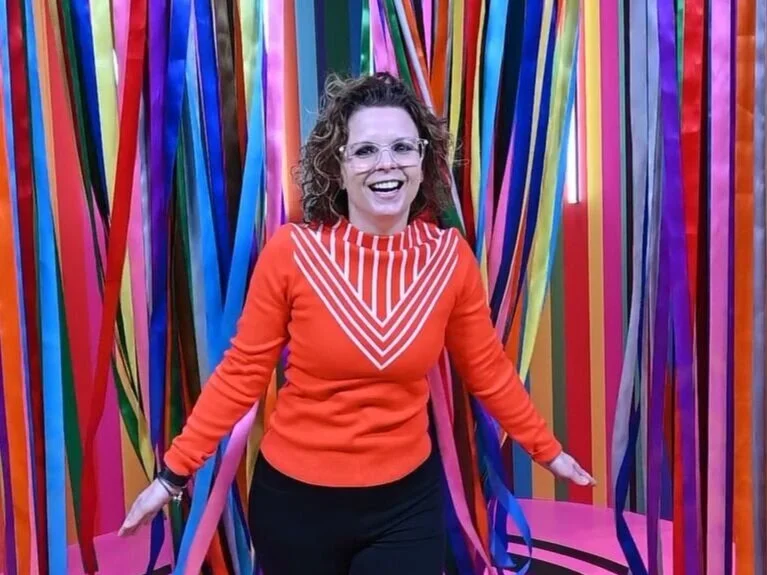
With a Ph.D. in Sociology and a career in market research, Zoe Dowling brings a multicultural perspective on adapting to change and being patient with ourselves and others in our journeys of growth.
Ep 12. Transcript
[theme music starts]
Alisa Manjarrez: When you’re experiencing a worldwide pandemic, sometimes it’s good to get a worldwide perspective on how to live out your day to day.
When you listen to today’s episode with Zoe Dowling, Ph.D. you’re going to hear, although she works in research and she has a lot of insight around the way people think and the way people are, she brings it all together by showing us that these are the times that we can really plant seeds for growth. Bringing everyone’s experiences into your own life so that you can have a greater understanding and a greater empathy for what’s going on.
So I love how she talks about bringing a lot of resources and a lot of information in and distilling it, thinking about growth and innovation.
[short musical break as theme fades out]
Rosa Santos: As a multicultural woman you’ve moved a lot, you grew up in one place, and then you’ve moved and left in various parts of the world before you landed or settled in L.A. where you are right now. How has that helped in your opinion?
Zoe Dowling: I actually grew up part in Scotland, I did a little stint in Ireland, and then my parents moved to South Africa, so I spent a good 12 years in total in South Africa, but I did quite a bit of schooling there. Finished school in Scotland, and you get the pattern going on here.
I’ve moved around an awful lot, and during those very, very formative years, one of the things that happened to me, and I desperately wanted to do it, I just didn’t know that the books that I were reading were fiction and not reality, I desperately wanted to go to boarding school. Yeah. It’s nothing like they have in the books.
It’s just nothing. I mean, just put that right up there. I went and I cried my eyes out for six months. I’d phone my parents sobbing because I just wanted to come home. They really weren’t being terrible and keeping me there, ‘cause it was, in the end, it was the best experience for me because once I got over that, I was so close to my parents and very close to my mother.
And once I got over that, sort of just detaching a little bit, in a way that was healthy, I think. And so it creates a resilience. You stand on your own two feet and the same when I’ve moved from one country to the next, or I’ve moved from one school to the next, and then one job to the next is that you have to find something within yourself.
People are there for you, but at the end of the day, you’re the one that finds the strength, the inner strength to gather yourself up and move on. And that’s what we’re all doing right now and it’s testing all of us to dig deep.
Rosa Santos: What I want to know is not just how you got to be here but what did you have to do to get here in terms of some key rule that you had to break in order to enable you to become the Zoe that you are today?
Zoe Dowling: I don’t know if it’s breaking rules, maybe it’s being less conventional. The first thing that springs to mind is that, I enjoyed university a lot. So when I went when I was 18 I stayed until I was about 28 or 30, so I did a decade in the university world. And I maybe shouldn’t admit to it, but I just find it really fun and I wasn’t ready to give up being the eternal student.
I mean, that’s something I can look back now, almost two decades later, sort of look in my twenties and thinking I learned so much from it, obviously, and it’s contributed to where I am and what I do today because it was growth of the mind.
I started in sociology and followed that through and thinking about culture and thinking about, I’m a researcher, so how do we ask questions of people? And so all of these things definitely came together, but it was a little bit of a rule break because there’s common sense was you should go off and get a job.
And it very much defines me because of the experiences that I had that was very different for many people in their twenties because it was in an institution and just the time I took to think about certain things.
Merary Simeon: How do you think that’s helped you in your career?
Zoe Dowling: I think initially it wasn’t so much a help as a hindrance because when you then enter the job force. And then I remember very distinctly when I finished my PhD and was applying for jobs, people look at you like you’re overqualified yet you’re under experienced. And it’s not that all I did was sit and studied. I lectured, I tutored, I did adult education classes on computer software, but at the end of the day, it’s not what you think about in the commercial world.
And so A: I was over qualified. And B: under experience, and so people don’t really know where to place you. That said, I think as my career has gone on and I have built up experience within the industry, within the commercial world, it’s made me exceptionally resourceful.
I’m used to there not being a path ahead and used to figuring things out because that is what you do, particularly on a PhD. The PhD I did is not like the American system where you do a lot of coursework and that culminate into your dissertation, which is, I’m going to say a shorter piece.
And it’s what I bring to any role is, okay, there’s not a plan for this. Well, it’s okay, we’ll figure that out. Which is good, because certainly, in today’s world, we need it.
I always had this kind of double whammy of I didn’t know anybody in Los Angeles. I didn’t have that network of a school that I’d been to in the US and I was just kind of randomly applying for jobs that I saw online.
And so you definitely feel at a disadvantage, but I think everybody when they’re applying for a job, feels at a disadvantage. There’s a lot of perception that goes in there. There’s a lot of your fears on, am I going to be good enough for this? You look at the job description, and I know for a woman in particular, we kind of, can I check off all of these little boxes here and, and can I actually do this?
But I put my head down and I learned a new craft. I mean, I’d gone from doing more sociological research and in the academic world to, to ad testing and really liked it. It’s a different world. It’s a different type of research and it’s something… I’d never been in the marketing type area before.
And so I just put my head down and learned. And so that was how I got to overcome my fears of, can I do this? And then found that I was growing quite quickly. And so it got to the point where I said, I can do more than this. And in essence I’m bored, and by the time I’d finished some of the team I joined, I kind of just kept moving up.
And in essence they were able to create a role for me that I just became the R&D innovation manager. And then I got promoted to VP, and then eventually I got promoted to SVP. I think it took me a long time to really find that confidence in that growth and that belief that you’ve got to figure this out.
You are good enough. You are able to do what’s being asked of you, and overcoming that, imposter syndrome. And so it’s the fake it till you make it, but you still have these internal struggles going on.
Merary Simeon: You are a very, very successful woman and we’re just so happy to have you here. I wanted to ask you, within your success right now, how are you personally dealing in light of this pandemic?
Zoe Dowling: It’s challenging in ways that the mind just can’t comprehend and everything feels so normal, yet nothing’s normal. And we go about our day to day, like I feel grateful to be in employment, to have a roof over my head, to have that kind of financial stability.
There’s food in the refrigerator and I have a good supplier of toilet rolls, so, all’s good. You know, the essentials are covered. And yet you also go through your mind, like you can feel how you are in a much better position than people like… I feel for people with young children, because I think this is exceptionally hard for them.
I’m seeing it from my sister, I’m seeing from friends, it’s just a lot to manage and with managing space as well, and people not being able to get outside. Also managing careers and work and I just kind of feel… well, I’ve actually, as far as if you’ve gotta be inside I’m doing pretty okay.
I think everybody’s got these struggles about the situation they’re in. Where, like in my case it’s, what am I feeling anxious about? Or why am I feeling frustrated or angry with the world?
And it’s because every decision that we have to make, like things, should I go to the grocery store or not? It’s not normally something you think twice about. It’s not something you think, is this going to damage my health? Is this safe to do? Like there’s a lot of pressure to do things quickly. So everybody’s dealing with their own world. And I think what I’ve learned through it is to connect with others. I think that’s incredibly important. I was speaking to another friend of mine yesterday, and as an introvert, I’m an introvert, she’s an introvert, and we were both saying how exhausting it is to be doing all these video calls and like speaking to three or four different people in a week. It’s like, I wouldn’t normally do that once a week. I’m so tired. (laughter)
Rosa Santos: (laughing) Yeah.
Zoe Dowling: That connection is really important. Also talking about how you’re feeling and being honest about it. Everybody’s got their own struggles, but it’s okay to feel your own, so it’s good to feel it. It’s really good to feel it and just stay as sane as you can. I think that’s… and exercise. I’ve got a Peloton bike and it’s kept me sane. That is my sanity.
Merary Simeon: Is there any advice or anything that you’ve seen that people can do to maybe just start thinking of the future versus dealing with the day to day? And kind of start preparing ourselves for that?
Zoe Dowling: It’s a tough balance. I don’t know about everybody else, but it’s exhausting. Like just the day to day. It’s extremely tiring. And I think also don’t feel too hard on yourself if it’s not coming right away, there’s really going to be time. But I think it is great to plant seeds. And I would say with some of the conversations that I’ve been having with friends that I’m reconnecting with I’m speaking to people I haven’t spoken to in five years and it’s been wonderful.
But then you also hear what are they thinking about? What are they doing? What ideas are they mulling over and talking about and, and just thinking, well, and I think that is where the seeds of what’s possible is going to emerge for many of us. I know that there’s some people that are just, this is it, they can sit down and write that book or they can, I have this idea, this is my time to write my business plan.
And they’re energized by it and that’s amazing. I think for many, I’m going to speak for myself, and I think there’ll be many people like that, it’s the balance between managing the day to day, getting into whatever routine this is right now, but still every now and again, just thinking about the opportunities and just being open to what you’re hearing from other people. Because I think those seeds are being formed and planted right now. And I think that’s what’s going to come to fruition in the coming months.
So I do think that this is a good opportunity to expand what we normally look at. Maybe it’s just understanding different elements within culture. Maybe it’s understanding, you know, financial markets, or if you thought about starting a new business. I think that reading books or watching movies, but genres you would not normally go for, because the idea is when you just do things that you don’t normally it opens up different worlds and thoughts to you. And so that would be my suggestion is maybe just whatever way interest you in whatever way, if it’s bite size chunks, great. But have a look at things that you wouldn’t normally do. Again, those seeds, it’s all seeds that’s being planted.
Rosa Santos: This idea of growth and moving forward, it’s so important, and at the same time, I think sometimes it’s difficult to articulate. How can we open up ourselves to growth?
Zoe Dowling: Growth is a very interesting one, because often we will use markets such as an educational attainment, such as maybe a promotion to say, I’ve grown. But in reality, that’s such a small fraction of what our growth really is. It does sometimes take stepping away from your situation to understand how you’ve grown.
I think that sometimes requires us to be very introspective, but take the time to do it. Like, you know what, this is a great time. This is a great time to maybe do some brainstorming and say, what did I do in the last year? And you might start with a blank piece of paper and you might have a blank piece of paper for a few days, because we forget. And I know I was terrible at this. I’m just always so hard on myself, because like I haven’t achieved anything, because I didn’t feel like I had the measurements.
So if you brought in a $5 million account, everybody’s going to say, Hey, you’ve achieved something. But that again, isn’t the types of achievement just, Hey, bringing a group of people together and actually creating a support group within your office environment. That’s an achievement. What I’m trying to say is we’ve got to think about our achievements in different ways. And then that will also help you think about the growth.
And that’s why I think it is really good talk and then just write down anything, and maybe take a week, two weeks. We’ve got time right now to try and think about what is our achievements and then also likewise, what would I like to do? How would I like to push myself and how am I going to get there?
Rosa Santos: You actually just reminded me of something that we forget, which is fundamental in terms of our brain wiring, which is self reflection. That meta learning that we don’t get to do doesn’t happen if you don’t self reflect, and by doing so, it’s the only way that we can go back and then grasp and ideate new ways to advance and grow and move forward.
Zoe Dowling: Just to build on that very briefly, I do think it’s an… it is incredibly important to think about growth holistically like that. How you’ve grown, say as a daughter, if I think about how I’m connecting with my mother now, and I know that maybe having more empathy or more patience, that is a good thing because that helps me as a person overall.
And that will translate into what I do in a professional front as well. It’s not our professional selves or personal selves as a wife, as a daughter, as a whatever labels we’re sticking ourselves. We are people and we grow in different ways and we grow in strength and these are all important and we just… it makes us better as we move through life.
Merary Simeon: One of the things that we always talk about is what can we do to support each other? Not just during these tough times, but what are some of the things that we could do to elevate the voice of women, or in this case, even the people in the frontline that need their voice to be heard?
Zoe Dowling: The word that came to my mind was empathy. We have to have empathy with one another. We have to understand what people are going through. It might not be what you’re going through. And then in their cases, I’m so grateful, I’m so grateful of what people on the front lines are doing from medical and first responders, but also even the grocery stores and the people keeping our essential businesses going.
So building an empathy and an understanding, because when you do that, you can start to understand what they might need or how you can help or maybe that’s just like I need an emotional support, saying thank you.
So I think that that’s one element. And in terms of helping ourselves, helping each other, helping other woman, helping other people in general, again, it’s that connection. It’s talking to people and listening to, what they might need, or spontaneously thinking, “oh wait, if I connect that person and that person, they might have a great conversation.” And who knows where that’s going to go.
And particularly freelancers have been hit very hard by just such sudden shifts and not really knowing where to look and so I’m thinking, well, actually have you considered X, Y, Z, because that industry is doing particularly well. I have a sense where I’m always trying to can I connect, can I help?
Rosa Santos: What role do you see us as women and especially multicultural women in that next reality?
Zoe Dowling: There’s an article that I’ve seen circulated. It was showing the leaders that are doing well in this time, and it’s all the women. And I’m such a fan of, for example, the New Zealand prime minister.
I follow her on Instagram. I’ve be reading just about how she’s dealt with this from day one, and that I was even… I even read a sort of analysis on just she’s… how she’s getting everything right. And I don’t believe that she’s just playing by a playbook. She’s being human. She is talking to people. This is decisive action. They alert stages that they started out with, but she did it in a way that allowed everybody to follow. Okay, there’s a plan that’s being followed. We don’t need to panic. We don’t need worry so much. We’re being kept safe.
And I think that is what woman leadership looks like as well. We’ve had to conform more and rather than being who we are. And I think what we’re seeing now coming through is women being women and leading very successfully. And I hope that that is an inspiration, that that is something that inspires our younger generations and it doesn’t matter what age you are, there’s always time to, grasp it and go.
So that’s what I hope. And it’s nice to see that there’s more visibility.
[short musical break transitions to recap]
Merary Simeon: It was so nice to have Zoe on our podcast today. One of the things, Rosa, that sparkled for me was her definition of growth. So many of us sometimes think of growth as a promotion, our economic status. It could even be marriage or kids, right? When in reality, I love the way that she, put it simply, let’s look at it from a holistic approach. Who are you and how are you growing as a friend? Even as a daughter or an executive, a mother, a sister? But just being able to look at yourself and growth from a holistic approach, to me, is so powerful because maybe what’s most important to you is being a great daughter. And you’ve got to sometimes lean back and say, have I grown as a daughter or as a friend?
Rosa Santos: What really resonated for me, that I think a lot of listeners as well might have a take on is, it’s really how we go through life exercising a flexibility muscle. And sometimes for those of us who have worked and lived in so many different countries that we have, and I think she alluded to, this idea of you might be a bystander, as a cultural anthropologist, if we can name it’s out way. And I think she alluded to it, right? And you don’t necessarily have to have lived and worked in a lot of different countries to sometimes feel a little bit like that. And I think us as multicultural women, maybe we can take that by-standing position and look into the situation like a third eye, and then make a choice as to where you want to act.
Merary Simeon: So many times we ingrain in ourselves, it has to be this way. And being able to be flexible even about our thoughts or the moves we make to get to where we are or where we want to be, it’s critical and it’s just powerful to think like, okay, maybe I wanted to get there in four years, but it’s going to take me five or it’s gonna take me three and I’m going to do it differently. It’s okay. It’s okay to be flexible and change your mind on how do you get there?
She mentioned about staying in school longer, that’s okay. If that’s what made her happy and it made her even better and stronger in her growth, and where she is today in a higher position, it’s okay to change your plan along the way and be flexible and be okay with it.
Rosa Santos: Sometimes we run so fast that we might miss opportunities and we might miss the opportunity to prove somebody that you can do what they might think you cannot.
She was overqualified but didn’t have the experience, right, or the expertise. All of us have heard in some way or another, some of those tags that somebody else puts on us and it’s like, yeah, I get it. And if you just take that for what it is, then that can paralyze us, and what I liked about Zoe was like, Okay, I get it. Let me just show you. Just give me the opportunity and I’ll show you I can do it. And we need to find those moments where, yeah, we can prove, not just to others, but to ourselves, that we can do things that we didn’t think were possible.
Merary Simeon: She had to believe in herself. She said, I’m going to ask for this, and I may not know it all, but I know I can do it. And just that piece, just to believe in herself that she could do it even if she didn’t have it all together or knew how it was going to happen. Just being positive and believing in yourself is such a powerful thing that we can do for ourselves.
Because it can help us and give us that strength or that fire that we need or that wind that we need to move us forward to the next level. Something as simply as saying, I can do this.
Rosa Santos: And again, redefining or reframing growth for ourselves is ever so important. And when she talked about getting out of your own bubble and what you feel super comfortable with and really challenge yourself. Am I really growing? Who else or what else do I need to be reading? And I think she provided some interesting ideas.
Reading something that you may not have thought about or learn about, you know, how to maybe file your own tax returns this year. And I think it’s one of those things that will keep us forever young, as well. And in that life journey that we’re all on, that we don’t compromise, that we don’t stagnate, that we continue to exercise that curiosity that we had when we were children that I think as we grow older for one reason or another, we, stop. We stop being curious. We stop inquiring and asking bigger questions.
Merary Simeon: And just something as simple as reaching out to somebody else. They can be planting seeds of innovation on you without you even realizing it. Something as simple as you and I having this conversation and you’re telling me about a book you’re reading that I’m like, huh, I never thought about that. I may try that.
Or I don’t have time to do A, B, C, and D, and you’re telling me how you’re doing it. And that may motivate me right there to do it. So sometimes we don’t realize that what we’re saying and what we’re speaking, we’re actually planting seeds of curiosity or innovation in somebody else.
And she mentioned how that was important especially being an introvert.
[theme music starts]
You can plant seeds in somebody or they can plant seeds of creativity in you, and I thought that was just so powerful. You may not even know how you’re impacting somebody, but rest assured you are.
[short musical break]
Alisa Manjarrez: That was Rosa Santos and Merary Simeon interviewing Zoe Dowling, Ph.D. SVP of Research at FocusVision. For more inspiring stories, please subscribe on Apple, Spotify, or wherever you listen to podcasts. If you have a guest you’d love to hear on the show, send us a DM on Instagram @ColorForwardPod.
I’m Alisa Manjarrez, producer of Color Forward. Thanks for joining us and please leave us a review.
[theme music ends]