
13. Shonna Dorsey, Tech Advocate on Being Fearless
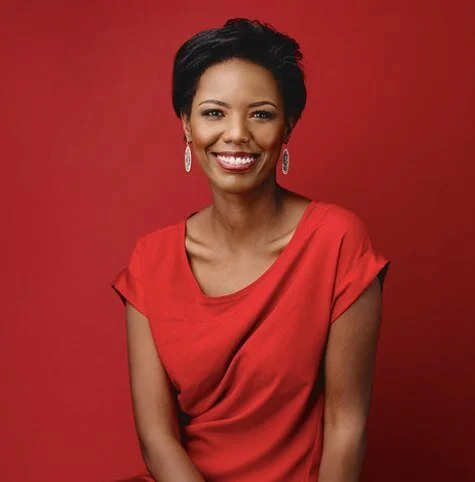
Being a woman of color in tech isn’t so much about the label; Shonna Dorsey tells us it’s really about embracing who you are as an individual. And as an individual, she likes to take risks and tackle challenges, unafraid of failure.
Ep 13. Transcript
[theme music starts]
Alisa Manjarrez: Have you ever seen the movie Meet the Robinsons? It’s a Disney movie and it’s about this little boy who’s an inventor. And he goes to this family’s house, they ask him to fix something, he completely messes up, he looks up, apologizing and they all shout “Yay! You failed! Good job!”
And they teach him “keep moving forward.”
And that’s exactly what Shonna Dorsey’s episode is about today. She walks into failure fearlessly and she talks about the ability to get comfortable with the uncomfortable.
Rosa could not make it for this episode so it is me and Merary interviewing Shonna. I hope you enjoy it.
[short musical break as theme fades out]
Shonna Dorsey: I feel like I just have a high level of comfort with just trying things out just to see how they go and if they don’t work out I’m okay with that. So I guess my fear of failure is pretty low, and that’s a huge asset, in my opinion.
Alisa Manjarrez: But where do you think that came from?
Shonna Dorsey: Living life. I’m in my 40’s now, so I think if I were younger it would be different, but just being in my 40’s and having had multiple career transitions, especially in tech, and all of that, I’ve just been like, okay, so the biggest thing that will help me set myself apart and be more comfortable is if I am comfortable with failure. Because the people that are making it are totally good with that. They’re comfortable with failing. Obviously they love success, but when they fail it isn’t the end. And that’s the thing that I’ve had to accept and kind of embrace.
Merary Simeon: Being a woman in tech is difficult as it is. Being a woman of color in tech, can you tell us a little bit more about that and how have you continued to achieve your success? And even how do you inspire other women? Because what you’re doing is amazing. And why IT? How did you get there? And just enlighten us with all the great things that you’re currently doing.
Shonna Dorsey: So the tricky part about being a woman of color in tech for me is that I’m also an individual. So I happen to be a woman. I happen to be a woman of color. But I also happen to have my own individual way of showing up in this world. And from what I’ve experienced it seems that I enjoy some sort of risk-taking and some sort of challenging barriers or obstacles and the great thing about that is that I happen to be a woman of color in tech because there are so many barriers.
Merary Simeon: I love it.
Alisa Manjarrez: You’re like barriers? I got this.
Shonna Dorsey: I think it’s fun.
Alisa Manjarrez: Bring it.
Shonna Dorsey: It sucks at times for sure, but at the same time, I found, actually, the things that I’m able to overcome make it easier for other people to come behind me.
So I’m like, Oh my gosh, well this is a win-win. I actually enjoy this. And if I can make it easier for people who come behind me, great. They can take whatever I do or leave it. I mean, my advice is not always great. I kinda just feel like the spirit of innovation and fearlessness is within me and I just go for things that I believe in.
I don’t know where that came from. My parents are very intelligent people and very supportive, which is amazing to this day. So my mom recently went through a cancer battle, but she has remained the most positive person I’ve ever met.
And she’s been that way my entire life. It’s fantastic to me that this person can go through something so difficult and in her perspective and the way that she approaches life is her goal is to not make it look like her life or her experiences are not anyone’s burdens.
And I’ve definitely taken that on in my own life. I’m kind of like, whatever comes my way, I will just look at the information I have in front of me and make a decision about what I need to do next. And that’s kind of it. It sounds so simple, but that’s actually all I do.
Alisa Manjarrez: It sounds like what you’ve taken from your mom is consistency. Like you said, that she’s been a positive influence your whole life. And even when she got cancer, she was still positive and what you’re taking away is remaining the same no matter what comes at you.
Shonna Dorsey: So true. She is definitely like consistently, all right, so family, here’s what’s going on with me, and here’s what I’m going to do next. I’m like, perfect. We know the direction we’re heading and we’re not anxious. We might be concerned and worried, but we know where we’re heading.
Merary Simeon: So can you tell us how this pandemic is affecting either you directly or the business and how have you dealt with it?
Shonna Dorsey: About a month ago our CEO at Mutual of Omaha, where I work, let us know that there was a positive test case in Omaha about a month ago. So they decided to close down our offices in town and closed down by like, Hey, everybody needs to work from home as of tomorrow.
I had to immediately switch from going to an office to working remotely, which is no big deal. I was running a startup for three years where I worked out of coffee shops, so that was totally fine. But what you don’t realize is that over like the course of several weeks it’s just challenging to work on your own, because it’s not like I can go to coffee shops and hang with other people. I’m like by myself regularly, so I have come up with different ways to stay engaged. I definitely love social media, as you all probably have seen. One of the little projects I came up with was I was like, well, what if I asked parents who are at home with their kids…
I don’t have kids. For people who do have kids at home, I know that that’s not always the easiest, but I’m like, what if I could send these parents 20 bucks to buy their kids something? If they send me a photo on Facebook of something their kids drew like just 10 photos, whatever.
So I totally did that. So they all sent me photos. I’m like, don’t be mailing stuff to me. I’ll just print them off on Snapfish or something. They’re all on my wall right now and it looks so cute. I’ll send you a photo of this later. But I just like to think of different just ways that are encouraging to me. So I am aware of what’s going on. I do pay attention to what people say in their fears and, and all that. I keep people in my thoughts and prayers for sure. My goal personally is just not to worry too much about things I can’t control. Like COVID came up and now we’re like, Oh my gosh, the world’s in chaos. And I’m like, well, the world’s always in chaos. It just so happens that we happen to have this one thing that we can assign something to, but nothing is certain. That’s the reality of life, period. You don’t know when it’s over.
Merary Simeon: I wonder if you could tell us, how did you fall in love with tech and what advice would you give women, especially women of color, who are thinking about it?
Shonna Dorsey: I would say the opportunities are great. The space is difficult though. So if you look at the trends, especially since the early eighties, the numbers of women in tech have dropped significantly over time, and now they’re starting to trend the other way, but it’s also a slow trend. So I would say that opportunities are great. Look for good mentors. They can be men or women. They don’t have to be women. They don’t have to be women of the same race as you either. Look for those who are willing to support and invest in you. That’s extremely important.
They do exist. I mean, I found them in my career and I’ve been in this space for over 20 years. So they do exist. People do want to help you and people want to support you being successful.
I will say like, this was back in 2010, I was a masters student at University of Nebraska, and I took this capstone course where I worked with this agency that worked with kids who were victims of child abuse.
And our class was tasked with creating this prototype application to help this agency store videos of these victim interviews so the kids wouldn’t have to be interviewed multiple times. Which as you can imagine, is traumatizing to have to tell your story over and over again. And I remember going through that 15-week course, getting to a point where the people in that class built an application that worked and it was basically like a private YouTube with a login and auditing capabilities, and I was like, you know what, the coolest thing about this experience is that I did not build anything. I was a project manager in that class. I’m good at project management, but while I didn’t build anything, it was very cool that our group was able to go from a blank slate to a functioning application that achieved this goal, and I was like, that is all I want to do.
So that was one of the key points. And then when I got into my actual career, I remember working with a woman who was close to retirement she was like a secretary who was responsible for putting together people’s iPhones making sure that they could log in.
This was back when they were Blackberries and Palm Pilots. She would send all these requests back to the help desk, which was what I worked on. But I’m like, what if you were able to actually do this yourself and not have to send these back to us.
And all of these devices are managed by our VPs and chief CX, whatever. But that will give you a lot more exposure instead of them having to come back to us all the time because we have plenty of other stuff to do. So anyway, I worked through that process to help empower her and I just got to the point where I’m like, the goal of IT and my position and my perspective is to empower other people and make their lives better.
Like that’s all I want to do with it. And seeing these two situations play out directly, one through a prototype in college, and then the other through this administrator who had been doing one thing for many years, but was never given the responsibility in IT because that was handed off to somebody else.
But empowering her to do that herself made a big difference. And it’s funny because as I’m telling you these stories these two things are not that big of a deal, but they made such an impression on me at that time that it took my career in a completely different direction and that is a big deal.
Alisa Manjarrez: Yeah. It’s amazing how you’ve just continually put your love for technology and being a resource to others to empower people. You put those together. At work, you’re making things happen, moving it along in other people’s lives, you’re making things happen, moving them along.
So thank you for also just teaching us kind of how to do it.
Merary Simeon: Yes.
Shonna Dorsey: Yeah, I mean like, and you kind of got to get out of your own way, because it’s not going to be all about you. That’s the thing that I’ve realized for sure that I’ve been like a catalyst, I guess in some cases, but it’s usually me and like several other people that make stuff happen.
Alisa Manjarrez: I’m curious about your passion for mentorship. Could you share a little bit about your experience?
Shonna Dorsey: When I was younger, my parents divorced when I was really young, and it is what it is. In my 40’s now I totally get that, you know, some people don’t belong together, but, you know, when you’re a kid you’re like, Oh my gosh, you’re ruining my life because we think everything’s about us. But I found that it takes so many people to raise a person.
And even in my role at Mutual of Omaha where I am a part of a lot of different initiatives where we’re trying to help existing employees transition into new roles. And it’s not just me and that employee and we’re like carving the path and making stuff happen.
It’s like me and that employee and several other people from inside the company and outside the company really shepherding and encouraging and providing the right sort of resources at the right time. That makes the difference. So I just believe that mentoring is complicated.
So it’s not like… I think Big Brothers, Big Sisters and programs like that are incredible, especially for that one on one relationship. You definitely need your go-to person. But have I achieved more maturity in my professional career? I found that a board of directors type of situation is way more beneficial because there is no one person that can be everything for all the things.
That’s kind of where I’m heading now, where I try to connect people with multiple individuals when I know that I’m not the right person for all the things, which is a crazy thing for somebody who used to have a huge ego to get to where you’re like, Oh my gosh, I don’t know everything. It’s okay.
Then also personally, as my needs change and my needs for guidance change, making sure I keep the right people in my circle makes a difference. And it’s not one person. I’m like, this is my mentor. I have many mentors.
Alisa Manjarrez: I think that speaks to the fact that we’re complicated human beings and we have so many layers to ourselves. And I shouldn’t put that responsibility on any one person.
So I think the idea of having multiple people to meet our multiple needs is really a cool insight.
Merary Simeon: Shonna, you spoke to me because I was a big sister with the Big Brothers, Big Sisters organization four years and I failed miserably and it broke my heart. And when you said that my heart just jumped because I tried everything in my power to just love on her and help her and her family. Like honestly I took on the whole family.
And unfortunately the last phone call I got from her, you know, she’d gone into the gang system and I remember talking to her and her saying to me, you know, I love you and I can’t see you anymore because we don’t know what the gangs will do. And till this day, and you’re saying that like my heart is beating so fast, because it hurts you, right?
You want to help other women and other children. But I love the idea of the board of directors. And I was thinking here, Oh, I needed to talk to you a few years ago because I am sure that I could have connected her to other people that could have helped her in ways that obviously I couldn’t because I failed miserably at it.
And that is just something that hurts me every day. So thank you for sharing that. Because I think you just lit a light bulb in my head. We can’t be everything to everyone.
Shonna Dorsey: You can’t, but the crazy thing about it is you don’t learn that until you go through it. And so like your experience, you went through it and now you’re like, Oh, my gosh, I can’t… I couldn’t have been everything for everybody. And I only know that because I’ve tried many times and failed miserably.
And I’m like, well, what if I brought in an agency to help out? That doesn’t mean that I don’t have any value in that person’s life who I’m trying to assist because I’m not the person offering the service. It just means that I’m trying to connect them to somebody who’s better equipped to do the things, but I didn’t know that beforehand.
I learned through failure. And that’s like when I was talking about that originally. That is totally the theme that I’m most grateful for is the willingness to fail. Like you were talking about, you failed miserably, you know now, and if you were to go into that situation again, you would be like, all right, so, okay, cool, I notice you have these 10 barriers. I can handle 3 and I know the other’s who can handle 4 and I’ll figure out who else to connect you with for the remaining. So that’s, I think, the beauty of life is learning that and then taking those course corrections to do better next time.
Merary Simeon: Because we’re not alone, right? It takes a village. It takes a lot of people to help one person, especially in circumstances like we see a lot of our minority youth, today. Thank you.
Alisa Manjarrez: As far as figuring out who to connect who to who, when I’m in a situation, how do I know that I can’t handle it and how do I choose the right person? What is that process like for you?
Shonna Dorsey: I would love it if we could just make up a fake scenario. So throw anything out at me, like a person with barriers? Let’s just make it up. It doesn’t matter how hard it is. Let’s just start with something.
Alisa Manjarrez: Okay. Let’s say it is a high schooler who has, I’m going to make it sad I don’t know why, but a high schooler who has just lost a parent and has some support, but really feels lost and is not excited about going back to school.
Shonna Dorsey: I love that you brought that one up, so it wouldn’t matter what situation you brought up. The thing that I love about this is that it’s really important to understand what resources exist in your community. So if we were talking about Omaha specifically a high school student who lost a parent.
I’m assuming that they are not alive anymore. That’s what I went with. We have this organization in town called Griefs Journey that I would connect them with and say, you know, they provide resources for people who are going through that process. And in high school depending on what district they’re in, I definitely know counselors and other agencies that are connected with the various school districts in our community that I would connect them with.
My goal always is, especially in a situation like that, that sounds very difficult and I don’t have the expertise to support that person, is to make sure that they’re getting the follow up from the agencies that I’ve connected them with. If not, then I will take that on again and continue to reach out to my direct contact. That’s my project manager, I guess, if you will, in me.
Whatever community you’re in if you are connected with an individual who’s going through hardship find out who is the best in your community at providing the supportive services that those individuals need, and then follow up with those agencies directly to make sure that they’re connecting with that individual.
Alisa Manjarrez: That’s amazing. I don’t think like that at all. You’re this like woman in tech who is like a social worker on the side.
Shonna Dorsey: I mean, yeah.
Merary Simeon: I know. I’m like, Oh my God, I could have done this. Yes. I’m like writing a note here. I need to know my community resources. Yes.
Alisa Manjarrez: Yeah. I moved to a new city about a year ago and I don’t know any of mine really, and I wouldn’t even think to connect to actual programs. And my mind automatically goes to who do I know instead of what organizations exist specifically for these needs.
Shonna Dorsey: I love putting them to work too. I love being like, Hey, you said you do this thing right? So here’s an opportunity for you to do that thing.
Merary Simeon: What does resiliency mean to you? And does it mean something different during today’s times?
Shonna Dorsey: I love to maintain a positive mindset and it was tricky upfront. I have my own little hangups like everybody has their little vices and whatever, and I found that it was easier for me to fall into those and be like, well, you know, might all be over, you know, that whole sort of thing.
But I’m like, let’s take the flip side approach, which is, what if this isn’t the end? This is just some like intermission. I never want to let myself down, if you will. So I’m like, let’s just keep moving forward, and if I get hit by a bus or killed by whatever thing then I want to always be moving in the right direction at whatever time that happens, you know, that’s how I want to live.
So I’m glad that I came to that mindset. So I guess that’s how it’s affected my resilience. I think everybody will go through a grieving process through any sort of trauma, which I think this is for people, and they’re dealing with it in their own ways, which are all personal and individual, and there’s no right or wrong way to deal with it.
It’s kind of basically reinforced different concepts I’ve developed over time, which is to just address things as they come up and then let go of things that you can’t control. Those are the two things that I stick to. I was going to say too, I saw this post the other day on Facebook and I got a little worked up about it.
I was like in the middle of my workday and I’m like, Oh my gosh, I can’t believe I’m getting worked up about this. But someone posted something about how like someone wasn’t responding in the way that people wanted them to. Like they weren’t sad enough about COVID. And that was hard for me because I’m kind of like, who are we, any of us to criticize how someone responds to a situation, you know, like, no matter how poor they are, rich, they are whatever you think their circumstances are, you don’t really know what people are dealing with.
And so their level of resiliency is personal and any judgments you have are based on your own perception of what their reality is, so you don’t really know, you know?
Merary Simeon: We can’t judge, because we don’t know what that person is going through, living through or how they’re handling, personally, their situation.
This may be their way, it’s a coping mechanism. So that just brings it into perspective. We’re all human. We all cope differently, and that’s okay. That’s okay. I think we have to be more open to giving people the opportunity to cope in the way that’s gonna allow them to take that next step.
Alisa Manjarrez: Yeah, and we have to have the grace to be okay with how other people are feeling. Like if someone is feeling fine or someone is suffering, we have to be okay with either emotion.
Shonna Dorsey: Yeah. It’s almost like we react more positively to someone’s suffering because we expect that right now.
It’s such a weird situation. As you said, the more we can just allow people to process it and experience it however they are, as long as they’re, you know, taking care of themselves and others I think that is, I don’t know, like the most humane way to deal with this.
Alisa Manjarrez: Yeah. When this airs we don’t really know what’s going to be going on with the country. We don’t know what’s happening today or tomorrow, but regardless of the exact situation for people who are looking for any type of, either ideas on how to help others or how to help themselves, what’s a key piece of advice that you could offer to our listeners?
Shonna Dorsey: A couple of things I would say is that comparing yourself to others is so pointless. So if you could look at where you’ve been and where you want to go and always look at are you moving in that direction or not? That is the key. So it’s not about what anyone else has done in comparison to where you’ve been or haven’t been, because this is your personal journey.
I think that’s one of the most important things. And then as things come up in life, address them and move on.
[theme music]
Just looking on my past and then where I’m at today, which is a very peaceful state, I’m like, Oh my gosh, my whole life was about things not being how I wanted them to be. Either they were good and not as good as I wanted them to be long enough or they were bad and I didn’t want them to be that way either.
So it was always like me trying to not be in the state I was. One is if you can accept where you are at all moments and just be like, this is the best place I’m supposed to be and just deal with whatever comes next. That is a beautiful, peaceful state to get to. And then if you get to a moment that is unacceptable and you cannot deal with it, then figure out the next step you can take to get yourself into a state that is more comfortable.
[short musical break – transition to recap]
Rosa Santos: Another great episode, you guys. I wish I could have joined you to have the chat with her. Tell me, you guys, what did you learn from sitting down with Shonna?
Merary Simeon: Well, for me, one of the biggest things that stood out was, if the space is difficult, the more she wants to go after it.
Alisa Manjarrez: Yeah. She is not afraid of failure at all, and she really accepts it as inevitable. Like, we’re going to fail, it’s not going to work out, and then we move on and then we’re going to fail again, and then we’re going to move on again.
Rosa Santos: That’s an interesting concept, isn’t it? Like just driving straight into failure and moving on and create something new.
Merary Simeon: But just think about how many things we go through in our lives that we fail, and if we went with that concept of, I know I’m going to fail, I’ll be ready for it, and I’ll just learn from it and keep moving forward. I don’t know. It might be a little bit less stressful than always worrying about failing, you know? It’s inevitable and I am going to be able to move forward.
Rosa Santos: Yeah. I think it’s less stressful to think of… to think about it that way and frame it that way. Then always trying to strive for perfection.
Alisa Manjarrez: Before I worked for a tech company, I would attribute failure to myself, like my own personal flaws. And then I got into technology and I remember the CEO telling me, failure happens every day here and we accept it as the norm, so it has nothing to do with you. It has nothing to do with any of us. It just happens.
Rosa Santos: Yeah, but that is very insightful, Alisa, because I think a lot of us go through life thinking that you are the failure, right? And being able to dissociate something that has happened outside you, up outside the constraints of you and yourself, and looking at it that way and analyze it that way is very different when you think that you are the cause of it.
Alisa Manjarrez: Exactly.
Merary Simeon: I think the powerful thing about that too is, and we hear about this all the time, fear paralyzes you. And I think I said this before, but just imagine how many more things we could go after in life, how many of the dreams that we’ve had, or we didn’t go for that job, or we didn’t invest in X, Y, and Z because we were just so afraid of failing because let’s keep it real, failures hurt. Whether it’s a heartache, whether it’s a struggle, whether it’s loss of a job, whatever it may be in our lives, it hurts. And sometimes it’s our own mechanism trying to say, Ooh, I don’t want to fail because it’s painful, so let me just keep going forward and do something that I feel comfortable with.
But I love the concept that if you think about failing is making you better and stronger and giving you more wisdom, it’s a different way of looking at life and Whoa, what a powerful way of you even realizing those dreams or even making them better than you thought they would be.
Just self revolution, right?
Rosa Santos: What about you guys when you asked around being a woman of color in tech, what did you learn from that? That was pretty interesting to hear her take on it.
Merary Simeon: You know, what I took was, something that we continue to see today and she reinforced it, it’s a difficult space, but something that stood out for me was when she said, there are good mentors out there and they do not have to be women or women of color. And I thought that was powerful because many times we don’t see ourselves in these roles, and we think we could never get there but she emphasized, there are people out there that want to help and we just gotta make sure that we find them, hold on to them and let them support us. As hard as it looks, there are some people out there that want to help women of color.
Alisa Manjarrez: And it kind of seems like she didn’t have a choice. I mean, there aren’t a lot of women of color in tech.
Merary Simeon: Thank you. That’s right.
Alisa Manjarrez: There aren’t even a lot of women. So if you want to learn, if you want to grow, you have to find whoever’s there.
Merary Simeon: I love that. You’re right.
Rosa Santos: You know, even changing the face of what a mentor or sponsor or whoever it is that you can latch on to help you thrive or navigate a different situation, right, when you might be the only person there.
And when she talked about, you know, I just don’t feel that I just show up as a woman of color in tech, I just show up as myself, right? And this idea of like, I am me, I am me. And I think like, Oh, again, that’s somewhat of a revolutionary concept like, like being me. Although we know that sometimes being me is not easy, right?
Especially as a woman or a woman in color in an industry that you don’t see a lot of yourself around.
Merary Simeon: Yeah. I love that piece about don’t compare yourself to others because your journey is unique to you, right? And that is the piece that you’re talking about, Rosa, when she’s like, I just show up as me. And how simple does that sound yet how difficult it could be for some of us to show up as, as ourselves, but it’s encouraging, too.
Alisa Manjarrez: In her case it’s, I show up as me, and I show up as someone who fails. And to accept that and move on and live your life that confidently is inspiring.
Merary Simeon: Powerful. Woof. Absolutely.
Rosa Santos: I think that sums up the whole program. It’s like, okay, let’s get there and let’s show up as ourselves. Let’s learn from our failures, right, and grow and grow from it and continue to be resilient through the entire process.
Alisa Manjarrez: I think that’s what opens her up to be such a great resource to other people because she’s not worried about herself. She’s not worried about what other people are doing, and she’s able to just keep going, make the connections that she needs to make to help whoever and keep going. I mean, that’s the definition of resiliency right?
Rosa Santos: Yeah, in itself, absolutely. Absolutely.
Merary Simeon: I really like how she knows how to leverage her resources. If you really think about, we know a lot of people, right? I don’t know that I’ve leveraged my resources the way that I could potentially do. When she talked about helping others, what I kind of felt in the interview is if she meets somebody, she listens, understands what their needs are, and she doesn’t think right away, Oh, I’m going to do this. She’s like, who do I know and how can they help them? And let me follow up to make sure that those connections are made. And I think a lot of times I know I do, I try to be like, Oh my God, I want to help them. I need to help. Or it is my duty to help, right? And we put a lot of stress on myself when I just loved how she put it so simply, know your resources and leverage them.
Alisa Manjarrez: You guys, I haven’t shown you the picture yet, but this is on Shonna’s website, shonnadorsey.com, when she told the story about collecting art from her friends with kids, she actually framed all of the art pieces and put them on the wall of her living room. So it’s kind of like this art during COVID gallery that she created in her loft.
Merary Simeon: Isn’t that’s such a neat way to engage. She just engaged her community around there to do something together. So powerful and just creative because like, I wouldn’t have thought about that.
But it’s a moment that every family and child and her will remember where they came together and created this art gallery.
Rosa Santos: Listening to her, part of what you got is this idea of living who you are. So being you, being me and learning and even creating failure. I think that is such a unique trait for a lot of creative folks who are not afraid, because I think the creative process and the innovation process has a lot of that in it. What are your guys’ thoughts around being creative and innovative and having to go through failure to be able to get there?
Merary Simeon: Well for me, I think about it in another way that is that, while I’m being myself and while I’m being fearlessly my whole self, I gotta be very sensitive and intentional not to judge or put on other people what Merary believes, because I think I can be creative, I guess, and I can have ideas, but I gotta be careful and absolutely respect when somebody else is bringing their whole self and is completely different. So when I think about creativity, I think of one of the ways to breed innovation is to be able to actually sit back and listen to everybody else’s while you’re also bringing yours.
It got me thinking yes, be me, but let somebody else be themselves as well and be willing to listen, because I may come out with something totally different when I’m able to listen to somebody else being their hundred percent.
Rosa Santos: How about you Alisa?
Alisa Manjarrez: It reminds me of the rules of improv and, Rosa, I know you have a lot of experiences with this being in Chicago and with the leadership program that you led, but it’s the idea of “yes, and” so when someone gives an idea there’s no good or bad ideas. You take it and you continue to move on with it.
And I think that’s the epitome of the creative process, accepting other people’s ideas and then building on them. And then if it sticks, great. If it doesn’t, you just move on to the next idea.
Merary Simeon: I love that. Much simpler said, thank you, Alisa.
Rosa Santos: Yeah, absolutely. Sometimes we think of creativity as like this big process or you enter in and either you are creative for you’re not. And I really appreciate that you brought that up, because it’s that simple as accepting, acknowledging, and appreciating other people’s ideas that again, help you form your own at the end of the day.
The one thing, and I tell a lot of people that I work with, that it’s a very simple way of appreciating and engaging somebody else’s idea is, it’s really at the end of the sentence, at the end of the idea of vocally expressing your idea or your thinking or your way forward, especially when that involves other people is that you end up that thought with, what do you think? Even just saying like, so what do you think? It will open up others feedback on the idea and generating their own as well as you put it on the table.
Merary Simeon: Well just imagine a life without the suppression of your imagination. Oh my goodness. If we could just see ourselves as success in progress the imagination and creativity would be unstoppable. It’s interesting because creativity and imagination is so alive in children, and yet as we grow to be adults, we kind of stop imagining and just live in the reality. Well this is the reality, so things can’t happen. If we can actually imagine it, we can take those steps towards it. So I liked the idea of the creativity being more improv, right, looking at it that way.
[theme music starts]
Yes, and. Yes, life is hard right now, and we can, you know…
Alisa Manjarrez: What do you think?
Merary Simeon: Exactly.
[short musical break]
Alisa Manjarrez: That was me, Alisa Manjarrez, along with Merary Simeon interviewing Shonna Dorsey, Senior Business Systems Consultant at Mutual of Omaha, later joined by Rosa Santos.
For more inspiring stories, please subscribe on Apple, Spotify, or wherever you listen to podcasts. If you have a guest you’d love to hear on the show, send us a DM on Instagram @ColorForwardPod.
I’m Alisa Manjarrez, producer of Color Forward. Thanks for joining us and please leave us a review.
[theme music ends]