
34. Dr. Cynthia L. Hannah and Dr. Valerie Ward on The Impact of Mentorship
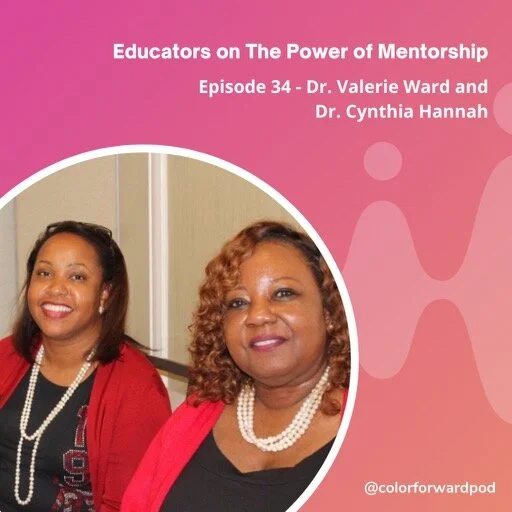
Continuing our celebration of Black History Month, we honor Black educators making a difference in the school system. Listen as Dr. Cynthia L. Hannah, an elementary school principal in Miami-Dade, the largest school district in Florida and the fourth largest in the United States, shares the many lessons she has learned from her incredible mentor, Dr. Valerie Ward.
Episode Transcript
[cue intro theme music]
Alisa Manjarrez: Merary, what mentor has had the biggest impact on your life?
Merary Simeon: Well, for me, it depends on the season.
One of the things that I enjoy is having different mentors for different reasons, right? For example, when I became a mother, my best friend, who was a single mother and raised an amazing, talented, and just humble young men was somebody who mentored me as a mother.
Alisa Manjarrez: Because she had gone before you?
Merary Simeon: Yes, because she had experience. I admired her in what she was able to do as a single mother. And here I am married and have a great support system and I’m like drowning. So to me, I’m like, I need to learn from her. Luckily she’s my best friend. I had mentors from high school. You’ve all heard my story about my teacher who saw my potential and spent two years mentoring me before I went into the corporate world. And then most recently I had a conversation with a CHRO who poured on me. I mean, I learned from her so much in one hour than I probably had in a very long time.
So to me, it depends on the season. I wouldn’t pick one over the other. I think they were there for me at the perfect time.
Alisa Manjarrez: It’s funny to even say that, because when I was in high school, I was a nanny for this family. I remember they paid me more than I thought they should.
And I was like, I can’t take this money from you. You’re paying me too much. I was like 15. And they said, no, you are impacting our daughter’s lives, and we value that and we value you. That was like the first seed to this relationship that we’ve now had for over 20 years that hasn’t been constant, but it’s been consistent.
Merary Simeon: And I think the important thing about that is that you were open, right? So the soil was good ground. It was ready to receive. And I think that’s also very critical, because when I talk about the different seasons and the mentors that have poured into me, I was ready. I needed that mentorship.
[cue music]
Alisa Manjarrez: Continuing our celebration of black history month, we wanted to honor black educators making a difference in the school system. Valerie Ward is a retired elementary school principal in Miami-Dade. It’s the largest school district in Florida and the fourth largest in the United States. And since she’s just finishing up her doctorate, we’re lovingly referring to her as Dr. Valerie today.
Dr. Valerie Ward: I am a mother, first time grandmother, educator, mentor, and intercessor at my church.
Alisa Manjarrez: Dr. Valerie is a leader of leaders, a mentor of mentors, and we’re highlighting this mentoring relationship that she has had for several years with current principal, Dr. Cynthia Hannah.
Dr. Cynthia Hannah: I am Dr. Cynthia Hannah. I have always stated that I am a mother of 605 kids. I have 602 at my schoolhouse and three at home. When I think of the things that I would like to see happening for my own children, I always make sure that I’m working extra hard for the kids here, because I want someone to stand in the gap for my own kids.
[music ends]
Alisa Manjarrez: One of the fun things that we all discovered when we talked to Dr. Hannah and Dr. Valerie, on Dr. Hannah’s first day as a teacher, she found out that It was also Dr. Valerie’s first day as a principal.
Dr. Valerie Ward: Well I started in March and it was during the summer, so at that time I had a lot of openings for teachers. It was during a time that there was a shortage of teachers. So I was walking through my office and in walks this young lady to drop off her resume. And I saw her and I was like, Oh my gosh, she wants to work here. I was so excited.
And I think I’d said, come let me interview you now. And I did, I brought her into my office, interviewed her. I think I hired her on the spot. Just like that.
Dr. Cynthia Hannah: That is, out of all the years I’ve known her, I’ve known her about 25 years, I never knew that she was a first year, just a few months, not even a first year, principal, because you would have never have known that because of how she carried herself. So yeah, that’s news to me. I didn’t know. You learn something every day.
Merary Simeon: This episode is definitely special to me, as we recognize educators, because that’s who planted a seed in me to be who I am today, and without her nourishing that I wouldn’t be here today. So, it’s Jackie Bolden. She will forever be the one who transformed my life. So this is very special to me and so honored to be lifting up the voice of these amazing women who transform lives every day.
[cue music]
What I love the most about Dr. Hannah talking about her mentor is the love, the respect and the admiration that she has for Dr. Valerie.
Dr. Cynthia Hannah: What really made me want to be her mentee, I’m a lifelong mentee of hers, is simply because she is an individual that would always speak life into a situation. I don’t care what situations I have gone through in my life, Ms. Ward has always found a positive way to not only provide me with guidance, but also to be that mentor wherein you’re in dire straits, so you’re having such a horrible, horrible date, she’s going to pull something out of it. I don’t know how, but she’s going to pull something out of that that when you finish talking with her, you’re going to leave better than when you came in.
[music stops]
Most people in leadership, you know, they’re either respected by the people beneath them, you know, or they’re only respected by the people above them, but during my travels with her to the region and district offices, I noticed that that was the case in both rounds that her supervisors and individuals respected her so much. And then the staff at the school also respected her so much. So to have the rubber stamping of Valerie Ward was also to have the approval of so many other people.
Merary Simeon: When you admire somebody and when you respect them, you listen, you want to hear more from them.
I think, nowadays, we listen to a lot of people, but we do not respect them. And what we are feeding or nourishing into our minds, into our soul, is probably not what we need. And I really loved that they’ve been able to just nourish this relationship into one of both admiration for each other. I mean, even when you think about Dr. Valerie, she is so proud of Dr. Hannah.
Alisa Manjarrez: And she loves her children like they’re her own.
Merary Simeon: Yes.
Dr. Cynthia Hannah: I wound up going into early labor and it was the end of may. So I was out of the school for at least three or four weeks and when she would call, I would be all like, you know, is there a report? I’m just trying to see how you’re doing. I’m just trying to check and see how the baby’s doing. Cynthia, just relax. And I’m, But I’m going to come out there and we’ll clean out my classroom and… Cynthia, stop, you know, just take care of the baby. And so that baby is now her six foot two godson right here.
Dr. Valerie Ward: How old is he?
Dr. Cynthia Hannah: 15.
Dr. Valerie Ward: 15 and 6’2”.
Dr. Cynthia Hannah: And he has the same mannerisms as her.
Dr. Valerie Ward: So sweet. Such a sweetheart.
Merary Simeon: To me, that’s the beauty of it all. And that’s the relationship that you cultivate together as a mentor and as a mentee.
Alisa Manjarrez: The idea that it’s a relationship is key. It’s number one, it’s not, you have a mentor. It is not this robotic relationship where this person is pouring into another person. It is real. It is genuine, and it is human to human connection. One of the things that we saw Dr. Valerie and Dr. Hanna model for us is that they’re really looking at each other as whole people.
Merary Simeon: Absolutely. And you said something important. It’s not that you have a label, because I believe my best friend, Ida would… she’s like, What, you see me as a mentor? And I do, right? And I’m putting a label on it now, but these are people that have changed my life. I’m sure Mrs. Bolden saw this as her job, right? This is what she does.
I’m just a student. But to me, she was a mentor. She changed it. We’re putting the label on it now, but this is the relationship that you build. The same thing with the previous CHRO that I was talking about. They see this as an opportunity of friendship, not only a mentorship. And I love that you say that because it is critical to have that relationship and be able to really respect and be open to learning from somebody else.
Alisa Manjarrez: Yeah. I know a lot of people that have said, how do I find a mentor? And it’s not one of those things where you go and ask someone will you be my mentor? I mean, you could, I guess, but it would be weird if you went to a stranger and said, Hi, nice to meet you, will, you impact my life?
And I think a lot of young people that I know feel like that’s the way it’s supposed to be. Someone says, go find a mentor. And they’re like, Uh-oh, let me go search LinkedIn and find someone.
Merary Simeon: You’re so right, because I get the calls, and then they’re like, can you mentor me? And to me, the most important thing is to surround yourself with different people, with different experiences and see where that relationship takes you. And I believe that automatically it would become a mentor, mentee relationship.
Forget the label. Yes, it is important. But to me, it’s more critical to have that relationship of somebody that you can trust that when they give you feedback or when they say, Hey, Merary, you’re going the wrong way, that you value it. Because what does it matter if you have this amazing mentor, if you’re not willing to listen to what they had to say?
So, Alisa, have you ever had a mentor teacher or anybody in a leadership relationship who you knew wasn’t rooting for you?
Alisa Manjarrez: You know, when I heard Dr. Hannah talking about how not everyone is rooting for your success, and that was a big awakening for her. I started thinking about this internship that I had when I was in college.
[cue music]
It was by far the coolest internship I’ve ever had. I was doing PR for Bloomingdale’s, and my job was to help secure and organize the models that were there for the big brands for fashion shows. So all these Italian young men coming and greeting me with a kiss. I mean, as a college student, I was pretty happy with this mentorship.
Merary Simeon: People should see your smile right now.
Alisa Manjarrez: I know, I’m blushing. The woman who was in charge of teaching me about public relations and that whole fashion industry, I thought she was amazing. I really admired and respected her. She dressed incredibly. I learned about brands that I’d never known about.
But there was something weird about our relationship. There’s this weird disconnect. At the end of my internship she wouldn’t respond to my emails. She wasn’t signing the papers to get me my college credit. And there were so many awkward conversations that I had with her.
I had no idea what was going on, and my professor, who was my mentor also at the time, said, with everything you’re saying, I think this woman is jealous of you. And that was by far the last thing I ever had on my mind, because I adored her. Because of all the cool things she was doing, and I was still in college, I felt like I had nothing to give. And I was just an awe being there. And just the idea of that, I was crushed and so disappointed.
[music stops]
Merary Simeon: Those are the times where you got to realize, Okay, it’s time to break up with my mentor, but it is difficult. I’ve been in those situations. Now here’s the difference, the mentors that stop rooting for you are the ones that I believe ended up seeing you as a competition versus being happy and proud that at some point you could surpass them.
And the way I look at my mentees today, I can’t wait to the day that they go further than I can. To me, that would be a reflection on me if they don’t. But I can also tell you that the mentees that I mentioned before, they wanted me to surpass them. My teacher, Ms. Bolden, she wanted me to be more than she ever could.
My best friend, as a single mother, she wanted me to do well in my marriage and my children, right? This CHRO that I just spoke to, she was telling me all the things that I needed to do so that I could be bigger than her one day. So these are the things that, to me, you look and you realized like, okay, this is a good relationship.
Now, unfortunately, last year there was somebody that I admired and I worked with them and we built a relationship and I was betrayed. And that, to me, was painful. I cried, and I’m pretty tough. When I spoke to another mentor of mine, she’s like, you know, not everybody is going to be like you, that wants the best for other people. And just like your teacher told you Alisa not every mentorship relationship is going to be a good one, and you need to be able to know when it’s time to move on from that mentorship relationship, especially when it’s somebody that you admire and that you invest the time in.
Alisa Manjarrez: Yeah. And at some point you just have to recognize that not everyone is going to be patting you on the back. And that’s one of the things that Dr. Hannah said, her first experience with Dr. Valerie was that was her first time ever having a principal. And she just thought that this is my boss, of course she’s going to tell me I did a good job. And Dr. Valerie, thankfully said, Hey, guess what?
Dr. Cynthia Hannah: Don’t be hurt when you meet other administrators that won’t tell you that, because it’s going to happen. And I was like, No, other administrators tell you you did a good job. Other bosses tell you did a good job.
And when I tell you I’ve had more situations wherein people said absolutely nothing, then when people said I did a good job. Had it not been for her preparing me for that. My feeling would’ve been devastated. I would have been the assistant principal and the principal that was always crying and always hurt and always, you know… And there were many times that I did, but it probably would have been many more if it was not for her telling me early on, you know, those life lessons and giving me those nuggets that I needed.
Which were things like that because, you know, who wants to hear, Oh, everybodies going to tell you everyday. It’s going to be roses everyday. But no, some people are not going to be roses. Some people are going to say, you know, absolutely nothing and you’ve done a fabulous job, but they’re not going to tell you that.
Alisa Manjarrez: I loved watching their relationship. Most of the interview tape is laughing because they had so much love for each other. Dr. Valerie was super calm. Her super power as a mentor is her ability to listen. And I think that there are a lot of times when people think that, I don’t know what makes a good mentor, what do I do? This person wants me to be in her life. and sometimes all it takes is becoming a good listener.
Dr. Valerie Ward: Like Cynthia was saying today, we Zoomed, and a lot of it was me listening. And she was telling me stuff that happened two years ago, but she needed to get it out. That’s a trait I have naturally anyway, you know, being a listener. As a mentor, if you don’t have that trait, it’s going to be very difficult because a lot of times people will come and they want to do all the talking. They don’t what to listen, you know? You have to put yourself in that person’s shoes.
Merary Simeon: Becoming a good listener, I believe, is the most important, because it will allow you to truly answer back or provide them feedback where they can grow or where they can leverage their strengths. I think a mentor must be the person who tells you the truth, at the same time that mentor needs to be the person that motivates you and that helps you realize your potential. And what I mean, realize, not actually do it for you, but show you that you can do it and give you the advice on some of the things that you can do to achieve that. It’s almost like they’re your bright light in the darkness. That’s kind of how I see the mentor is, Yes, you’re going to shine the light, and guess what, I’m going to walk with you until you’re ready to go on your own. That’s how I see a mentor.
[cue music]
Alisa Manjarrez: That’s what we saw modeled with Dr. Valerie, because she has been walking with Dr. Hanna for so long through pregnancies, through deaths, through life. When we asked her what makes a good mentor, she said…
Dr. Valerie Ward: You have to have the spirit of wanting to help. You know, if you don’t have that spirit naturally, it’s going to be difficult. But if you have the spirit of wanting to help others, to empower others, to see others grow, it should come easy. It’s like a passion for me, so much so that I’m able to do it in retirement. And I feel like it’s not even a job. It’s a passion. It’s something I truly, truly enjoy.
One of the things that I always did when I was a principal, I would empower my staff. And as I empower others, it’s helping me, right? So that’s the way I looked at it. So, I think you have to be authentic to yourself and true to others, want to be one to lift others up, and see the best in them and then help them to meet that potential that’s already in them. When my former mentor saw something in me that I didn’t see in myself, and I’m like, an administrator? What? You know, you have to have someone that’s pushing you to reach your full potential.
[music stops]
Alisa Manjarrez: That’s where you need to come from when you’re mentoring someone. You’re really there for the other person. It’s not about you spouting out your wisdom and all your lessons learned. It’s really about taking a step back and asking yourself, how can I help this person in this moment?
Merary Simeon: You can also be that connector to be able to help them find another mentor to help them in a different area. A mentor doesn’t know it all, but the mentor knows enough to guide you in the right direction, make the right connections, right? Just help you grow in a specific area.
Alisa Manjarrez: What do you think makes a good mentee? Merary, you mentor women all the time. That’s like one of your favorite things to do. So when you have people coming to you, earlier you said, you know, some people don’t know how to come to you, but the people who are in your life that are really wanting to learn, what makes them good at that side of the relationship?
Merary Simeon: By the way, even when they don’t know how to come to me, I still help them, because I just loved to help. It’s something I really enjoy. But what makes a really good mentee is the ones that listen, take the advice, but most important take action. If there is something that, to me, feels like they’re not taking my time seriously or my advice seriously, or even what they discovered themselves through the conversation is when we have the next meeting and they have not done or taken action against anything we discussed.
I have found that the ones that do grow quicker and do more than we even talked about, because they go out of their comfort zone, they take those steps. It’s time consuming for the mentor and the mentee and if they both don’t have the respect for each other’s time, it’s not going to be a win-win situation. One of the things that I love about it is that I also learned from them and I see how they grow and that inspires me.
Alisa Manjarrez: And as a mentee, the mentor might not be a good fit for you. Like if what they’re telling you doesn’t resonate or you don’t get it, or you can’t act on what they’re telling you, it might just be time to find someone else who you have that chemistry with, because that’s really important. Again, it’s a relationship you’re not going to click with everyone.
Merary Simeon: It’s gotta be a natural fit. You have to build different relationships through your network and see which one naturally clicks at the end of the day. Because you want to be able to love and respect that person. And when I talk about love, I’m talking about what they’re telling you, that you’re respected enough, to act on it, but it does have to be a natural fit.
Some people are like, Hey, can you connect me to so-and-so, because I think they could be a great mentor. I’m like, Uh, no. Um, that may not happen because some people are not, they’re just not, and that’s okay. That’s why I keep reinforcing that relationship is key.
Alisa Manjarrez: One of the things that I mentioned earlier is, both of these women have impacted hundreds and thousands of children. That mentor/mentee relationship has then had a direct effect on the school district. And this relationship of love and laughter and fun has so much meaning. Finding that fit is crucial because of all the people that you, as an individual, will be impacting. It’s this amazing trickle down effect.
Dr. Valerie Ward: We won a lot of awards at our school. We were like doing it, you know? I mean, and we moved school from a low D to four points from an A, so we were doing some great things at our school. So Cynthia was a part of that dream team. The A-Team, we called ourselves. The leadership team was the A-Team. I would take her everywhere with me. I have a meeting, we have to present at the region to the other principals to tell them what we’re doing at the school and she would present and…
Dr. Cynthia Hannah: And we were laughing about that earlier today. I was like, that was one of the most scariest meetings in my life, but most principals would not do that. And that’s one of the things that I learned from her and I would share with my staff. I would never say the reason why this school is successful is because I did this.
Ms. Ward never did that. When Ms. Ward presented she would say, this is her A-Team, and she gave us the power and the credit, which takes a really big person to be able to do that. That’s one of the things when you’re looking for a mentor, you look for those things. She constantly had that team mentality going. She never had problems with succession or replacing people because there was always individuals willing to rise to the occasion. She had that personality and that wherewithal to build leaders.
No matter where she was, there were always people being promoted from her school. There was always great things happening at her school. There was always somebody giving something to her school, or giving something to her, because of her and what she was doing.
Merary Simeon: I think you can start mentoring people at different stages in your life, right? Just even because so many of us have different gifts. Like, you know, Alisa, before you knew it, you’ve always been a visionary. I was reading one of your posts, you were like, Oh, I need a vision board. And it was like, I don’t know how many years ago. Imagine how many people you have mentored throughout your life without knowing, because that’s your gift.
And then when you are, you know, as successful as you are, Alisa, now you look back, you’re like, Wow, I have all these mentees, but I’ve been mentoring people leveraging this gift my whole life.
So that’s the way that I would look at it. I think, look at yourself, look at your strengths and see how you can help others who maybe have the potential but just need a little bit of advice for growth in that area.
Alisa Manjarrez: You’re right. We don’t always recognize it in ourselves. And I think back to my babysitting story, that’s what the parents who had hired me to be a babysitter for their kids, that’s what they saw as a 15 year old, I was mentoring them.
Merary Simeon: And that impact, I’m sure, changed their lives. So don’t underestimate the shadow that you cast and the power that you have at an early age, middle age, elder. It doesn’t matter. You can mentor somebody and inspire somebody to grow each day or develop an area that comes easy for you.
[cue outro theme music]
Alisa Manjarrez: I would encourage our listeners to start looking for opportunities to mentor or be a mentor. Ideally you should have both, people that you can look up to, people you’re bringing up, and then peers that are walking alongside you. I call it up, down, side to side.
Merary Simeon: I love that.
Alisa Manjarrez: You look up, you look down and then you look side to side, and you have all those people supporting you. Sometimes it does happen naturally, but I think that if you can take the step to look for those opportunities, you’ll find it.
Dr. Cynthia Hannah: Always make yourself trainable. And make yourself teachable. It doesn’t matter what position you’re in, there is still something you can learn. There is still someone you can learn from. There’s never a moment that you can’t learn from someone else. So you always need to be open for that.
Alisa Manjarrez: For more inspiring stories, please subscribe on Apple, Spotify or wherever you listen to podcasts. If you have a guest you’d love to hear on the show, send us a DM on Instagram at @colorforwardpod.
I’m Alisa Manjarrez, producer of Color Forward. Thanks for joining us and, please, leave us a review.
[outro theme ends]