
39. Dr. Shindale Seale, Cultural Equity & Diversity Strategist on WOC Getting Advanced Degrees
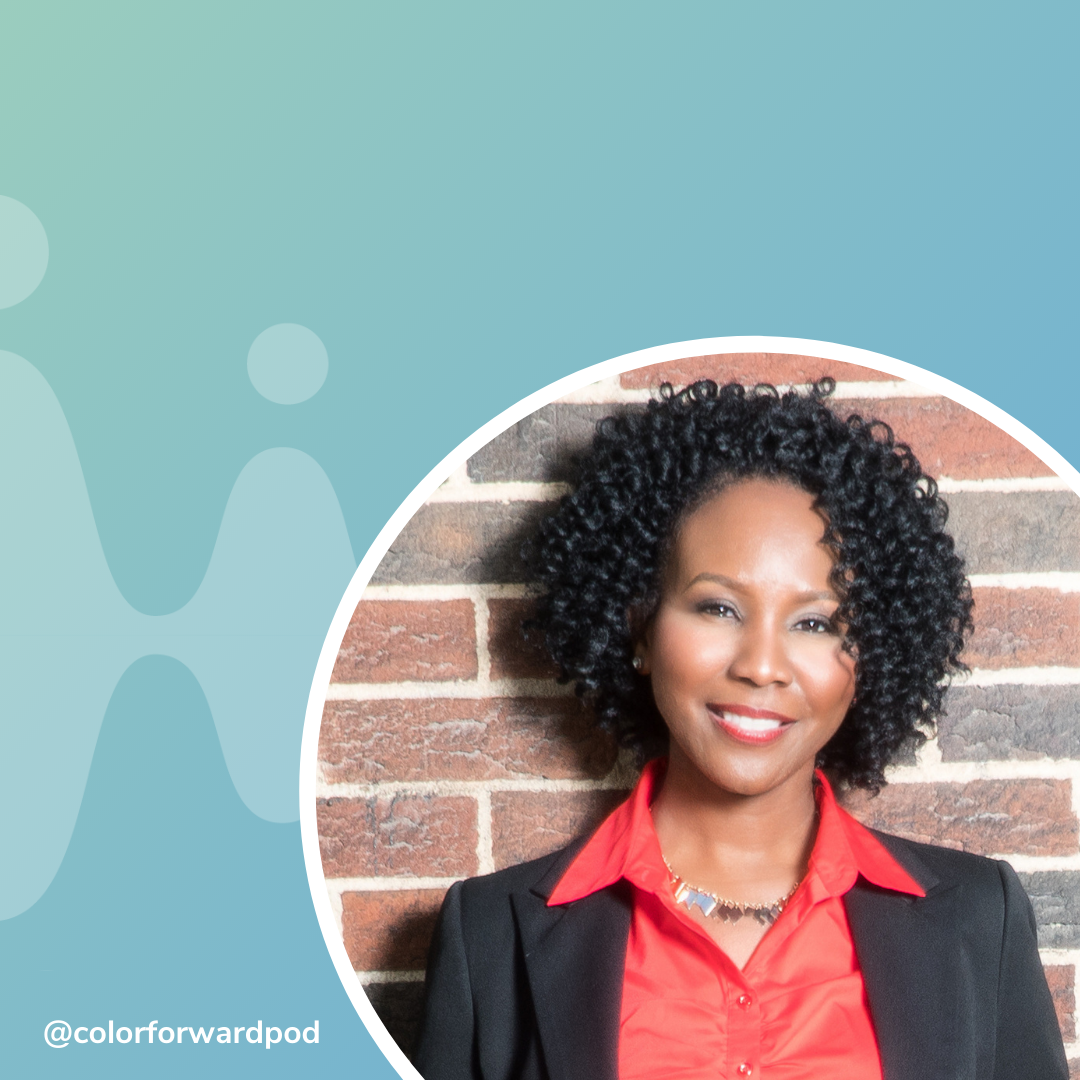
We all know what it feels like to face something so huge, it seems insurmountable. Landing a dream job, saving for a new home, trying to start a family, or just… going back to school. Life’s greatest pleasures often seemed locked behind years of struggle and sacrifice. But where there’s a will, there’s a way… right?
Listen as Dr. Merary and Alisa chat with Dr. Shindale Seale about what happens when you look past the pain of “getting there” and things finally start to click.
Episode Transcript
[cue intro theme music]
Alisa Manjarrez: Welcome everyone to the podcast that is all about women challenging the status quo, breaking the rules along the way to achieve whatever type of goals that they have.
[cue music]
Today we’re specifically focusing on the idea of women and women of color getting advanced degrees.
Dr. Shindale Seale: My name is Dr. Shindale Seale, and I am the CEO of SEADE Coaching and Consulting, which is a diversity, strategy and education company that provides education, diversity training for corporations and for academic institutions all over. I am also the founder of a nonprofit organization called Our Community Mentors that provides academic professional and quality of life resources for Southern California, but we’ve been reaching out across the nation.
So I’m excited about that. I’m also the chair of the diversity, equity and inclusion department for UC Santa Cruz Extension. So I build out all of their diversity curriculum. I teach some courses there as well. And I am a professor at University of Redlands in their business school. So I teach organizational change. I teach leadership, organizational design, organizational behavior, everything that has to do with your organization, I’m your person.
[music stops]
Alisa Manjarrez: I read your blog, and I was like, Oh my gosh, I feel like I’m back at school in the best way, like why was your blog not there breaking down, you know, all the different models of change when I needed it for my papers?
Dr. Shindale Seale: Oh my gosh.
What I’m doing now and why I’m doing what I’m doing is because we have such a dearth of women of color in positions of power in organizations, especially in our corporate spaces, and in our academic institutions and I think, Merary, you had some really, really great stats on what we’re looking at, what the situation is like right now.
Merary Simeon: Yes, and According to a study I saw recently conducted by Catalyst, women have earned more bachelor’s degree than men since 1982, more masters since 1987, and more doctorate since 2006, yet a study conducted last year by McKinsey & Company found that only 9% of women of color in corporate America hold a senior manager or director role.
Sadly the numbers get smaller as you move up in the organization. 6% vice president, 5% as VP, and let’s not even talk about the C-suite that’s a 3%. For me, making a decision to earn a doctorate degree in strategic leadership from Regent University was a no brainer. Only 2% of the people in the United States earn a doctorate degree.
So my hope and the reason for going after a doctorate degree was to counter those stereotypes of women of color in corporate America. We are brilliant, and when we are given the opportunity, we make impactful differences in the business, the community and in our families. Look at this today, listen to us today, there’s two doctors in the house. You can’t get better than that.
Alisa Manjarrez: It’s pretty amazing. You know, Merary, your answer is so much more academic than mine. When I was trying to go for an advanced degree, I heard this statistic that if you’re single and you get a PhD by the time you’re 28, you’re never getting married. So I was like trying to hurry up and get my next degree so that I could get rid of that stat. That wasn’t my only reason, but…
Merary Simeon: Oh, my gosh.
Dr. Shindale Seale: It’s funny that that’s the marker, right? The marker is, you’re never going to get married if you’re too intelligent. It’s like, okay, so what are we saying about marriage right now? What are we saying about marriage? You know, it’s absolutely true. It’s absolutely true. Because when we look at what Merary was saying about the C-suite and looking at these positions that women are qualified to hold, but are unable to attain, you know, you have to be twice as good or three times as good as a man to get half of what he has. And so this is why I think a lot of women think that the security of that education is vital. So we go after it, unabashedly. But then of course, there’s that trade off.
Merary Simeon: And I think that is definitely a stereotype as well. When I was growing up in corporate America I didn’t think I could have a family and go to school and be married, because everybody above me was divorced or single. And I was afraid for a long time. Hence why I got married at 38 and had my first child at 40 and literally got my doctorate at 47. But at the end of the day, those were things that society was putting on me, because with a two-year old and with a husband and as an executive, I was able to get my doctorate degree.
What I don’t want people to think is what you were thinking, Alisa, that you can’t have all these things. Yes, there are some sacrifices. I made tons of sacrifices in the past four and a half years, but I also believe that you got to build those support systems around you and be a little bit creative so that you can have a family and you can have your career and all those things, because at the end of the day, at the end of the day, yes, I have that degree, but, wow, my family means so much more. I was happy about getting a degree and I still am, and that’s my title, but what I’ve created, what I’ve been able to accomplish, that I almost didn’t, is just have a generation under me. And that to me is just valuable.
Dr. Shindale Seale: So I kind of did it differently. I was married, and then I had my son, and literally a year after that we got divorced, and I was like, Oh, wait, hold up. I mean, it was, was like, Oh wait, I’m a divorced mom of a toddler and I have no education. Holy til… What am I going to do with my life?
That’s when I just went into overdrive, literally, because that piece was what we were just talking about, how am I going to be able to really, first of all, support myself and my son, and then leave that legacy, that example, you know, create that space that I suffered under, essentially?
I started college out of high school and flunked, and it took me almost 20 years to get back into college. And then when I did, after my son was born, I was like, okay, I’m just going gusto, eight years, three degrees, and it was literally like…
Alisa Manjarrez: You just went through?
Dr. Shindale Seale: I went straight through. I did my bachelor’s in English with a focus on language and linguistics. And then I did my masters in English… No, in education with a focus on teaching speakers of other languages. Then I did my doctorate in education with a focus on organizational change and leadership.
And literally it was like, boom, okay. I’m doing this because I want to move up. I want to make more money. So, okay, let me get the masters because if I do that they’re going to see, my job is going to see, and they’re going to give me that promotion and that raise. Eh. Then I came into my purpose, and I said, okay, let me go after it.
So it really is similar to what men will do. Like, okay, I get this degree, I’m going to be able to make money and blah, blah, blah. But then there’s also that other piece for us, what example am I going to have for my kids? What example am I going to be to other women in the world? How am I going to be able to pull them up behind me? I see that in most of the women that were my contemporaries in my doctorate program.
Merary Simeon: When I went to school, I started out community college and I could relate, because I didn’t have any mentors and I completely failed my first year. But I’m that type of person. I’m like, no, I’m going to escape poverty. And I know enough to know that education has to be part of it.
And I did, and that’s really one of the reasons that kept me going. And as I continue to move up, then I started seeing, okay, the stereotypes in the workplace, the way they look at women of color, they automatically assume we’re not smart enough, that, Oh, you’re just going to have 10 kids, or you’re just, you know, end up on drugs or you’re just going to end up with it…
And I see what the world sees because of what media or whomever have portrayed about us. So to me it was like, okay, I’m going to make the money and I’m going to get the degree, because I’m going to show them I’m smart. Now at the end of the day, I think what I needed to understand is I don’t need to prove to the world, I needed to do it for myself. And I didn’t realize that until probably when I finished a few weeks ago, I was like, wow, I wish I would have learned that sooner.
Dr. Shindale Seale: Well, yeah, because when you step into those spaces, when you step into those spaces and you’re like, okay, well I’m Dr. Merary, and I’m gonna go out there like, okay, well, great. You know, I’m doctor whatever, right? Because, you know, depending on the space that you’re in, right, you can be in a space where nobody has that degree. And then you’re like, you know, in a blind world, the one eyed man is King, right? So then you’re like, Whoa, Dr. Merary, but then when you’re in a situation where everybody has the doctorate, then it’s like, okay, you’re in this big pond.
So then what differentiates you? What is it that you’re doing? Why did you get this? What is the motivating factor? And I think that when you started talking just now about really what you’re trying to build for your family and for other women in this space, is key because we see that with the responsibility of this knowledge, or I like to say there’s a lack of knowledge, because the more you realize that you need to learn, right? When we see this lack of knowledge, there’s a responsibility. It’s an encumbrance, we have got to push forward and reach back. So, that’s the way I look at it.
Alisa Manjarrez: Oh, push forward, reach back. I love that.
Merary Simeon: That’s a great quote.
[cue music]
I found my purpose through my journey obtaining my doctorate. And just really understanding the difference that I was making for other women. It brought me to my purpose and it made me realize you’ve been doing this throughout your life, now it’s time for you to put a focus on it and put a light on it and really bring it to life.
Dr. Shindale Seale: So I’m not originally from the United States. I’m from Barbados. And so all of my teachers, when I was young, they all looked like me, right? But then when I came to the United States, I didn’t know any dangers that looked like me, that understood my background, because my background is vastly different.
[music stops]
Alisa Manjarrez: Yeah, it’s interesting to hear both of your stories, because my entire undergrad career, I guess you could say, I was told, a communications major isn’t going to get you anywhere. You have to get a master’s. So I graduated, and thought, you know, I should probably get a job before I studied to be an executive coach. And what I didn’t realize is I was building a career so that later I could be an executive coach, not realizing that I built a career with an undergraduate degree.
And even today I love my degree and the education I got. I got my master’s in organizational management and development with a concentration in executive coaching. Which is why I like your blog by the way. It’s only in hindsight that I realized, you know, I didn’t even need a degree. I probably could do what I’m doing with just a certification, if I wanted to. And so it’s just interesting how we grow up or the things that we hear really impact our choices and the paths that we think we have to follow.
Dr. Shindale Seale: Yeah, that construct. Everybody’s like, okay, you graduated high school, you go to college, you get a job, you work for somebody, you get married, you toil under tyranny, you know, I’m sorry, that that’s not part of it. Anyway, you worked for them. You get married, right?
Alisa Manjarrez: Sometimes it is.
Dr. Shindale Seale: Right. Right. Okay. I was just kinda, you know, ad libbing there. And then you have kids, then you retire and that’s that’s life.
But how are we giving back? How are we making something? And it’s not necessary a hundred percent. I will say this. It is not necessary to have those titles. What I will say is, what I learned in my academic career is invaluable. I mean, the things that I’m able to do, the way I’m able to push myself, it’s not even the content, it’s the discipline of getting those two 20 page papers per week done, right? That type of stuff right there, when you’re cursing at yourself, Why the bleep bleep bleep did I do this? When you’re yelling at everybody around you, when you’re up at 2:00 AM drinking coffee, that discipline is what carries you through. And it really, really helps you to be able to do the other things that are important, that can really make a difference in the world.
Merary Simeon: Yeah, and I agree. I went to school, I would say my whole life, because I always went to school part-time so I got my bachelor’s at night. I got my master’s at night and on the weekends, and obviously I got my doctorate at night on the weekends. So all I’ve ever known is studying, and I got really good, to Dr. Seales point, at being disciplined and knowing when I was studying or when I was writing, it had to be a productive time. Especially when you have little kids running around. So I got really good at it, but that has carried into my life, to your point.
I don’t need a doctorate to do what I do as an executive, but it has helped me so much in my personal life whether it is discipline about my, my, my health, whether it is mental, spiritual, or physical health. And for me, I say it like this, I look at it a little bit different, I’m like, you want to get closer to God, you start studying, you go get a doctorate degree. Because everyday, I was like, Lord, I am so sorry. Ah, I don’t know why I’m doing this.
But I’m there with you with drinking the coffee, and, Oh my God, but that… that discipline, it has transformed into everything from, Alisa knows, from doing a conference in the middle of a pandemic, from writing a book, from being able to do just all these million things that I do, and people constantly ask me, how do you do it? I’m like, because I didn’t have a choice. Well, I guess I could’ve had a choice not to go to school, but once you signed up and you’re paying the money, you’re like, okay, I need to get this done.
Dr. Shindale Seale: Exactly. Exactly. Because you’re going to have a whole lot of explaining to do, honey.
Merary Simeon: Yes. I’m like, listen, if I’m not going to buy that pair of shoes, then I need to make sure that I’m writing. But, I can do anything right now. I’m limitless. Like there’s so much that I can do, because I can apply that discipline to anything that I put my mind to.
[cue music]
Alisa Manjarrez: Dr. Seale, I know you went straight through eight years and you had these expectations. So I want to know what were your expectations and then what was reality?
Dr. Shindale Seale: Now we really need a therapist, right?
So, one of my sayings is, expectation breeds disappointment, and that one rang true for my academic journey. And this is what we were taught, right? If you get this education, then you will get this promotion, because your job is going to value the energy that you put into it. Your bosses are going to see how great you are. That’s what I bought into. With a doctorate, you would imagine, especially an organizational change in leadership, you would imagine, okay, well, I’m going to be running a department or I’m going to be in the C-suite at some point. Like this is one of the things that I tell my master’s students who were trying to do business or whatever, it really, really is about your relationships. It’s about those relationships that you formed in that organization. It’s about experiences that you’ve had, and more so the relationships than experience. Those relationships will trump those experiences all day long, if somebody really, really believes in you, and I didn’t have that.
Alisa Manjarrez: What did you have instead of that?
Dr. Shindale Seale: I had the relationships, but not in the right places. And I don’t think the right people believed in me. And I don’t think that the right people really, really would’ve gone to bat for me. If anybody’s listening, form those authentic relationships, you know? That’s the lesson.
Alisa Manjarrez: We’ve heard that a lot, that relationships, the sponsors, the mentors, the people who are laterally working alongside of you, it really is not just the people, but I like that you said, building authentic connections and relationships with people, because at the end of the day, it is human to human experience and that’s what work is about. And you obviously are an expert in that.
Dr. Shindale Seale: Yeah, I became an expert a little too late.
Alisa Manjarrez: Yeah. Now you can say that with the knowledge and the experience to back it up.
Merary Simeon: It’s all about the relationships anywhere, not just in corporate America, in anywhere that you want to succeed or even in the community, if you really want to make things happen. There are people who will say things and build stories to prove themselves that you still belong in that stereotype that the world has built for you. So at the end of the day for your mental health it’s critical that you do it for yourself.
That, to me, was the biggest disappointment. Number one, the haters, and number two, the people that build stories and tell themselves their own lies to still see you in the stereotype the society has built for women.
Dr. Shindale Seale: Well, that makes them comfortable. If it’s always been like a security blanket to have you right here next to me, and you have emerged and become this force for good, what does that mean about me? It’s more about their perspectives upon themselves and their lack than it is about your achievement. That’s literally all it is. And your example for your family, for your kids, and even those haters, because they’re watching you too, and trust me, they’re probably about to take a certificate program, trying to get up to where you are.
That’s what it is. But that’s what happens. Hopefully we don’t spend our time, like, thinking about that situation. Hopefully we focus on really where we need to go. That means you’re doing something right.
Merary Simeon: I agree. And I always say, I have this little girl that’s looking at me and failure is not an option for me right now at this stage. There are going to be plenty of things that she will be able to fail at in school. It’s not an option, not in this family.
Dr. Shindale Seale: No, and then she sees purpose in her mom. You are her example. You are her icon. And when she’s able to look at you and she goes to school and she’s like, Oh, well, my mom’s a doctor. Because they do that. They do that. Okay. They do that. They don’t know what you’re a doctor in, and they probably think that you’re like, you know, listening to heartbeats or something. They probably think that, but they’re going to say, my mom’s a doctor. That level of pride is everything.
Merary Simeon: Yeah, and at the end of the day, let’s just face the facts, as people of color, we have to work harder. So let’s just face it, whether we like it or not. And at the end of the day, education is, it’s almost like the minimum that we gotta be able to get just to even be considered.
Dr. Shindale Seale: I don’t even know if this is on topic or not, but I was, having this interview a couple days ago and this lady asked me, What do you think about bringing your authentic self to the workplace? We should be able… And she was like… I was like, dude, it is not desirable to bring your authentic self, as somebody who looks like this, to the workplace, because you will be carrying all your boxes out in your little trash can to your car. There are, for us, there are different rules and those rules, it’s very, very important now… The tide is shifting. I mean, I’m in the DEI space, it’s what I live, the tide is shifting. And with gen Z, they’re not playing this whole like racism, you know, any kind of ism stuff, but still to this, to your point, we have got to understand the realities of our life, the realities of our educations, the realities of our professional endeavors and work accordingly, push the envelope, but still do what you need to do. And it is amazing to see what is blossoming just in front of us.
The fact that you can achieve it with the barriers, what does that say about your potential? What does that say about what you are able to do at every turn? This is the gem within us. I really, really am pushing to help other young women of color find that gem, because a lot of it is under a lot of dust, right? All the messaging that we see, everything that we hear does not serve getting to these achievements, but in reality, it’s latent within us.
The higher women go, the more resistance, the more, gender isms, the more micro-aggressions for people of color, the more racism you are going to experience. If you are just, you know, lower level, you’re not going to experience it the way that women with advanced degrees experience it, and especially a woman of color, you’re a twofer. You’re a twofer, now we’re looking at, Oh, well, so, how did you get that? Was it, you know, an affirmative action, blah, blah, blah. And you’re going to hear that from women too. Women who don’t really realize that the only reason why they are where they are too, is because of affirmative action, but we’ll just leave it at that.
Alisa Manjarrez: I feel ignorant, because I had no idea that was there. When you get your higher degree, I thought people would start to get it for some reason in my mind.
Dr. Shindale Seale: No.
Merary Simeon: It gets definitely harder. So I have two, I have a five and a seven year old. I care for my parents. And I’ve gone to school my whole life. So I built that muscle. But people start thinking, Oh, how do you do that as an executive? Your job must be easy. It’s like, really? You can’t say that here’s a role model. Here is somebody that gives back to the community. Here is somebody that is doing the right thing. An example. It’s like, Wow. This is an opportunity also to show them, this is what you can be capable of if you change your mindset. But the minute you start thinking, this is as far as you can go, then that’s your mindset. My mindset is, my sky’s the limit now, is it going to be easy? I’ve always known it. I’ve experienced it. I lived it. I know it is not easy, but if we continue to have the mindset that things are hard, they are.
Dr. Shindale Seale: If you want it that bad. You know? And one of the things too, like, and you mentioned this, when you start hearing it from your family, that can be a very hurtful thing. Let me tell you, I’ve, I’ve heard it from everywhere, right? I’ve heard it from everywhere. Literally, okay? And, Oh, so you’re a doctor now, so you think blah, blah, blah. Oh, so now you think you’re smarter than me? Oh, so now… Oh, well, um, let me just share this with you.
Alisa Manjarrez: You’re like, actually, I do.
Dr. Shindale Seale: Yeah. And this is what I say, I say, No, I don’t think I’m smarter than you. You think I’m smarter than you.
Alisa Manjarrez: Ooh, even better.
Dr. Shindale Seale: Then you just stop talking. Because that’s really what the… Like I told you before, they’re pulling you down, because they, in their minds, believe certain things, right? We, as women, we’ve been taught this is the limit, this is the construct in which you will live.
[cue music]
This piece, Ms. Dr. Executive, is going to get real, and I want you to hit me up when it happens. I mean, I’m giving it maybe about like, when you start putting your title on stuff, hit me up like a week after, because that’s going to vest.
Merary Simeon: I might call you later tonight, because I put my title on right away.
When you know your worth, all these things that come at you, all this negativity from your loved ones, from the workplace, from society, you can just brush them off, because at the end of the day, you’re not doing it for them. You’re doing it for the people that need that visibility, that need that hope, that need that door open. I’m doing it for them. I’m doing it for my kids. I’m doing it for myself. I’m not doing it for the people that don’t want to do more for themselves. You’re not going to be able to change their mind. And that’s not my job.
Dr. Shindale Seale: There you go.
Merary Simeon: My job is to help those that want to be helped.
Dr. Shindale Seale: Boom.
[music stops]
Alisa Manjarrez: Speaking of helping, I don’t want to miss everything that you’re doing with your nonprofit. So you gave us a little bit of a taste, at the beginning, but now that I’ve heard everything, almost, I mean, we could probably go on for awhile. No, I’m definitely not getting my PhD. No, I’m just kidding.
Dr. Shindale Seale: More power to you girl. You’re doing more than most, let me just put it that way.
Alisa Manjarrez: Tell us more about your nonprofit, because it sounds incredible.
Dr. Shindale Seale: It’s called Our Community Mentors, and it was born of not having any mentors. We’ve got like three or four pillars. The first one is, we deal with youth, like marginalized youth. We have this thing called career days. Like we bring in innovative professionals of color that are similarly situated to the kids that are in the schools. We’d have like, five or six of them come in and they’d rotate through the classrooms and whatnot. And the kids actually have opportunities to apprentice with these professionals, and the kids actually get like a roadmap. And they actually write it out for them, and, you know, it’s really, really a wonderful keepsake for the kids. So we’ve serviced probably over 2000 students, from K through 12. We also do financial literacy classes for middle school and high school students.
I wrote this workbook to help elderly who were having like early onset dementia. And so I bring my son and like his friends in, and they actually helped them write. It’s great for obituaries. It’s great for their families when you know, they pass away or whatever. We also do job preparedness, seminars and whatnot, because, like I said, we don’t know what we don’t know. So, I’m thinking about entering into job preparedness for people that are developmentally disabled. That’s going to be a little bit of a work, but, yeah, that’s what we do.
Alisa Manjarrez: Congratulations. That’s amazing that you’re able to serve so many different people in that manner.
Dr. Shindale Seale: Like I said, this is this, is that mind, right? That’s that, Oh, I have to be doing, I have to be doing.
Merary Simeon: Well, Dr. Seale, I’m listening and I’m like, Oh man, I need to do more. I’m not doing enough. You know, that’s a gift that you have and for you to be leveraging your gifts to give back to the community, that right there is priceless.
Alisa Manjarrez: I have two questions to end us off today. One, What’s your pump me up song? And then, When people who have a lot of ambition and who know there’s so much they can be capable of in a healthy manner, we don’t want people to burn out, of course, when they are in that stalled place, what advice would you give to help them to push forward themselves? And what should they be listening to? That’s the real question.
Dr. Shindale Seale: Well first, there are a bunch of songs that I actually listened to to get myself through. But this goes back to when I was doing my doctorate. I was listening to Alicia Keys, This Girl is on Fire.
Alisa Manjarrez: Yes.
Dr. Shindale Seale: I mean, I would be like… The thing comes on the radio and I’m like, yeah, I can do it.
Alisa Manjarrez: Yes.
[cue outro theme music]
Dr. Shindale Seale: When you’re at that valley, it can be like an emotional bolder on top of you when you don’t really know how to get past it. And for me, depending on what it is that I’m down and out about, I think about, well, what’s going to happen if I don’t do it? When my son grows up I want to have those landscapes, those environments, prepared for people like us to get into.
If I don’t do what I’m supposed to do right now, that’s time I’ve wasted. That’s opportunities that could be lost. And what would that mean for them? It can be very, very stressful because now you’re really like replacing what it is that you need to be doing for what you want to do, essentially, but I think it’s important to consider the alternative, and work toward that.
Alisa Manjarrez: That’s great encouragement for our listeners who have a purpose and a calling on their lives. When you do find it, whether it’s through getting your education or working on a project that you never knew you were passionate about, once things start to click, what will happen if you don’t do it? Because we’re all created with certain skill sets, certain knowledge, certain experience to bring other people along, to make a difference. Even when you feel like there’s a boulder ahead of you, because we all know what that feels like.
For more inspiring stories please subscribe on Apple, Spotify, or wherever you listen to podcasts. If you have a guest you’d love to hear on the show, send us a DM on Instagram at colorforwardpod. I’m Alisa Manjarrez, producer of Color Forward. Thanks for joining us, and please, leave us a review.