
43. Turning Your Insecurities into Superpowers
The urge to fit in, especially among colleagues, can be incredibly hard to resist. But there’s good reason to believe that taking what others see as a quirk and spinning it as your own personal accent might, in fact, be your greatest gift!
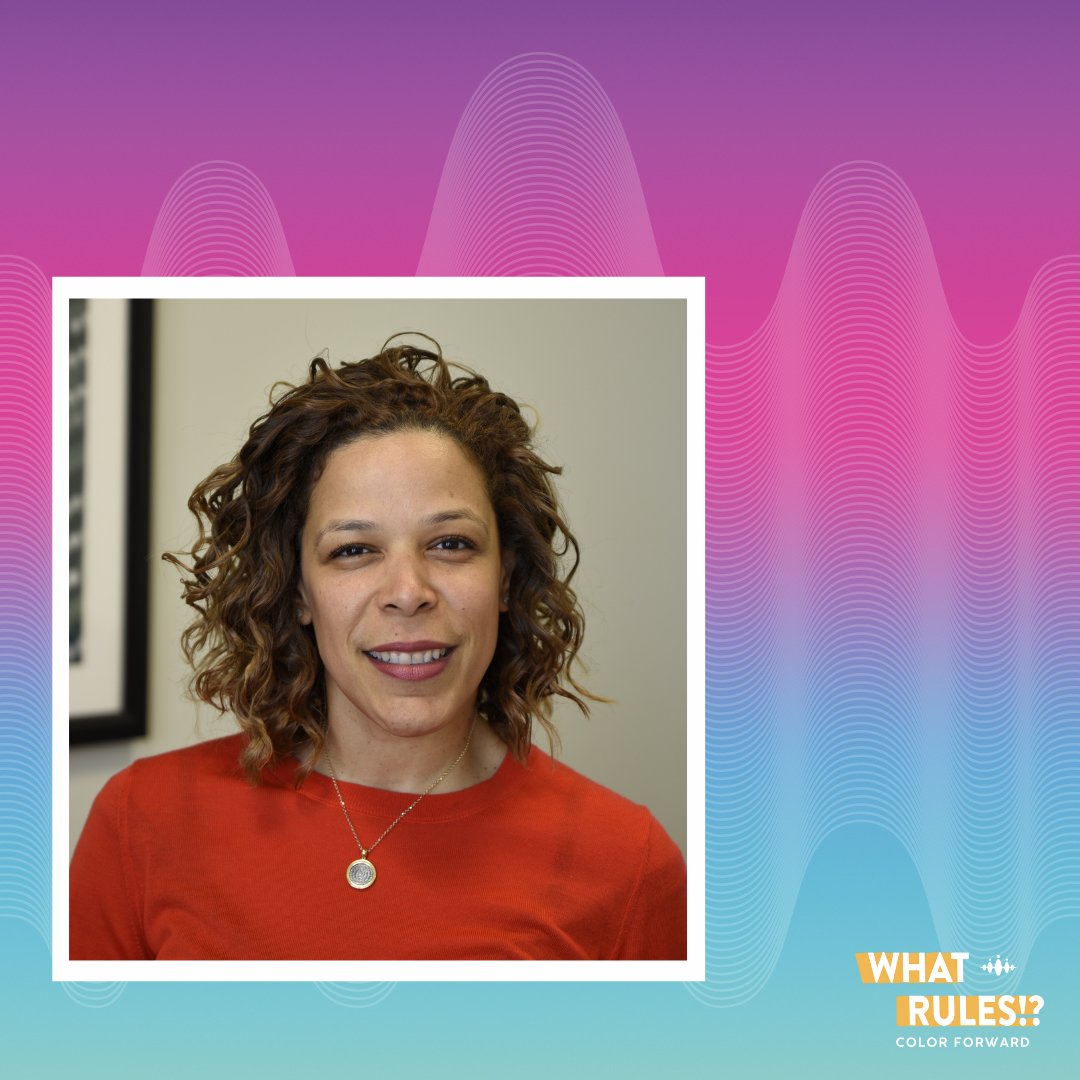
This week, Alisa and Dr. Merary chat with 5xminority Founder, Elaine Montilla, about how she took advantage of being a queer Latina in tech and found her place in the world by turning her insecurities into superpowers.
Episode Transcript
Alisa Manjarrez: I am pumped about this topic because we are talking all about how to turn your insecurities into your superpowers.
Dr. Merary Simeon: So I’m really excited to hear all the other stories. But for me, my biggest insecurity that I probably still struggle with is trusting other people, that they will really help me. And to me, that insecurity was born early in my life. It is hard to trust when the people that you love or let’s even say authority figures like teachers or loved ones hurt you, however, the superpower that came out of it was that I was forced to find value in myself and leverage the resources, I like to call them gifts, that God had already placed in me. So for me, the super power allowed me to take action in the midst of fear, because I didn’t want to wait for someone to rescue me.
I didn’t want to trust other people. Even though some days I failed miserably, other days, I breathed victory. But each day I push my talents to the next level.
[cue music]
And now when I look back, that insecurity that others are not going to come for me really exploded my talents to push them every day to a different level.
Alisa Manjarrez: Hello and welcome to what rules podcast. My name is Alisa Manjarrez. I am a vision producer and executive coach at the Happy Cactus. And I’m here with my co-founder cohost, Dr. Merary Simeon. She is an HR executive, and a motivational speaker.
And speaking of speakers, we have an amazing speaker as a guest today, Elaine Montilla. She is the founder of Five X Minority and the assistant VP and CIO for information technology at CUNY. And so Elaine, I want to let you know that there are no rules. You can jump in any time. You don’t have to wait to be called on because we can do whatever we want here.
Elaine Montilla: I am patiently waiting. Let me see what I can jump in.
Dr. Merary Simeon: No rules. Jump in any time.
[music stops]
Elaine Montilla: Yeah. You know what, you said something that’s really interesting, Merary, and I never thought about it that way. I think that what you’re calling your superpower, is actually your ability to be independent and not rely on other people and be okay with that.
You know, for me, personally, I had so many insecurities because I was born and raised in the Dominican Republic. And when I came to the US I did not speak a word of English. And when I started to learn English, I had a very heavy accent. And so being a shy Latina, you know, we were raised to be quiet and to not raise our voices and not to speak up. It was a big struggle for me to change that into becoming the superpower that it is today.
Alisa Manjarrez: I love that you have just really leveraged this as, you know, part of what differentiates you and makes you unique and you, you really own it. I’m curious for you, at what point did you feel like, okay, like I’m going to own this and really make it my super power?
Elaine Montilla: I came here. I learned English. I was told, you have an accent. And I struggled because people would stare at my lips to understand what I was saying, and that would get me so, not sad, but, afraid and scared of making sure that I’m saying the right words and what happened to me is that I flew back to the Dominican Republic and I went to the store to buy something. And the guy at the store said, you have an accent. We’re not from here.
And at that moment I was like, are you kidding me? I have an accent here. I have an accent there. Why am I allowing other people to decide how I’m going to feel about myself?
And I think that was the moment where I was like, you know what, screw this. I have an accent. It doesn’t matter what type of accent. I love it because it’s mine. It makes me a unique individual. And I have a lot of gifts that I’m ready to give. So I changed it into an obstacle and it became a gift that I had because it allowed me to communicate with different people, listen to different types of music, and we were talking about that earlier and also because I work in tech, which is another superpower of mine, I’m able to think in different ways because our consumers are different. And so I’m able to think about the Spanish portion of the popularity and also the ones that live here in the US.
Dr. Merary Simeon: I love that. And I can tell you, for me, the accent was the huge reason, probably one of the biggest reason, why I didn’t start doing public speaking sooner because every time that I would get nervous, my accent would come out and I still to this day, you know, there are some words like I’m going shopping, right? Instead of shopping, right? So I would be saying something on stage and my accent would come out and people would laugh and I would get so nervous that it was like I start stumbling and it wasn’t until, you know, somebody… I heard a similar story, or story that they were like, but that’s you, why are you letting other people stop you from using your voice?
And I was like, wow. Okay. And now when people laugh, I’m like, yes, that means they’re paying attention. That means they’re listening. If they get my accent and they’re like that means they’re paying attention. So I started viewing it in a different way. And you said it beautifully, Elaine, I saw it as a gift, right, because people now have to pay more attention so that they can know what I’m saying.
Elaine Montilla: Yeah. And you know, I went through that also when I started to do public speaking, because I was so conscious of the words I was saying, and I wasn’t worried about my accent when I was speaking, I was worried about forgetting things. I was worried about people judging me. I was worried about not knowing what I was talking about. And so I don’t know if you’ve ever heard of this group, it’s called Toastmasters, and I think they’re all over the world. I joined Toastmasters. And what I learned was to use humor as a way of getting rid of the anxiety that I had. And so when people will say something because I mispronounce a word, I would just laugh at myself and I would make a joke. And that’s, I think that was the key for me to knowing that I’m not gonna let people make me feel less than, because now I’m going to make fun of myself so that you don’t have the opportunity to make fun of me.
Dr. Merary Simeon: No, I love that. It’s funny because my daughter, she doesn’t speak Spanish, but she has like my accent. So she’ll say the same words, with the accent. I’m just looking at her, cracking up. And I’m like, I love what I’m passing down to her.
Elaine Montilla: I love it. And you know, I think that’s the other part of us thinking that we don’t have super is, is culture, you know, and society, because we have all of this conditioned thinking and people are making us feel like having an accent is something that is not good. Having curly hair is something that is not good. Having dark skin is not good. And it’s that process of knowing that you have a voice and you could challenge the status quo and, you know, create your own rules. Who created these rules anyways?
Alisa Manjarrez: What rules? I’m just going to find every opportunity to say, What rules?
Elaine Montilla: What rules? Exactly.
Dr. Merary Simeon: Love it.
Alisa Manjarrez: When I was thinking about, for me, what insecurities I had for my super power, I thought about when I first became an executive coach and I was 30 years old. I’d never been an executive. And I was like, well, how am I going to go find clients if, you know, I worked at an advertising agency at, I dunno, and one of my professors was like, Do you realize that you’re a young Latina and your competition right now, this, this is a while ago, your competition is white males from the military, because that was predominantly a lot of the executive coaches coming in. And he was like, this is a perfect time to build your business. And I didn’t. Like, I wish I had taken that advice, but I was still too insecure. I felt like I had to go climb the corporate ladder myself. So that’s the path that I went down.
And before I got to the place that I thought I needed to get to, which now I know, who cares, right? What rules? But before I did that, I met the CEO. He was a client, he was a marketing client of mine. And I was working with him and his tech company and he said, oh, wait, you do executive coaching? I just read an article, the New York Times about how we need younger voices to empower us and give us a different perspective. So he asked me if he could be my client, and he was my first, like real CEO outside of my real personal network. And it was amazing. And later as we started working together, he asked me how old I was and he was like, oh yeah, you’re actually older than I thought you were.
Dr. Merary Simeon: Oh, my God.
Alisa Manjarrez: He’s like, but I guess it’ll do.
Dr. Merary Simeon: Did you fire him? No.
Elaine Montilla: Talking about age…
Alisa Manjarrez: Right?
Elaine Montilla: But, you know, what’s amazing, in my office if you walk into my office now, I have a sign right on my door that I made sure everyone reads before they enter my office. And it says, don’t believe everything you think. And what you just said took me back
to that because I, for many years, dealt with imposter syndrome and I know a lot of people say, you know, that doesn’t exist. Men created that. It doesn’t matter. We feel it, right? And that’s what matters to me. And so one of the things that I did, and I share this with the young women that I mentor, is collect evidence. And so I spent a lot of time writing down all of my accomplishments and I’ve been doing this for over five years.
And so every time I hear that little voice in my head coming back and saying, who do you think you are? You are a Latina and you think you could be a CIO. I go back to that document. And I’m like, last year I did this, and I did this. And last week I completed this and then I close it. And, you know, I meditate so that also helps, but I think it’s, it’s the little voice in our heads that sometimes says, you know what, I don’t think you’re ready for this. And we need to learn to challenge that voice and question the voice and not believe what it says all the time.
Alisa Manjarrez: I love that term, collect evidence, because, you know, confidence comes from your past achievements. And it’s something that happens from before. When you were in Toastmasters, you weren’t a confident speaker, but after you practice and practice and practice, now you’re a TEDx speaker, you’re speaking all over and you have the confidence because of the work that you put in and that’s the evidence of your expertise. And I do that with clients. I didn’t have a term for it, so thank you.
Elaine Montilla: Steal it. You can steal it.
Alisa Manjarrez: I’m totally stealing it. Collect evidence to build confidence.
[cue music]
Elaine Montilla: And, you know what happens, especially for Latinas, is that we are waiting for other people to validate us, right, instead of knowing that we are the ones that need to validate ourselves.
I don’t know if you know Dr. Brene Brown, she talks a lot about vulnerability, which is another one of my super powers, because I’m an empath and so I’m very sensitive. And as a leader, especially during the pandemic, it has helped me so much, connect with my teams and connect with my staff. And so I praise myself all the time. I tell myself what a good job I’m doing. I high-five myself when I feel that I completed something that was really meaningful to me. And I think it takes practice, but we need to start, you know, seeing the value that we have for ourselves instead of waiting for my boss to tell me that I did a good job or my mom to tell me that I’m a good daughter. I think we’re in a cycle sometimes that it’s really hard to come out of.
[music stops]
Dr. Merary Simeon: I go back to what you said about collecting the evidence. I think we got to really take a look at what we’ve achieved and many would say, well, I’m not there yet. And I always go back to resiliency. I’m like, look at the things that you’ve experienced in your life.
They may not have a certificate. They may not have a title, but whoa, the things you’ve been able to achieve, others haven’t. And I think sometimes when we start collecting those evidence, we really need to look more than just the workplace, but look at the things that we’ve been able to survive.
Number one, as being a woman and number two, being a Latina. And number three, being a working mom… And don’t let me get on, because I have like 10 pages. But I love that, Elaine, it’s like give yourself credit because sometimes we think… we make up these rules, which now we say, What rules, that, Oh, it has to be this way. This is what women do, or this is what we’ve seen, or this is what we go through as mothers or Latinas or whatever it may be in this country. And it’s not true. And sometimes that stops us because we look at it like well, I don’t have the experience. And how many of us have heard we don’t have the experience for that? No, we do. It may not look like the way the world wants to see it, but we have the experience and more potential than they can handle.
Elaine Montilla: Yeah. And you know something that I learned recently doing some research for a talk that I had is that even when it comes to getting highered and having a job, you know, we may look at the job descriptions that people are putting together online and unless we have a hundred percent of the qualifications we don’t hit apply.
Which is insane, because men could have 50% of the qualifications and they’re like, I could do this. That’s fine. So I want to empower women to understand that you have what it takes and if you don’t, you could learn it, you could get it. And, you know, one of the reasons I created Five X Minority was a way for me to turn, right, all of these things that I thought were some things that were, you know, putting me down or not helping me to turn all of that into my brand. I made it my brand. Five X Minority. I mean, it’s all these things that I struggle with being a female and being a lesbian and a Latina and being a woman in tech, which is insanely challenging these days. And so that’s what I’m hoping that your audience can get that piece of advice from me that, it is up to you, and you could turn it around if you want it to.
Dr. Merary Simeon: Absolutely. I think that’s the beauty of asking ourselves What rules? If we will look at it as like, it’s not a rule, you can walk right through it you could break it. You could do whatever you want with it, then the sky’s the limit.
Elaine Montilla: Yeah. And also, you know, try new things and see what happens. See what happens if it doesn’t work, you turn left and if it works you keep going forward.
Alisa Manjarrez: We had a guest a few months ago who said, why not? And she moved with, she moved as a single mom to another country to start another job. And she said, why not? And then she moved to another place. Same Situation. And it was always, why not? And gradually she grew that way. And one of the things that both of you said kind of struck a chord with me, because thinking about that evidence, collecting the evidence of not just your achievements, but what you’ve been able to overcome, that is super powerful.
If you can think through, not just what you’ve done, but how you’ve persevered and all the adversity that you have faced that you have now turned around, and, Elaine, earlier you had said you redefined your insecurities and I love that idea of redefining what are these things that actually make me amazing?
Elaine Montilla: Yeah. You know, I was talking with one of my friends last week and we were talking about quotes and she was saying, oh God, I have so many quotes. And I said, you know what? I have one, I could tell you my favorite quote in two seconds, because it helped me redefine myself. So if you ladies are ready, I want to share my favorite quote with you.
It’s from Dr. Wayne Dyer. And it says “When you change the way you look at things, the things you look at change”, and I can tell you that quote changed my whole life because we grow up seeing ourselves a certain way, because society tells us that if you’re Latina, you’re supposed to do X. And my question for everyone listening is, Why do you need to do that? Are you questioning the things that are being thrown at you? And I know that because I have all these titles that society wants to give me, they’ve tried to put me in so many boxes. I mean, I have a hundred boxes that society tries to put me into. And that’s the constant fight, you know, trying to get myself out of the boxes.
And I think as I grow older, the process for me is actually on learning all of the things that without knowing my mom transferred to me or my teachers transferred to me, or even my mentors, because not all mentors are perfect, 100% , and so we all carry those insecurities with all that, you know, it takes time. It’s a process. It’s not something that happens overnight.
Alisa Manjarrez: What would you say has been… So we talked about a little bit about your process, but when you’re like in the depths of despair and, you know, we all get to these, this negative, self-talk where, you know, you can be this empowering speaker even, and Merary knows this, we’ve talked about this, you’re out there motivating everyone. And then you have those moments when you’re all alone, and some of those thoughts creep back in and the things that you think you’re about, you’re like, Ah, why do I have to learn this again? How do you get yourself out of those slumps?
Elaine Montilla: Yes, that’s a good question. You know, for me, the biggest help was therapy. I actually had a therapist that worked with me for a few months. And she’s the one that helped me start collecting evidence, because I was not able to believe all of the accomplishments that I’ve had. And she started to make me write them down. And so I thank her for helping me with that.
But you know, the other thing that I do is question my thoughts constantly. And I think my spiritual practice is what has helped me with that. I meditate every day. And so during my meditation, I try to make space for nothing, for nothing. Because during the day we’re so busy going from one thought to the next, to the next to the next. And we don’t give our brain any time to relax or breathe. And so I like sitting in silence. And the other thing that I do is I usually ask myself, what is this here to teach me? I’ve had a lot of very tough moments. I’ve made mistakes. Because I am very imperfect, which is something that I wish more leaders would admit to in public.
We’re very imperfect. And so I am always looking for the lesson. I am always saying, okay, well this happened and I messed this up. What is this here to teach me? And then I write it down. I journal a lot. And so it helps me to remember, because I think words are very powerful. That’s why I like writing poetry. And so I write it down and I say, you know what? I messed this up. And now I can see why I forgot to do this last week, or I missed this deadline because, you know, I was distracted. and so I think being humble helps with that a lot and understanding that we are not perfect and also seeing beauty in our imperfections.
Which sometimes is really hard, you know? But I’m a human being and I love every part of it. And I didn’t lose the parts that are “good” in quotations and the parts that are “bad” in quotations, because I don’t know who created good and bad, but anyways…
Alisa Manjarrez: What rules?
Elaine Montilla: What rules?
Alisa Manjarrez: This is going to turn into an existential podcast.
Dr. Merary Simeon: That’s right. What somebody thinks is good for them, maybe bad for me, you know? So it’s vice-versa. So what rules it’s up to you? What rules?
Elaine Montilla: Yeah, and, you know, growing up, it was, it was interesting because I never grew up thinking that I could go into tech because in my family, that was something that men would do.
And if you look at television and if you see commercials, you don’t see girls. I think it’s changing now. Thank God. And you see more female scientists and, you know, technicians and leaders, but we have a long way to go. And I think one of the things that I’m trying to accomplish is to make sure all the girls could see me as a role model, because I didn’t have that many when I was growing up.
And so that’s what I walk in saying everyday, What rules, of course, I’m a woman, and I am in tech and I’m going to sit in this room full of men and run a meeting because why not?
Alisa Manjarrez: And you’re like, I’m a minority, but I’m a Five X Minority, and not only that, but I’m going to make it my whole brand so that if anyone has any of these exes, you can see that I can do it.
Elaine Montilla: I know. Yeah. But you know, I have a lot of privilege too, when I want to take a moment to recognize that, because I know that.
Even when it comes to, you know, belonging to the LGBTQ community, I can get away with a lot of things because people don’t see it as soon as I enter a room. And so I’m mindful of that. And I wanna bring that up and make sure that everyone that hears me… Happy pride, by the way, this is pride month. You know, it’s also powerful to understand. All of the power that we have and the opportunities that we have that other people don’t have. And so I know that it’s easy for me to sit here and say a lot of the things that I’m saying, but I know that there is a big struggle out there for a lot of other Latinas who have an accent that’s way stronger than mine, and don’t find a way out. And I want to thank you for this program because you’re helping a lot of us get through some of those situations.
Alisa Manjarrez: I’m so thankful that we can have amazing women like yourself come, and I’m repeating myself, but I think it’s worth repeating that you’ve made a choice to become visible throughout your insecurities, and you have made a decision to be a role model. You didn’t have to, you could easily be a CIO in your little corner, not sharing with anyone. And so I would really encourage our listeners to not stay in your corner and not stay hidden because you have no idea what impacts you make just by showing up and showing up as all of you is very powerful and transformational.
So I want to acknowledge you, Elaine, for showing up, for showing up in all your areas and for being here on this podcast and through your art, through your poetry, which I know we’re going to get to in a little bit.
Elaine Montilla: Thank you so much, Alisa. I wanted to share something quickly if I can. Um, I did my TEDx talk and it was an amazing process. And I was really scared and I didn’t know what was going to happen, but I want to tell you that when I finished that talk, I got so many emails and messages from women who were telling me, I can’t believe you went through the same things that I went through. Thank you so much for saying, out loud, what we are going through, working in tech. And I think that was the fuel that confirmed that I needed to continue my work with Five X Minority, because sometimes I’ve told myself you’re a CIO already. You could just sit down and relax, but I realized that they need me, you know, the future generations need me.
And so I can’t sit down anymore. I have a responsibility now to give back and demonstrate that if I did it, not speaking English, being Latino and being gay, of course they can do it. And I want them to see that so that they can continue to fight and move forward.
[cue music]
Dr. Merary Simeon: It all goes back to everything that we continue to talk about, right, is we all have talents, we all have gifts and we need to share them with people so that they know that they can bring those gifts they have inside them to life and be successful and do not let the rules that the world puts around you, or the thoughts that you think rule your everyday actions, because if you do that, then you’re putting rules and you know, we’re all about not having rules or what rules.
Elaine Montilla: You know, something else that helped me a lot. I have this book from Don Miguel Ruiz, it’s called the Four Agreements. It’s one of my favorite books. And one of the agreements that he shares is, don’t make assumptions. And I realized that I was making so many assumptions about the things that other people were thinking about me or saying about me that were not true, and that was holding me back.
If you could please take one thing from today, don’t believe everything you think, but also, ask questions and stop making so many assumptions. I’ve been in rooms where I think people are talking about me and they don’t care about me at all. And so I think that can hold us back just wondering and thinking that other people are so interested in the things that we’re doing when they’re really interested in themselves.
[music stops]
Alisa Manjarrez: Dr. Marisa Franco came on our podcast and she talked about a Cornell study that says that people like you more than you know. And when we assume that they don’t like us or that they’re judging us or whatever, it actually holds us back.
Elaine Montilla: Exactly. And just so you know, I’m in the group with Marisa and Vanessa Santos. I want to give them a shout out quickly. We have this group of women and we support each other all the time. And every Friday we share our wins and it is so amazing to see how women can support other women. And so I was delighted when you mentioned her name because I love both of them.
Alisa Manjarrez: Yes. Oh, that’s fun. I just chatted with Vanessa earlier today too. Small world, I love it. I’m going to offer an exercise for our listeners, that now I’m going to call the collecting evidence exercise, previously known as the spider exercise, but collecting evidence, it sounds way better than spider.
Elaine Montilla: I love it I’m going to charge you, Alisa.
Alisa Manjarrez: Yeah, you should. So, okay, listeners, this is what you’re going to do, and you’re going to draw a circle in the middle of a piece of paper with a lot of lines coming out. So it’s going to look like a big sun or a spider. And this is your way to collect evidence. And in each of these legs of the spider, you’re going to write your achievements, things that you’re proud of and any adversities that you’ve overcome. And this evidence collection, it looks like a spider because that’s how we think of ourselves, but then it ends up looking like a bright sun and this bright sun is what you can take away. And when you forget who you are, this is the evidence that has brought you up to this point and you can renew this exercise any time or add legs at any time you want. And when you forget, you have a visual aid of everything that you’ve achieved, everything that you’ve overcome. And so I want to thank you, Elaine, for giving me the new collecting evidence name, and listeners, do try this at home.
Dr. Merary Simeon: I love, I love the sun shine piece of it though, it’s like, be the light.
Elaine Montilla: Yeah. That’s the first thing that came to my mind when you started describing, I was like, oh, that’s a sun, and we have rays that are coming out and illuminating the world and other people around us.
Dr. Merary Simeon: Yes. I love it.
Alisa Manjarrez: Merary, before we end, do you have anything that you would like to share? I always put Merary on the spot.
Dr. Merary Simeon: No, I think, you know, that was so inspirational. I was about to interrupt you and say, look at you being all inspirational and stuff with the sun. I mean that was beautiful. Be the light. Leverage… Each ray represents a gift. It might’ve been a difficult time that you overcame, but the gift is that you overcame that. And take every single one of those experiences as just a blessing that made you stronger each day. So exercise those gifts and arise and shine, like I like to say.
Alisa Manjarrez: Hey, Elaine, before you recite your poem, can you tell us what inspired you at that time in your life to write it?
Elaine Montilla: Hmm. Yeah. So one of the things that I share a lot is that, you know, growing up, I often thought that I was to be good at one thing only. And then I realized that there were so many things we could do.
We don’t have to just stick with one. And I was really shy about sharing the things that I would write until I decided to make it a super power. And so I think I was on vacation and I was coming back and I was listening to someone talk about their hair, the curls, the natural curls. And I was so impressed about the feedback that came on Facebook to this person saying, are you kidding me? Your curls are so beautiful. And I remember myself worrying about my hair. Is it going to rain outside? I need to cover it. It’s gonna look ugly because of another assumption, thinking that straight hair is the most beautiful hair out there, when that is not true.
And so I decided to take my cell phone and just start writing things that came out of my mind. And I was like, you know what? This could be a poem. Let me just, let me keep writing and share it with everyone. And that’s where it came.
Alisa Manjarrez: All right. Go ahead.
Elaine Montilla: Thank you.
My superpowers.
Si, soy diferente. My words do sound different and that is my superpower. Mis palabras son mias. And I own every part of my accent. I’m not walking around feeling less than. My accent is my asset. It elevates my wisdom. It helps me express ideas in a unique way. So tell me why, why do you feel less than? Why the shame? Why the discomfort? Why do you make yourself smaller? Never again, let someone decide your worth.
[cue outro theme music]
Know that your accent, the color of your skin, your sexual preference, your fears, your insecurities, they are all your superpowers and you are even more beautiful because of it and despite it.
Alisa Manjarrez: Want to know how breaking the rules can help you level up your career game? Search What Rules podcast on any social media platform and join our members only group on LinkedIn where we discuss rule breaking strategies for multicultural women. What Rules is a production of Color Forward. This show is produced by me, Alisa Manjarrez with editing and fabulous sound design by Mathr de Leon. Visit colorforward.com for more stories, events and of course all the episodes of What Rules.