
44. Not in it Alone
Has there ever been a time you thought you needed to go it alone, only to discover the beauty of having other people around to see you through it?
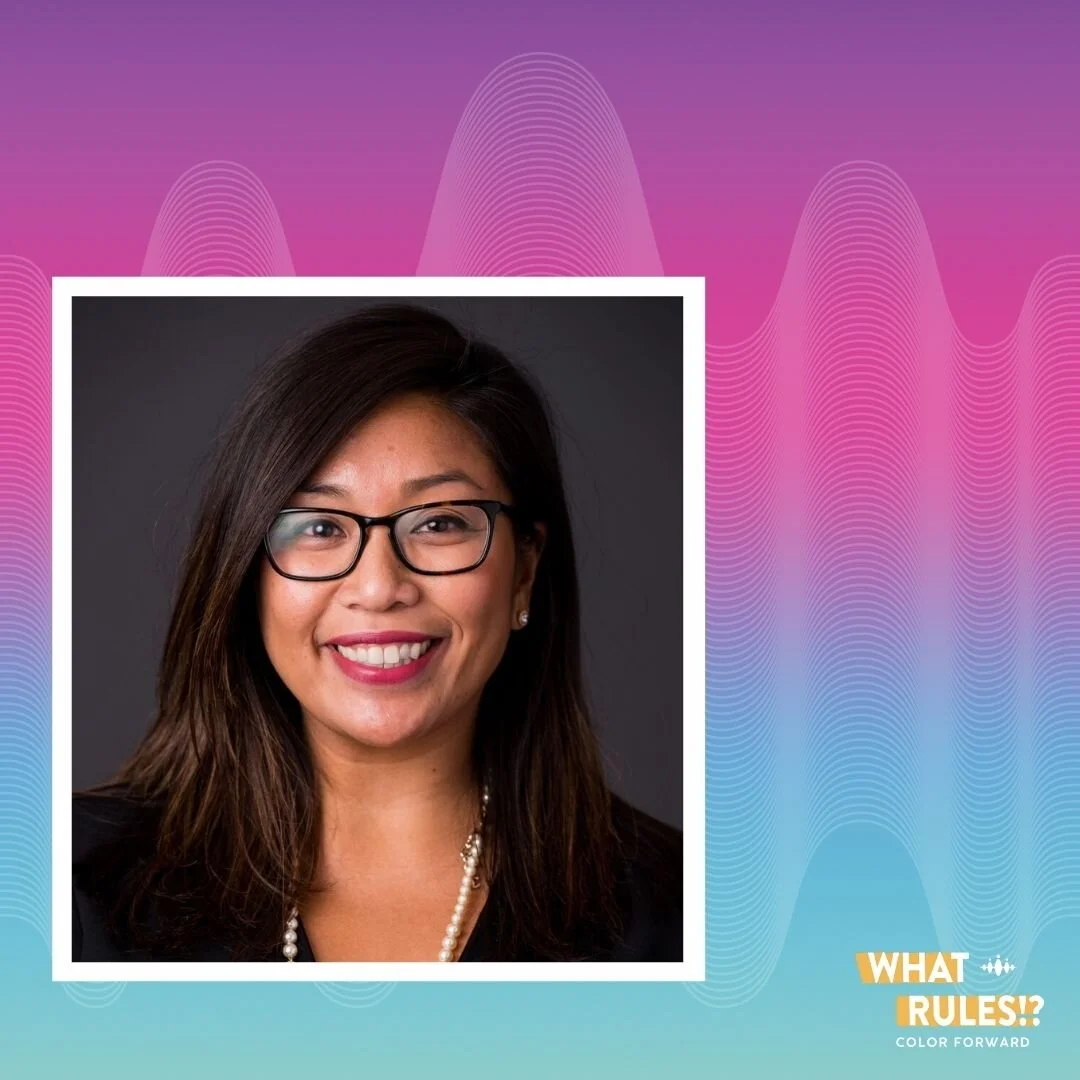
Alisa, Rosa, and Dr. Merary are joined this week by Partner and Chief Client Officer for RMB Capital, Michele Francisco, to discuss how breaking the rule that you have to do everything yourself to be successful might have the potential to change your whole life for the better.
Episode Transcript
[cue intro theme music]
Alisa Manjarrez: Welcome, everyone, to another episode of What Rules, where maybe there are rules, maybe there are not, but we are here to talk all about how to outsmart the game to advance your career. I’m here with my two co-hosts, HR executive and motivational speaker, Dr. Merary Simeon, talent management executive and leadership expert, Rosa Santos. Our guest today is Michelle Francisco, chief client officer at RMB Capital. Today we are going through this podcast together because we’re talking about not doing anything alone.
[music stops]
I love putting Merary on the spot. So I’m going to start with you, Merary, about a time where you thought you needed to do something alone, but you discovered the beauty of having other people around you to support you?
Dr. Merary Simeon: Okay. There are several things, and one, I would say, is definitely getting my doctorate. So I think people would think, Hey, that’s something that you put in the time, you do this alone. And in reality, yes, I might have written everything by myself, but I had a community of women like you, Alisa and Rosa, who whenever I would text and say, Hey, what do you all know about this topic, would help me, provide me papers. Uh, I mean, I read it and I did the research, but at the end of the day, I had y’all to do that. My husband supported me by helping me and doing and going above and beyond with things in the house and the children, my parents supported me by just going above and beyond on the weekends, right? So I had a whole community of people around me who really helped me be successful.
So when I graduated, I told everybody, We did it. I didn’t say, I did it. Yes, it has Dr. Merary Simeon, but I tell my team, which is my husband and my kids, it’s like, team Simeon did it, because I couldn’t have done it without them. So although it’s like, yes, I’m the one who wrote the papers. I couldn’t have done it without that community that just made it that much more doable and easier for me.
So thank you ladies, for being part of my doctorate.
Alisa Manjarrez: I love that you call your family a team because it totally changes the way you approach life. And when, for each of you, no matter what you’re doing you have a different mentality when you know you have a team backing you up. A team that you live with. A team that you can come home to.
Michelle, for you, how has your family been a support system in your life and your career?
Michele Francisco: Interesting enough, so I come… My parents are immigrants, so I’m first generation. My extended family, so my cousins have very strict parents, and I was always very independent minded. I like to do very different things than my siblings. But they never held me back. They were supportive. We didn’t have a lot of money. Some of the things that I did, like, my junior year of high school I was adamant about doing this college prep camp at Northwestern. That was a lot of money, but my parents, if it was ever education focused or just something that supported me, they were really… they went above and beyond to try and support me in those efforts. And looking back, I didn’t know the sacrifices my parents made to actually pay for tuition. I just didn’t know, and I know now, so they’re hugely influential in terms of doing it.
So I have… and just work ethic. I just think seeing my parents work ethic. Yeah.
Alisa Manjarrez: Did you know, at the time, that they were backing you up? It sounds like you like, maybe looked at your cousin’s parents as the people that were going to support you and your parents, you put it in a different category. What do you think was going through your mind at that time in your life when it came to looking to your family… or to your parents for support?
Michele Francisco: When I say support, I just, when I compare it to my aunts and uncles, they didn’t hold me back. I don’t, I don’t know if that makes sense. So I had cousins who, you know, college, amongst other things, wasn’t a big deal. So it was like, yeah, sure, go to community college, and there’s nothing wrong with community college, but I have these weird like ambitions compared to my cousins, of like, yeah, I want to go to DC for school. And I think… I’m telling you, I grew up with a ton of cousins who are all looking at me like, what is this about? And so what I think is cool about my parents is that they didn’t try to discourage me because of money or distance. So they were supportive in sort of my independent pursuits from that. Because they could have, they could have a hundred percent and trust me as I was just telling this story to somebody, I was so hell bent on going to this school in DC. My parents just thinking, you know, money-wise drove me down to U of I because they wanted me to see it, but I was like hugely fearful of big Greek systems because it’s really socially awkward. So they took me down there. I wouldn’t get out of the car. I was such a brat. Like we drove all the way down there. I was like, we could drive through campus, but I’m not getting out of a car. And so we drove back and so they could have held me back a number of ways in terms of, Nope, we can’t pay for it. You’re not going to make it. But, I don’t know, I look back and I think about the massive sacrifices they made, even just coming to this country. And then, you know, just, I see it in a bigger picture, like how fortunate I was, not only that they were supportive, it’s just my whole life. Beccause my life could have turned out really differently.
Alisa Manjarrez: Yeah. What a privilege that they saw your ambitions and they backed you up as much as they possibly could.
Michele Francisco: Yeah, they really did.
Rosa Santos: I love that you mentioned that and you give that credit to your parents. I think a lot of the women that we speak to on this platform, in fact, really give all the credit to not just the upbringing and the lessons through the up bringing, but also the sacrifices that their family and their parents, or that parent figure or support or mentor that they actually had in their younger development years, to be able to become who they are today. Tell us a little bit, Michelle, I’m curious, throughout your, you know, your school years and then career, have you actively sought for support or how, how did that happen?
Michele Francisco: I’ve been with the same team for over 20 years now. So team. The CEO of my current company, I met him when I was first interviewing when I was 24, for this team, he was 38. He had the smallest team of five to six people. So I was employee number seven. The CEO and I have a really close relationship. So when I think about, I’ve had this span, not only in my career, but interjected in that has been, I quit in 2005 and I traveled around the world.
He was really supportive of that personally. He didn’t know if I was going to come back, but just being so encouraging of me to pursue something so life-changing on the personal side was massive. He’s played a huge influence. I pursued my MBA, five years ago, and it was a huge time commitment while also working. He wrote my letter of recommendation. So he is a mentor and somebody in my life, that’s not only helped grow my career, but has taken me along to see this firm grow, my career grow, and just has really encouraged me to grow personally. There’s no way I could be where I am today without having mentors like him.
And other people that I work with. And then just personally, you know, the friends you make. I don’t think… And, Dr. Merary, I know exactly what you’re saying. When I got my MBA, we were the highest percentage of women in our cohort, and those women, they helped me get through it and they are some of my best friends today.
It’s just, it’s amazing, not only the professional network you have, but just the social support and having people support you that you can be sounding boards with. They play sounding boards of your life or your career. And I think that’s hugely important to get perspective or support or push you in a direction that you wouldn’t have considered.
Dr. Merary Simeon: You don’t hear about that often, but how amazing is that that a leader in your organization is saying, I support you. I support you, even though it may mean losing your talent, but he knew that by him just nurturing that and you come back, you will be that much more better, that much more engaged, that much more, you know, inspired to do more. So it’s just such a privilege to have people like that in our lives. And wow, congratulations to you. That’s a blessing.
Michele Francisco: Yeah, look, I think, you know, part of when I was thinking about this rule, like surrounding yourself with people, it’s also surrounding yourself with the right people. Like they influenced your thoughts. And that’s a big deal. Instead of focusing on sort of some negative things you can day-to-day, I think that helps bring some perspective, for me at least.
Dr. Merary Simeon: That’s a key one I don’t want people to forget, because we talked about this before. The people that you surround yourself, the ones that bring out the best in you, the positive. Because we all have all those people that could be friends, blood, family, that are not, and got to make sure that those people bring out the best in you and support your dreams, your imaginations, and challenge them to make you better each day.
Alisa Manjarrez: It reminds me of me and Rosa, because we were there for each other in graduate school and we’re still friends today and business partners and podcast hosts and everything. And it’s because of that support of working full time and being in school together and all of those things. I think that sometimes we think that… or what I’ve heard a lot of women just assume is that when things are good, that’s when you can like bring people in. But it’s really when things are hard that you build those bonds with other people, and it’s so important to not go at it alone.
It seems so simple, and obviously all of us here have reaped the benefits of bringing other people along your journey, but there’s another side to it where there’s a pressure that some people feel that they have to… that they’re stronger if they do it by themselves. And so I love, Michelle, that you’re giving so many examples of how we can break the rules, really. You broke the rules by asking your boss to support you in a very unconventional way. And he said, yes. And now you’re still together, you know. There’s a reason why you’ve been there for 20 years.
[cue music]
Michele Francisco: You know, when I first thought about doing that on the personal side, I did think, I was like, I’m never gonna find anybody that wants to do this with me. I’m gonna have to do this by myself. And one of my girlfriends, who I traveled pretty well with, we talked about it and she’s like, I’ll do this with you. When I was first thinking about it, I thought, well, maybe I can last four to five months, but because she came along with me, it pushed us harder to go to more exotic places that I probably would have not been willing to do on my own. And we have this shared deep experience, you build really strong bonds when you do something together side-by-side, whether it’s difficult, easy.
It’s the same thing with my boss. I was one of a handful that helped build his company, you know, it’s our company now. And I think these shared experiences and doing things side by side, really help. If you are actively thinking about like, these are your people, like in there are your people that will end up being your lifelong friends.
Rosa Santos: That, for me, actually, doesn’t come naturally. The way I was brought up I think there was an expectation that, as one of three daughters, both my parents were very focused in truly making fully independent, successful, fulfilled women. And for me, it’s been hard, because I know I’ve fulfilled into that expectation of both my mum and dad. And it’s been great, because I think it’s helped me be who I am, self-managed, independent, left home really early. You talk about traveling the world, I started when I was, I think, 15, 16, there was a train that crossed my hometown from Lisbon to Paris, stopped at my hometown, got on it and continued on.
So doing things by myself has always been very important in a sense of accomplishment. And both Merary and Alisa know, it’s very actually hard for me to talk about myself, about my achievements and seek out for help. Even to these women here who are my family. It’s really hard to actually open up and say, this is happening. And yet when I do it, every time I am so in awe how much folks really want to help.
[music stops]
What can you say around that for folks like me that really have to work at it? Even though we’re socially outgoing? We have a really good network. People know who you are, you know, I do a lot for others, but it’s so hard for me to actually say, I’m struggling. Can I get some help?
Michele Francisco: I don’t know if any of you have ever read Brene Brown’s book, is it Daring Greatly? There’s one about vulnerability, I mean, it’s a theme that she carries through a lot of her books, so forgive me that I don’t remember that one, but I am so much like you, Rosa, I get it.
And I will be the first to say, I’m somebody that initially deals with a problem or whatever independently, first. My immediate reaction is not to, let me immediately talk to my friends. I have to process it first, and get my thoughts together before I’m even ready to talk to friends.
What I found, and it’s uncomfortable, when you’re strong and independent and successful. A lot of times it’s because you’ve been able to deal with your vulnerability on your own, or you only share it in really private moments, I think, because it’s hard, it’s hard. And when you’re somebody that always has the answer or is achieving things, it’s hard to like show your vulnerable moments.
But I have to say, for me, the learning I’ve had over the years, it’s when I’ve shared being vulnerable, that the best opportunities and solutions and like different paths in my life have opened up. Another example I can give in my career as is, so after I got my MBA and I graduated, it was a really stressful time for me. I mean, I’m sure for all of you guys balancing grad school, your personal lives, work at the same time, was really tough for me. And I came out of it really burned out. I had 60 brand new best friends that I was burned out socially. And then my career, because I got my MBA, all of a sudden it’s like my work stress went up.
And I was in a really bad place at the end of 2018. Just burned out. And again, I, you know, so thankful of my CEO, I talked to him and told him I was having a really hard time. And he was like, what is it you need? And I told him I needed to take time off. I need to leave. I need time away to just recharge.
And we worked it out and he figured out how to give me a six month leave of absence. And I was so thankful. I was in tears asking for it. Because it’s really hard to say, you know what? I just achieved all… It’s like I got to the mountain and like achieved all of this and now I just, I’m like crashing. I cannot make it. And it was really tough to, one, sometimes it’s tough to ask for, in that moment, what exactly did I want? I didn’t know what I wanted, you know, but I was like, you know what? The thing I want the most is time away, but I don’t want to lose my job.
And what’s the worst that can happen? He can say no, but I’ll always regret if I never asked for it in that moment. I don’t know. So those moments of vulnerability, I think, they’re hard, but I think that’s when you really connect and open up.
Dr. Merary Simeon: I think the other thing, because I believe the moments of vulnerability are key. One of the things that worked for me recently is just talking about the things that I’m thinking of doing. I mean, think about it. That’s how this podcast was born. We were just talking about like, Hey, wouldn’t it be wonderful to do this?
And I’ll give you an example. I wrote a book that hasn’t been published yet. And the girl that I work out with, my personal trainer, her graduate degree is in journalism. And I was just talking, yeah, I’m writing this. She’s like, Hey, I’ll edit it for you. And I’m like, what? Like, I have no idea about this whole writing thing. She’s like, I love what you’re doing. Let me help you. And I would have never even known that she had that skill or that talent if I just didn’t share it with her the dreams, you know, this podcast wouldn’t have been born if Rosa and I weren’t talking about, wouldn’t it be wonderful… I want to do this. I want to do that.
But then we came together as a team and we made it what it is today. But I think, and I also think the book that I just finished writing, it wouldn’t be as great if… her name is Debbie, if Debbie wouldn’t have provided her input on my book.
So I think, yes, the vulnerability. Absolutely. It has to happen. But I also think, talk about your dreams. Talk about your imagination. Talk about those things that you would want to happen because I can, at least in my experience, every single time I’ve talked about it, I had other women say, How can I become part of that? How can I help? How can we do more? So it’s just sometimes keeping those conversations open.
I think a lot of the times we compete against ourselves, say, Hey, I don’t want to talk about it, because that’s my idea. And there’s just so much out there that we can achieve together. Many of us are robbing ourselves and other women from achieving the best that they can be. Or for us to even come out with a product that may be just amazing because we want to keep it to ourselves.
Michele Francisco: I think it’s about just thinking that the world is abundant and that it’s not scarce. And I think when you think that way, you’re willing to share more, that nobody’s going to take anything away from you. In fact, that’s awesome that you found friends there to help you and encourage you.
Dr. Merary Simeon: I love it.
Alisa Manjarrez: Michelle going back to that time in your life, where you were, you got more responsibility, you just finished your MBA you knew you needed time off. You didn’t really know everything that you wanted, how did you get to that point where you asked your boss? Because that little moment from “I need it” to “I need to do something about it” can last some people years. So, how did you get from a to b?
Michele Francisco: Well, for me, it was that I can honestly see that lasting years if you’re not attuned to yourself. I think for me, it was, I could see what was happening to myself physically. I was eating terribly. I was gaining all this weight and I just didn’t like the way I felt.
So, you know, I’m a big believer, like your body is an indication there’s some… there’s indications happening as something’s off balance in your life. And, you know, I kept thinking, okay, well maybe I can just spend more time working out or eating better, but it wasn’t. I also realized I wasn’t engaged. I just didn’t feel fully engaged in my whole life. That’s how burned out I felt. And I think… I could not… It was way more… There’s a saying that says you realize you have to make a change… When the pain of changing is less than the pain of not changing. I know there’s a saying like that. I mess up these things all the time.
I was fortunate enough to look at my finances and be like, you know, the worst thing that can happen is my boss says no. And I knew for myself that I would have to be willing to walk away and take a break then. But I knew for my mental health and physical health and just resetting my life, like that’s okay. It was a hundred percent okay. And like, I’m the only one that can put myself first. Like, yes, you could still have like a whole support system, but I’m the only one living in my head that knows what I need. And that’s what drove me to ask, is I was prepared for the worst and ended up with the best outcome for myself.
And I think because there’s a huge level of trust between us. I was willing to make that ask, and just telling him what was going on in my life. So that’s really what happened. It probably took me a year to get there, to make that ask, I was just kind of feeling out what was going on with me. And it was, again, it was, in my life, one of the best things I did was take that break. I really needed it.
Dr. Merary Simeon: Not everybody has made the best financial investments to be able to take that time off when they are exhausted. I was just speaking to one of my mentees, you know, divorce, family sickness, all these things, the kids, and she, she was just diagnosed as like burned out, and the doctor’s like, you need to take a break and she’s like, I’m not financially there, because of all the situations that have happened. What advice would you give to someone? Because here’s my thinking, but I would love your advice. I’m like, if you don’t figure out maybe what benefits the company over what you can do to take that time off right now, it’s only going to make it worse for you.
Other sickness may come and in your family. So I struggled a little bit and would love to get your insight. What does a professional or anyone that doesn’t have the financial means to take the time off, do to be able to take care of themselves mentally, physically, so that they could be a better parent, in this case for her, and a better professional when she does have the ability to return back to work?
Michele Francisco: That’s a really tough situation. And I also think every company or wherever somebody works, every workplace is different. So I’m going to come at it only because I have only had the experience with my company, but we’ve actually had some recent people, obviously COVID has been really tough, and we’ve had some recent folks where even though things are opening up, it’s just been a really hard year for them. And they’ve decided to take leave under family medical leave. Fortunately for my company, depending on why you’re taking leave, they’ll pay you. But I think it requires a conversation with your company, right?
Like I think there’s options looking at leave. It’s, can she work reduced hours? You know, I don’t know how much strain that puts on somebody financially. But to your point, if you’re not even having a conversation about it, if nobody knows, that’s not a good place to be either. So yes, this is, it’s a struggle, but I think just starting to talk about it with the right people in your company, whether it’s your boss, your HR department. Granted, I’m going to, I understand, not every person’s company workplace would be that giving to figure out a solution like that. But it’s also not going to get you anywhere if you’re not talking about it, I think.
Rosa Santos: Hey, one question I have, it’s a little… It’s in the same kind of theme, but I want to know, I’m curious, I want to know, is there anything off limits when thinking about reaching out? Because sometimes I feel, and maybe this may come from me in terms of what I just shared with you guys, my sometimes inability to really exercise this reaching out and sharing and, and, and, uh, being okay with being helped. But is there anything that is out of limits? I mean, how do you guys go through that process?
Dr. Merary Simeon: What rules? What limits?
[cue music]
I don’t know. For me, it’s all about, what’s important to me. And if it’s important to me, I feel I have to take action, because if I don’t, it’s just going to be one of those things that continues to hold me down. And Michelle said a beautiful, you may regret it, or you always wonder what could have happened.
If I asked or if I didn’t. I don’t ever want to have to look back and say, I should have asked. I should have taken that risk. It may not be a time off to travel the world, but it may be some time to take care of those things that are important to you that you’ve been neglecting.
Michele Francisco: I know for me, I think like any conversation you don’t want to be TMI, but I think, you know, I didn’t come out with my boss immediately saying, oh, I’ve gained all this weight, I feel terrible. I need time off. I just was like, I’m struggling. Like I just entered the conversation very gently with, I remember we had dinner, and I’m like, Hey, you know, thanks for having dinner with me. I just need you to talk about something. I’m really at a point in my life where I’m struggling. And to me, depending on that person, they’re going to start to dig further if they want to know. And that opens up the conversation. And generally, if you feel a level of trust with that person, they will start to dig into it to that level of comfort where you can feel it out and you’re willing. But I read you. Where there was no way I was going to go into that being like, here’s the litany of things that are going terribly in my life right now.
Alisa Manjarrez: I think it’s really important to think about who you’re sharing what with and what types of situations or struggles you’re sharing with people. So obviously on a professional level talking to your supervisor, if you have a trust. I mean, if you have a relationship with them, but on a personal level, I really think about who I need in that moment. So, you know, Rosa, you talk a lot about having a bookshelf of friends and each friend for me serves a different purpose. I have, and this isn’t to make friends a commodity, but I have a friend that I go to who’s a cheerleader, a yes person, and sometimes you just need someone to say, yes, right? You just need someone to be like, that’s awesome. So I have that person that I go to, and then sometimes you need the person that’s like the truth teller. That’s like, look, you’ve been giving me this issue over and over again. It’s time to stop, right? But when I need a cheerleader, that’s probably not the best person to go to, right?
And then, and then you have just like general support and there’s all these people. So for me, it’s been a process of learning who to share what with and when, and also I love what Michelle said about kind of giving them, giving them an opportunity to dig in further, because that gives you a signal. That’s like a trust signal. If they start saying, Oh, well, tell me more about that. Then it gives you permission to say more and then you can still decide. So you have, you’re an agent of yourself, so you can decide what you feel comfortable with and you can change your mind. You can go to that truth teller and realize, okay, actually I’m not ready. I’m not ready to receive what they have for me. So I’m going to stop here and accept this conversation and then go back to myself and, and figure out what I need to figure out. And then maybe, maybe I need to go to this loving, supportive, you know, I’m here for you person, instead. So I think there’s nothing wrong with seeing your support system as having certain roles for your life.
Michele Francisco: That is very true, very true. Everybody has strengths and weaknesses that you bring to your relationships. And I think recognizing that and what you need in that moment is really important.
Rosa Santos: Yeah. I love what you said also, Alisa, in regards to this idea of agent, right? And we haven’t talked about it, but there’s something about agency, right? Overall agency of being aware and recognizing, not only what’s going on, but how you might potentially want to address it and then how you’re going to bifurcate, right, between who to go to and what for, but that sense of, owning it, embracing it and having the agency to move forward. It’s ever so important, right? And I think, in my case, I do find this strategy… I have a strategy now that I’ve thought, and I’ve practiced, I don’t think I’m great at it by the way, but I try to practice them, right? But what I always feel is there is something about practice and practice and practice, right, that comes into play here as well, again, what Michelle was saying before, allowing yourself to be vulnerable. And then knowing what kinds of vulnerabilities you may be able to bring to whom at what moment in time.
Alisa Manjarrez: Yeah, and you can choose who you want to share with. The part about agency that I love is that you can change your mind at any time and you can start to walk on a path and stop and turn around. And that is something. So Michelle could have easily decided, and I’m not talking about changing your mind out of fear, that’s a totally different subject, but changing your mind on what you feel like you need in that moment. And so she could have told all of her friends and family, I’m going to ask for leave. I know this is what I want. Gone to her boss, her boss could have worked out a different scenario.
And maybe in that moment, she could have said, you know what, actually I can see that working too. I hadn’t thought about it. And there’s nothing wrong with going back to all your people that you’ve told everything to and saying, Hey, this is what happened. I and think that sometimes, I know for me, sometimes I get embarrassed, like, oh my gosh, I just told all these people I was so vulnerable about the situation and it changed, or I changed my mind or I don’t feel that way anymore. And now I have to go back and share this part of my life with them. And, and that can be challenging in certain moments.
Rosa Santos: And there’s something else actually that I like to bring into the conversation, which is this idea of perspective. When you’re doing it all alone, I think sometimes we make an issue bigger probably than it really is. I had a conversation yesterday with a teacher of my son, and she made me feel so silly, you guys, because I was worrying about this massive thing. And then she listened to me and, and I felt we needed to do some kinds of intervention and all this. And then she looks into the zoom and said, look, your son has no problems. He is a stellar student. If he was having the problem that you think he has, his grades would be awful. You know, and I kept, I kept, you know, I kept saying no, but you don’t understand, his comprehension and all these things I was saying. And then she was, I think she was getting a little annoyed, because then she gave me this spectrum, like really bluntly.
And it’s like, from when you talk about withdrawal, is he like doing all these things? Like a hoodie on over, like putting himself in a corner, and I’m like, Oh, Okay. Yeah. I guess we’re fine. Like you need sometimes that perspective, because then you start seeing an issue that you have not compared or that you don’t have a perspective of how that’s been felt or dealt with, or the possibility that someone can bring to both Michelle, and your point Alisa, in regards to, you know, there’s this, but what about this or something else that you haven’t thought about, but is going to open up in a way of seeing the light?
Alisa Manjarrez: Before we get into that, I just want to point out that vulnerability hangover that happens when you do ask for help, because you had it, right? You’re like, oh my gosh, I can’t believe I asked for help. And that maybe I didn’t even need it, but you clearly did. Like that perspective was so important to you, but the negative that happens, and I don’t know if it’s a negative actually, but is that once you do share and or ask for help, you do start to do that like backpedaling, like maybe I didn’t need that much help, or maybe it wasn’t that big of a deal. And you tell yourself all these things, and she thinks I’m crazy when probably she was like, all right, next. And then the next parent had the same situation.
Rosa Santos: Yes, that’s absolutely right.
Michele Francisco: I think, for me, I think, the stuff in our head is always so much bigger than it actually is. I don’t care. It’s just always so much bigger. And I was hearing what you were saying, Rosa, and I can go down that path too. Like she was probably thinking, and he was thinking, and then one practice I’ve tried to do to stop that sort of cycling is wait a second, people don’t think about me. They’re not thinking about me that much because they’re too busy thinking about themselves. And so like, it’s okay. I don’t care if I’ve shared this because you know what this thought is going to be out of their head, like the next day. Because they’re going to be too consumed with themselves and I’m not going to worry about what they’re thinking about.
But I do think that perspective, because we are in our heads so much, to what Alisa said earlier, if you’re going to the right people where you know sort of what you need in that moment, or maybe don’t need, or you’re not sure having somebody bring some outside perspective, I think is good. It can’t hurt. And the agency that, Alisa, I do like, like you survive, like I love that idea because, you know, maybe you did have a vulnerability hangover and you’re just going to learn next time,Hm, I’m going to slowly slide into that kind of vulnerable moment. I’m not sure, but I do think you need others. It’s why therapy is such a big industry, you know, it’s like you need others to kind of like give you different perspectives and temper things.
Dr. Merary Simeon: I think it’s something important that you said, you do need others to give you different perspectives, but ultimately you have to make the decision, and you have to take a look or you have to listen to other people tell you and put them through a filter.
Because if you only do what others say or what others are saying or asking you to do, yes, some of them may be great, but not all of them are great. And I think we need to remember that at the end of the day, you have to determine what is best for you physically, mentally, emotionally, as well as also recognize that your greatness is determined by what you do, not other people’s opinion.
However, I do believe, together, we are stronger. But you gotta do it at your timing, at your pace and whatever is more important to you as an individual, because otherwise you may do things that you may not be ready for and they may turn out worse. So that’s why I love what you did, Michelle, just the timing was what you needed. You did it when you were ready and it was what you needed to do at the time.
Michele Francisco: And, by the way, my parents looked at me like I was insane.
Alisa Manjarrez: That’s awesome. What an interesting perspective of not doing things alone, by asking for help, even when other people don’t understand and don’t agree. So it’s like you have this supportive community, but they don’t always get you. And that’s a part of it because we’re human. Just having a community doesn’t mean that you’re going to have people that understand every step you take and every, every move you make.
But I really think that that’s part of the complexity and the beauty of having that strong network behind you. And this idea of breaking the rules is twofold. It is doing what you want, breaking that rule and asking for help.
And that is a very interesting juxtaposition of independence and interdependence. And I think that the examples that you’ve given have been so crucial for people to hear, because a lot of women, and men, everyone deals with burnout and it’s not as easy as saying, oh, take time off.
Like, there’s so many layers around that. So I’m really glad that we were able to address all those things. As we wrap up, I would like to know… I’m going to get coachee again. I did this in a previous episode. And I’m going to start with you, Michelle, put you on the spot, out of everything that we’ve talked about today, what has been your greatest insight for yourself?
Michele Francisco: I really, I’m going to go back to something you said, that agency, it’s a great word. It’s a really great word, because we’ll use words like, you’re in control of yourself. But agency, to me, it’s a more positive word, I think, you can be an agent of change. I just really liked that word.
And I think, using that and what, what you just wrapped up with, which is, you know, being independent, but the interdependency you have with your friends, family, or network, ultimately you control that too. You’re the agent of all of that. As your life goes on, that’s what builds your accomplishment. Like your agency and the help… Everybody is an agent of themselves, right? Like I just really like that word a lot. And I think if you have an awareness of that, that gives you a sense of empowerment. And I think that’s very positive. So I think that’s what I’ve walked away with. I’m going to use that word a lot more.
Rosa Santos: Awesome. You know, for me, I think it’s, what you said about the vulnerability hangover. I think I need to really pull from my resiliency and just get over it.
Alisa Manjarrez: And, Rosa, I just want to acknowledge you for getting vulnerable with us today and our listeners by sharing a vulnerable moment, because that is a practice as well. So kudos to you.
Rosa Santos: Thanks.
Dr. Merary Simeon: You know what I take from this is, you have to put yourself first, and that is, one, making the decision that you can’t do it alone, and you should ask for other’s perspective, but, two, ultimately, if you don’t do it, you’re only going to end up hurting yourself. So your mental health, your physical health and your ability to perform at your best, depends on the actions that you take of investing in yourself.
[cue outro theme music]
So taking actions, asking others and not doing it all, not doing it alone is an investment that you make in yourself, but ultimately you have to make the decision, you have to take the first step to becoming a better you.
Alisa Manjarrez: I love that. I think my takeaway is something that Michelle talked about, which is no regrets, and don’t go into a situation where you might be full of regret. So take the action you need so that you can take advantage of those moments and those opportunities.
Want to know how breaking the rules can help you level up your career game? Search What Rules podcast on any social media platform and join our members only group on LinkedIn where we discuss rule breaking strategies for multicultural women.
What Rules is a production of Color Forward. The show is produced by, me, Alisa Manjarrez with editing and fabulous sound design by Mathr de Leon. Visit colorforward.com for more stories, events and of course all the episodes of What Rules.